 HeySolids
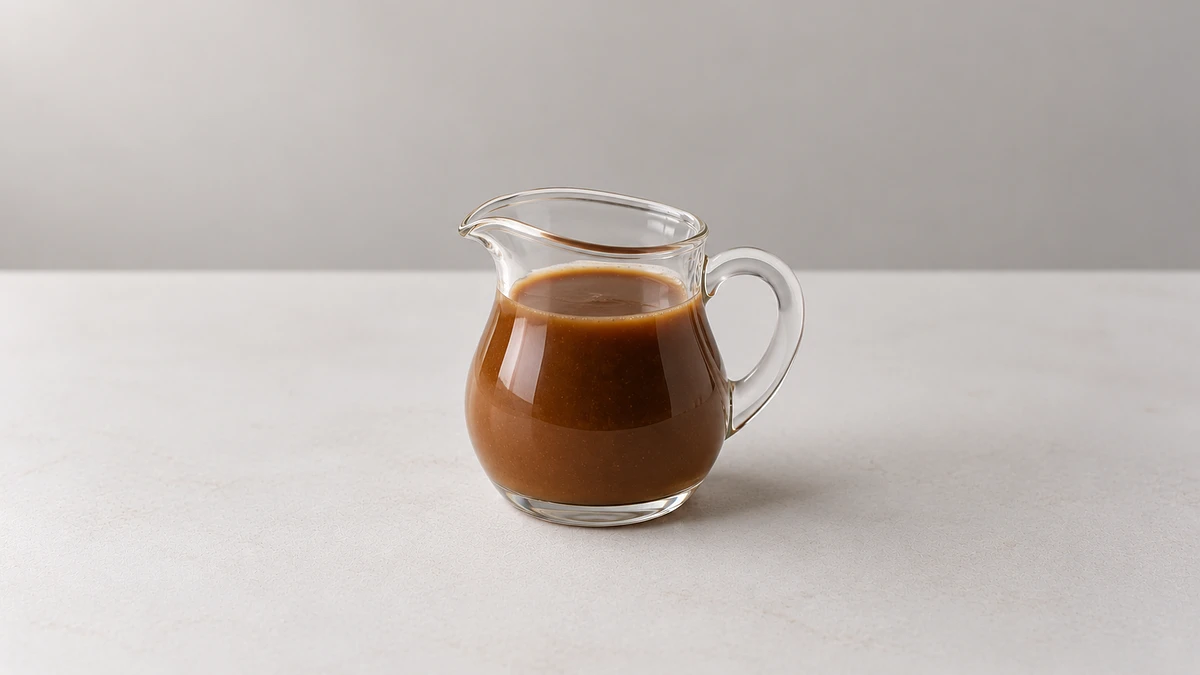
Can babies have gravy?
Yes, if you make it from the pan juices. Meat juices thickened with a little flour and no salt are just the roast in liquid form. From 6 months, a spoonful over mashed potato or a strip of meat helps soften food for a baby. Most family gravy is different, though. Granules, jars and cans are very salty: a quarter-cup of jarred gravy has around 300 mg of sodium, close to a baby’s daily guide of 370 mg.[1][2][4]
At a roast, spoon off some juices before the family gravy is seasoned, skim off the fat, and thicken them for your baby. Everyone else can have the regular gravy. From 12 months, a small splash of family gravy, thinned with water, can fit into a toddler’s day if the rest of the plate is unsalted.
Choking risk
Gravy is a low choking risk - it's a liquid, and it makes dry foods easier to manage, not harder.
Keep it a thin pour rather than a thick, gluey one, and skim off the fat so it doesn't coat the mouth. See how to serve for each age.
Allergens
Gravy isn't a common food allergen in itself, but it's a mix: most are thickened with wheat flour, country and sausage gravies are made with milk, and jar and granule recipes often add soy, celery or yeast extract.[5][6][7]
Homemade pan gravy thickened with cornstarch is free of all of them. For packet gravy, read the ingredients once - it's the easiest place for an allergen to slip onto a roast-dinner plate unnoticed.
As with any new food, start with a small amount and watch for a reaction.
Food safety
Salt is the main issue. Gravy granules and instant gravy are mostly salt, starch, flavoring and coloring, and a stock cube in homemade gravy adds the same problem. Make your baby’s portion from unsalted pan juices, water or homemade unsalted stock. From 12 months, count any family gravy as the salty food of the day.[4][1]
Skim off the fat. Reheat stored gravy until it boils, then let it cool well, since gravy holds heat. If the family gravy was made with wine, give your baby the plain pan juices instead.
How to serve
6+ months old
Unsalted pan-juice gravy
A tablespoon or two over mash or meat
Before you season the family gravy, spoon a few tablespoons of meat juices into a small pan and skim off the fat. Whisk in a teaspoon of flour or cornstarch and simmer for a minute until it thickens. Pour it over mashed potato, soft vegetables or a strip of meat. No stock cube, no granules, no salt.
How to prepare
If it’s too thick, loosen it with water or unsalted stock. Let it cool before serving.
12+ months old
A splash of family gravy, thinned
A tablespoon, mixed with water
From 12 months, a tablespoon of the family gravy, mixed half-and-half with water, can go over a toddler’s roast dinner, as long as it’s the only salty thing on the plate. That keeps the meal well within a toddler’s daily sodium guide of 800 mg. Unsalted pan gravy is still the better everyday choice, and gravy made from granules stays occasional.
How to prepare
Mix with water, skim off the fat, and serve warm, not hot.
Sources
- Dietary Reference Intakes for Sodium and Potassium (AI 370 mg at 7-12 months, 800 mg at 1-3 years) - National Academies 2019
- Gravy, beef, canned, ready-to-serve - USDA FoodData Central
- Foods to avoid giving babies and young children (salt, stock cubes, gravy) - NHS
- Foods and Drinks to Avoid or Limit (honey, added sugar, salt) - CDC
- Food Allergies (the 9 major US allergens) - FDA
- Wheat - FARE
- Milk - FARE