 HeySolids
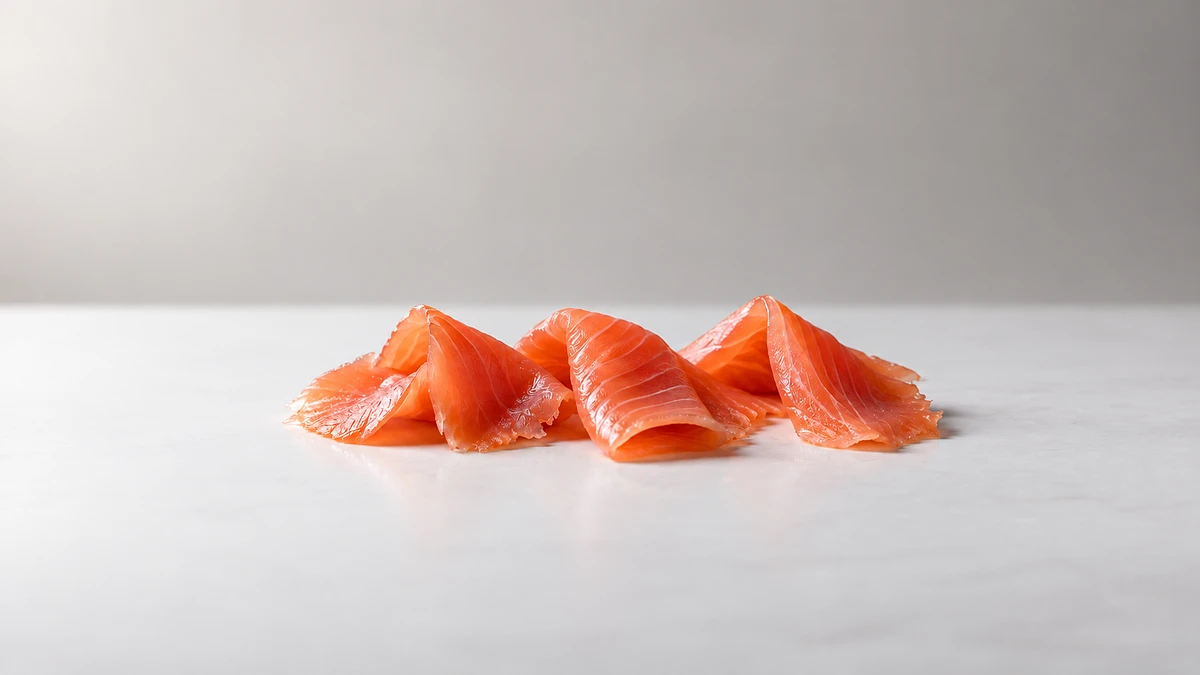
Can babies have smoked salmon?
Not before 12 months, and after that only in small amounts, cooked into a dish.
There are two problems: listeria and salt. Lox, nova and gravlax are cured, not cooked, and cold smoking never gets hot enough to kill listeria.[7][6] Hot smoking does kill it, but the bacteria can get back in afterwards, so the FDA treats all refrigerated smoked fish as higher risk.[6][5]
The salt is high too. USDA lists regular lox at about 2,000 mg of sodium per 100 g, roughly 570 mg in 1 oz. A baby’s daily guide at 7 to 12 months is 370 mg. Plain smoked salmon is lower, around 670 mg per 100 g, but that’s still a lot for a small eater.[1][2]
In the first year, offer freshly cooked salmon instead. From 12 months, a little smoked salmon now and then is fine, cooked into a dish until it’s steaming hot.[5][4] Cooking takes care of listeria but not the salt, so keep plain cooked salmon as the everyday fish and smoked salmon as an occasional extra.
Choking risk
Smoked salmon is a moderate choking risk - a thin slice is floppy and slippery, and a folded piece can lie flat across a small airway instead of breaking apart, much like a slice of deli meat.
Chop it finely or cook it into food rather than offering a draped slice or a strip. See how to serve for age-by-age prep.
Allergens
Salmon is a common food allergen: finned fish is one of the most common food allergies in the US, and salmon is among the fish people most often report reacting to.[8]
Introduce fish with plain cooked salmon first, not smoked, so any reaction is easy to read: one new food at a time, a small taste, and keep it on the menu regularly once tolerated. More than half of people allergic to one fish react to others; fish and shellfish are separate allergens.[9][8]
Start with a small amount and watch for a reaction.
Food safety
Young children are more likely to get sick from food. The FDA’s food-safety guide for children under 5 says this is because their immune systems are still developing.[5] The CDC lists other groups at higher risk from listeria too: pregnant people, newborns, adults 65 and older, and anyone with a weakened immune system.[4]
Listeria can grow even in the fridge. The FDA guide lists all refrigerated smoked fish as higher risk, whether hot- or cold-smoked. Safer choices are seafood heated to 165°F and canned fish.[5] Salt is the other reason to keep portions small, since the CDC advises against feeding young children salty foods.[3]
How to serve
Up to 12 months old
Skip smoked salmon - introduce fish with freshly cooked salmon
Skip smoked salmon in the first year. Lox, nova, gravlax and cold-smoked salmon are never heated enough to kill listeria, and hot-smoked can pick it up again after smoking. It's salty too: 1 oz of lox carries more sodium than the 370 mg a day that counts as adequate at 7 to 12 months.
What to offer instead
Fresh salmon baked, poached or steamed to 145°F, until it flakes, checked for bones and offered as a finger-sized piece or flaked into mash. It has none of the curing salt, and gives a clean read on fish allergy when it's the only new food that day.
12+ months old
Finely chopped, cooked into a hot dish or heated and flaked
A thin slice at most, chopped small
From 12 months, a small amount now and then. Cook cold-smoked salmon, lox or nova into scrambled eggs, a pasta bake or a potato cake, or heat hot-smoked salmon before flaking it into rice or mash. Either way, get it to 165°F, steaming hot, then cool it. Chop it finely; never a draped slice.
How to serve
Keep portions small: 1 oz of lox is about 570 mg of sodium, most of the 800 mg adequate intake for 1 to 3 years. It carries vitamin D, B12 and some omega-3s, but plain cooked salmon gives you the fish without the salt, so let that be the regular fish.
2+ years old
Small amounts in a meal, still an occasional food
About one thin slice, chopped, inside a dish
From age 2 it’s still an occasional food. Chop a slice into a frittata, pasta, chowder or fish cakes, and heat it until steaming rather than serving it cold on a bagel. The FDA still counts children under 5 as high risk for foodborne illness.
How to serve
The daily guide stays at 800 mg of sodium through age 3, so a bagel with lox is still an adult portion. When you cook smoked salmon into a dish, don’t add any other salt. And if anyone at home is pregnant, over 65 or has a weakened immune system, they should only eat refrigerated smoked fish cooked into a dish too.
Tips
- Keep the rest of the meal unsalted. Plain eggs, potato or pasta with no added salt leave room for the salt the fish brings.
Sources
- Fish, salmon, chinook, smoked (FDC 173687) and Fish, salmon, chinook, smoked, (lox), regular (FDC 171985) - USDA FoodData Central
- Dietary Reference Intakes for Sodium and Potassium (AI 370 mg at 7-12 months, 800 mg at 1-3 years) - National Academies 2019
- Foods and Drinks to Avoid or Limit (honey, added sugar, salt) - CDC
- Preventing Listeria Infection (reheat deli meats until steaming) - CDC
- Food Safety for Pregnant Women, Their Unborn Babies, and Children Under Five - FDA (PDF)
- Risk Assessment of the Public Health Impact from Foodborne Listeria monocytogenes in Smoked Finfish; Request for Comments (hot-smoking kills Listeria, but recontamination after smoking can occur; cold-smoked fish is eaten without further cooking) - FDA, Federal Register, March 4, 2005 (PDF)
- FSS and FSA issue updated advice to higher risk consumers on ready to eat cold-smoked and cured fish (smoked salmon, smoked trout, gravlax) - Food Standards Scotland
- Fish - FARE
- When to Introduce Egg, Peanut Butter & Other Common Food Allergens - AAP HealthyChildren