 HeySolids
Choking risk
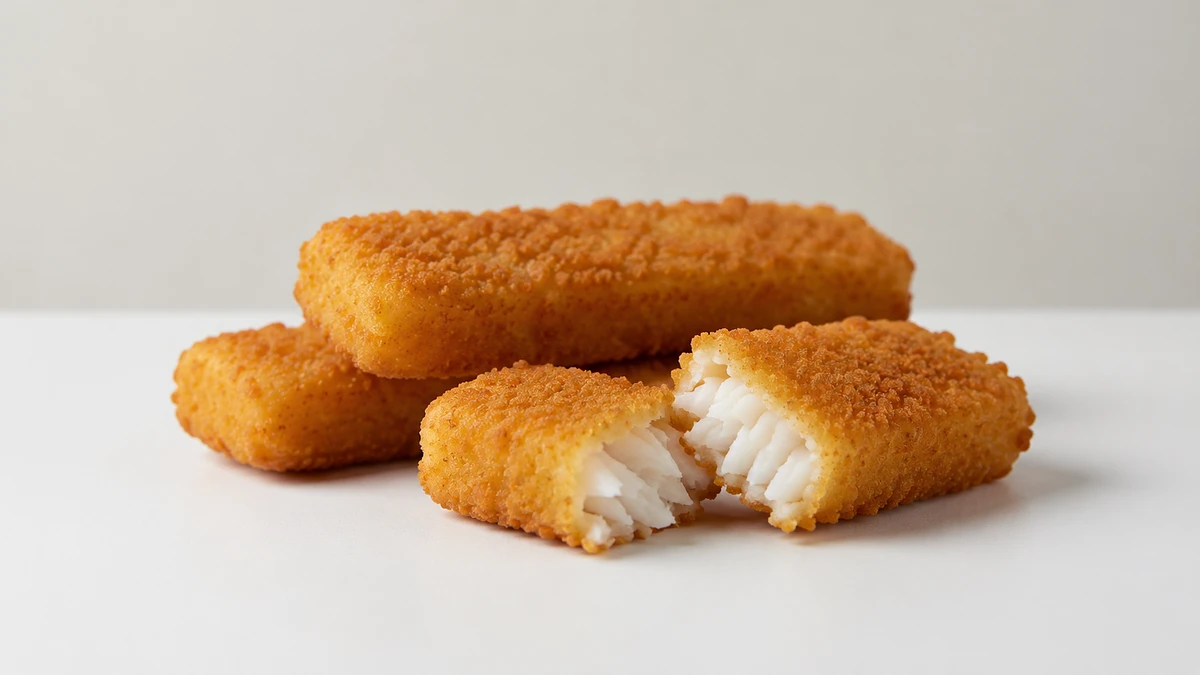
Fish sticks are a moderate choking risk. The fish inside is soft and flaky, but the coating is firm and takes more chewing than the fish does.
Cut sticks lengthwise into strips, and check each piece for bones as you go. See how to serve for age-by-age prep.
Allergens
Fish is a common food allergen, and the coating adds wheat - so a fish stick carries two allergens in one bite.[1]
Introduce plain cooked fish on its own before any breaded stick, so a reaction points to a single food. Once fish and wheat are both tolerated, sticks are an easy way to keep fish on the menu.[3]
As with any new food, start with a small amount and watch for a reaction.
If baby refuses
Fish sticks are often accepted by kids who turn down a plain fillet - the coating is milder and drier than fish on its own. If they're refused too, serve them with a dip. Plain yogurt with a squeeze of lemon gives a familiar flavor to land on.
Food safety
The fish inside is usually pollock or cod - low-mercury "best choices" on the FDA list, fine as one of a toddler's two fish servings a week.[4]
Many frozen sticks are raw fish inside a browned coating, so cook them as the package directs, until the fish flakes at 145°F.[5]
They're also salty for their size - compare labels, keep them occasional, and let plain baked fish do the regular job.[6]
How to serve
12+ months old
Cut lengthwise into strips
From 12 months, fish sticks can appear in occasional meals. Cut each stick lengthwise into two or three strips, check the fish inside is opaque and moist, and look for bones as you cut.
Make sure plain fish has been introduced on its own first - a breaded stick shouldn't be the first test of the fish allergen. Compare boxes for sodium; the range between brands is wide.
How to cook
Bake or air-fry as the package directs until the fish flakes and reaches 145°F - many sticks are raw fish inside the browned coating. Cool before cutting and serving.
2+ years old
Whole sticks with a dip
A stick or two, with bites taken
Toddlers can hold a whole stick now and bite pieces off. Serve with a squeeze of lemon or a dip - plain yogurt with lemon, mashed avocado, or a mild homemade tartar sauce - and keep sticks occasional rather than the weekly fish.
For the regular fish serving, this is a good age to bridge to homemade: strips of cod or pollock in breadcrumbs, baked, taste like the boxed kind with far less salt - and from there, plain baked fish is a short hop.
How to cook
For homemade, coat fish strips in flour, beaten egg, and breadcrumbs, then bake at 425°F until the coating is golden and the fish flakes at 145°F. A batch freezes well - cook from frozen like the store kind.
Tips
- Pollock is the fish in the box. Most fish sticks are Alaska pollock, sometimes cod or haddock - all low-mercury "best choices" on the FDA list. So the fish itself is a good one; it's the salt and coating that make sticks an occasional food rather than the regular.
- A dip does half the work. Plain yogurt with a squeeze of lemon, mashed avocado, or a mild homemade tartar sauce turns dinner into dunking - and dunking sells fish to toddlers better than any speech about omega-3s.