 HeySolids
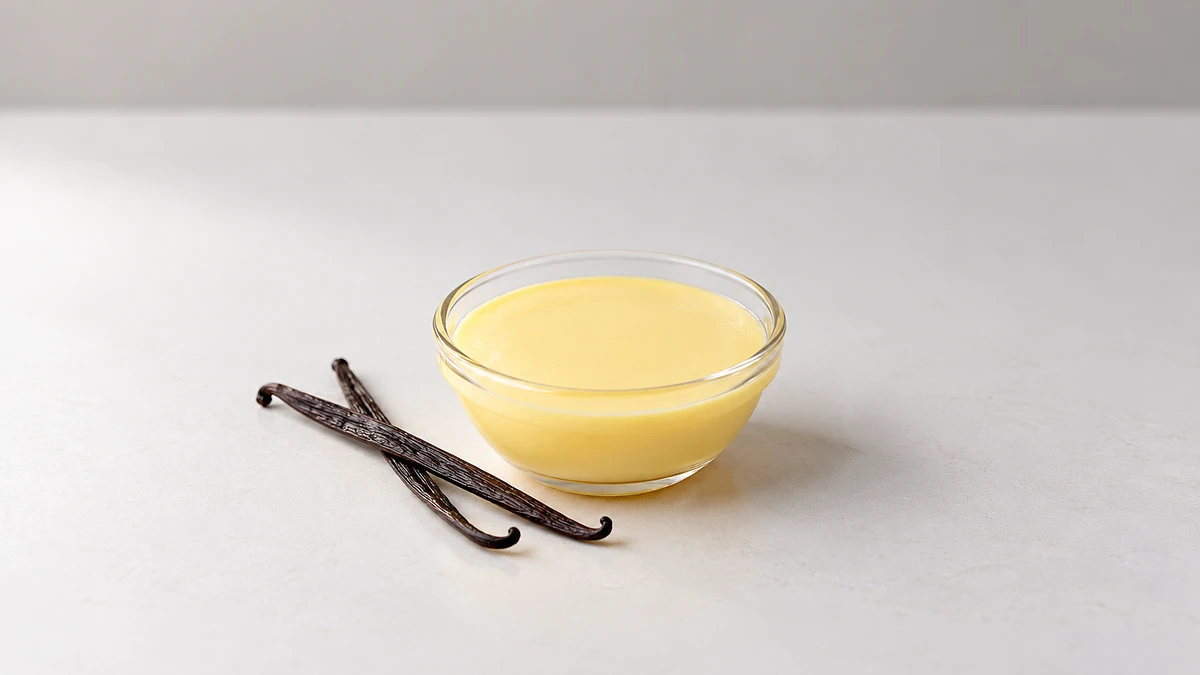
Can babies have custard?
Yes, if it’s homemade. Real custard is egg and milk, cooked gently until it thickens. Cooked egg and dairy are both fine from 6 months, and the smooth texture is easy for a baby to eat. Leave out the sugar and it becomes a simple first food rather than a dessert. Custard is an egg food, so offer egg on its own first.[1][2]
Store-bought versions are different. Pudding cups, cartons of ready-made custard and custard powder are thickened with cornstarch, often contain no egg, and have around a tablespoon of sugar in a small serving. They’re not for babies, and after age 2 they’re an occasional dessert. Flan and crème caramel are sugary by design.[3][4]
Choking risk
Custard is a low choking risk - a smooth, soft set with nothing to lodge.
Serve it warm rather than hot, and keep any fruit stirred through it soft and finely chopped. See how to serve for each age.
Allergens
Custard is egg and cow's milk - two of the most common food allergens in babies, in one bowl.[5][6][7]
If baby has had both already, custard is nothing new. If either is still to come, introduce it on its own first - a little scrambled egg, a spoon of yogurt - so a reaction can be pinned to one food; custard then becomes an easy way to keep both in the diet.[2]
As with any new food, start with a small amount and watch for a reaction.
Food safety
Cook it all the way through. Egg dishes need to reach 160°F to kill Salmonella. A stovetop custard is done when it coats the back of a spoon, and a baked one when a knife comes out clean. Never serve it with a runny center, and let it cool to warm before offering.[8]
Refrigerate leftovers within 2 hours and use them within 2 days. Don’t sweeten custard with honey before 12 months, or with sugar before age 2. Stir in mashed fruit for flavor instead.[9][3]
How to serve
6+ months old
Homemade unsweetened custard, thick enough to spoon
A few spoonfuls
Whisk one whole egg with half a cup of whole cow’s milk and a little alcohol-free vanilla. Cook gently, stirring, until it thickens and reaches 160°F, then let it cool to warm. Offer it on a pre-loaded spoon or let your baby dip their own. No sugar, no honey.
How to prepare
Use low heat and stir constantly. Or bake it in a small dish set in a water bath until a knife comes out clean. Leftovers keep for 2 days in the fridge.
12+ months old
Homemade custard with soft fruit stirred in
A small bowl
At this age, keep custard homemade and unsweetened. Stir in mashed banana, stewed apple or soft berries, squashed or cut small, for sweetness. Store-bought cartons and custard powder wait until age 2.
How to prepare
Make the same custard, cooked to 160°F, and stir the fruit in once it has cooled a little.
24+ months old
Ready-made custard or pudding as an occasional dessert
A small cup, now and then
From age 2, store-bought custard, pudding cups and custard made from powder can be an occasional dessert. Added sugar should stay under 10% of a child’s daily calories, so one small cup is plenty. Homemade is still the better everyday choice, with real egg and far less sugar.
How to prepare
Check the label for sugar per serving, and choose the plainest flavor.
Sources
- When, What, and How to Introduce Solid Foods - CDC
- When to Introduce Egg, Peanut Butter & Other Common Food Allergens - AAP HealthyChildren
- Dietary Guidelines for Americans 2020-2025 (birth-24 months: no added sugar/salt under 2) - USDA/HHS (PDF)
- Added Sugars and CV Disease Risk in Children (none under 2) - AHA, Circulation 2016
- Food Allergies (the 9 major US allergens) - FDA
- Egg - FARE
- Milk - FARE
- What You Need to Know About Egg Safety (cook egg dishes to 160°F) - FDA
- Botulism Prevention (no honey under 1) - CDC