 HeySolids
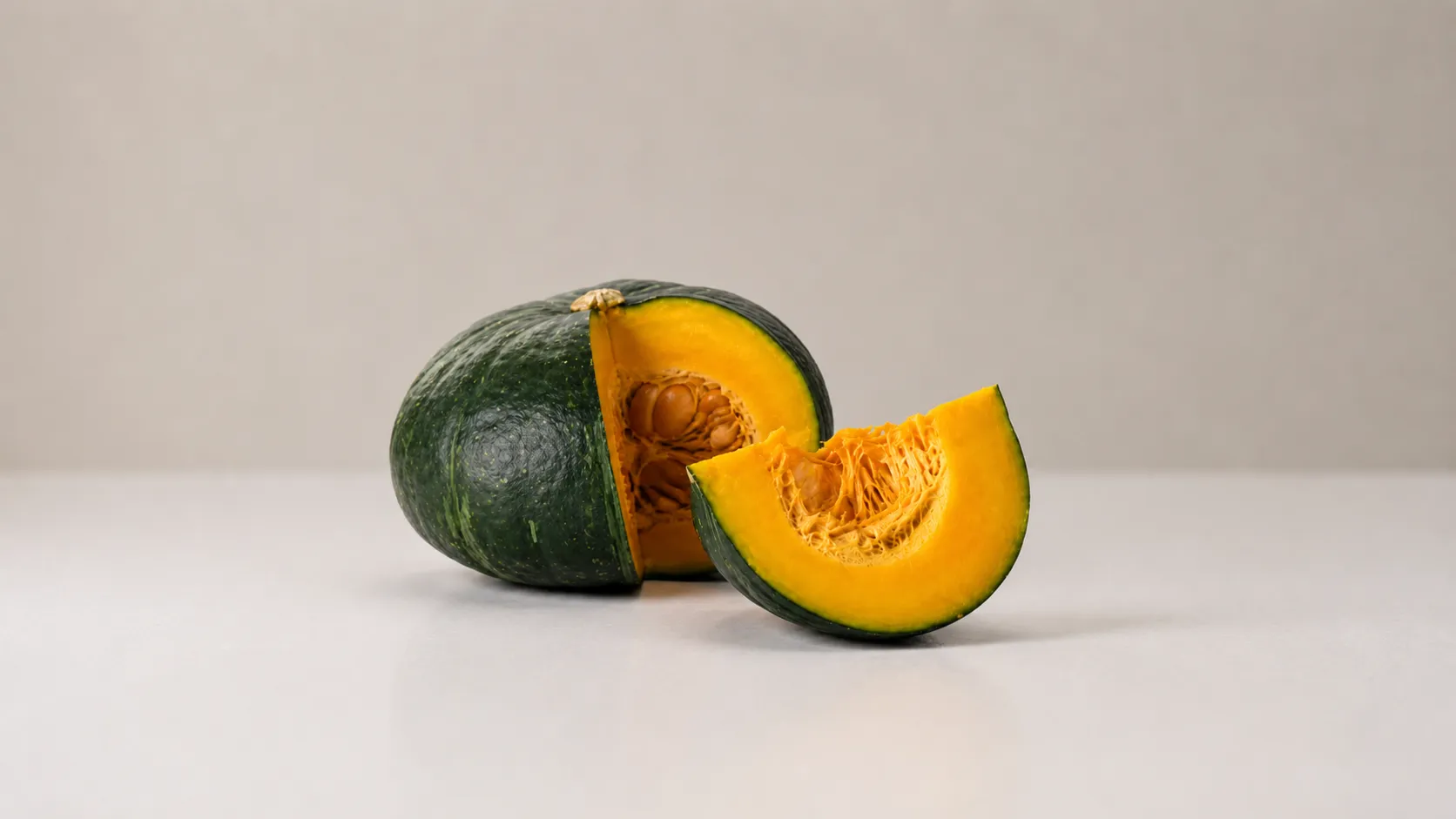
Choking risk
Squash is a low choking risk once it's cooked soft - the risk comes from firm, undercooked pieces.
Cook it until you can squash a piece between two fingers, then serve smooth mash or large soft wedges; skip firm chunks and round coins. See how to serve for age-by-age prep.
Allergens
Squash is not a common food allergen, so a true food allergy to it is rare.[2]
Start with a small amount and watch for a reaction.
If baby refuses
Serve it warm, not cold, and try stirring a little breast milk or formula into the mash. Mix it with a food baby already likes, like carrot or sweet potato, or offer it again in a day or two - new foods can take many tries.
How to serve
6+ months old
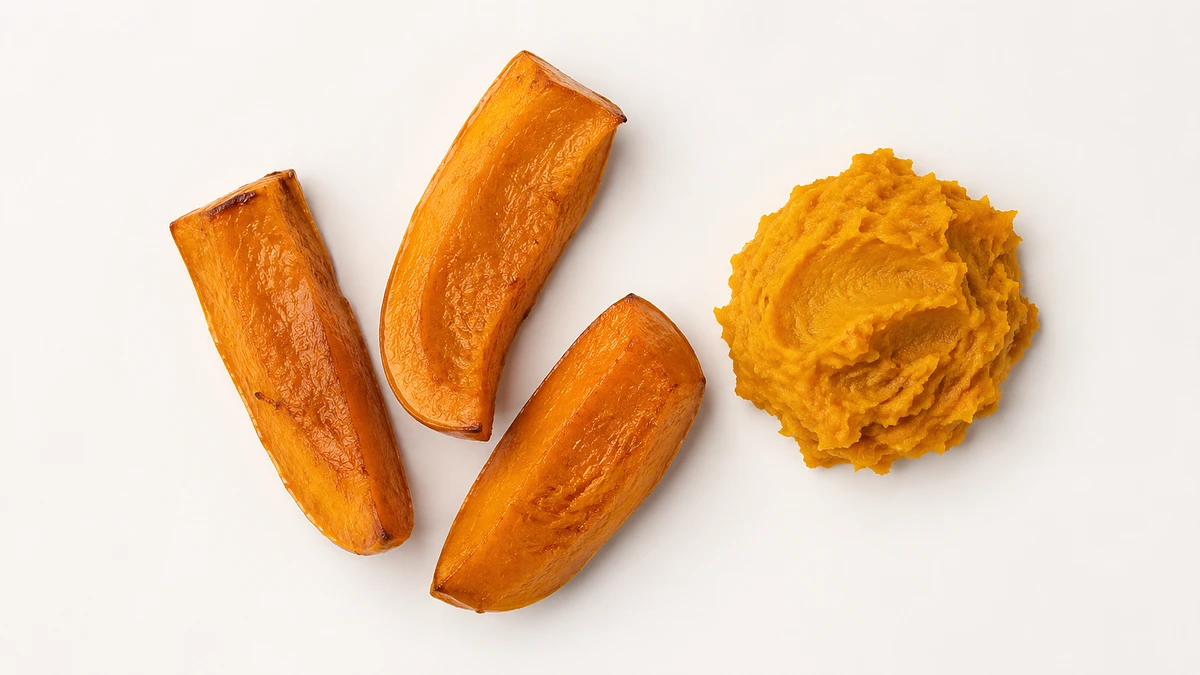
Large soft wedge or smooth mash
Wedge about the width of two adult fingers
Offer a large soft wedge for baby to grip and gnaw, or mash the cooked flesh smooth and serve it on a pre-loaded spoon. The skin is tough, so serve the flesh only. If a piece breaks off, stay calm and give baby a moment to move it forward.
How to cook
For winter squash, halve it, scoop out the seeds, and roast cut-side down at 400°F for about 30 to 40 minutes until fork-tender, then scoop out the flesh. Softer summer squash steams in 10 to 15 minutes. It's done when the flesh squashes easily between two fingers.
9+ months old
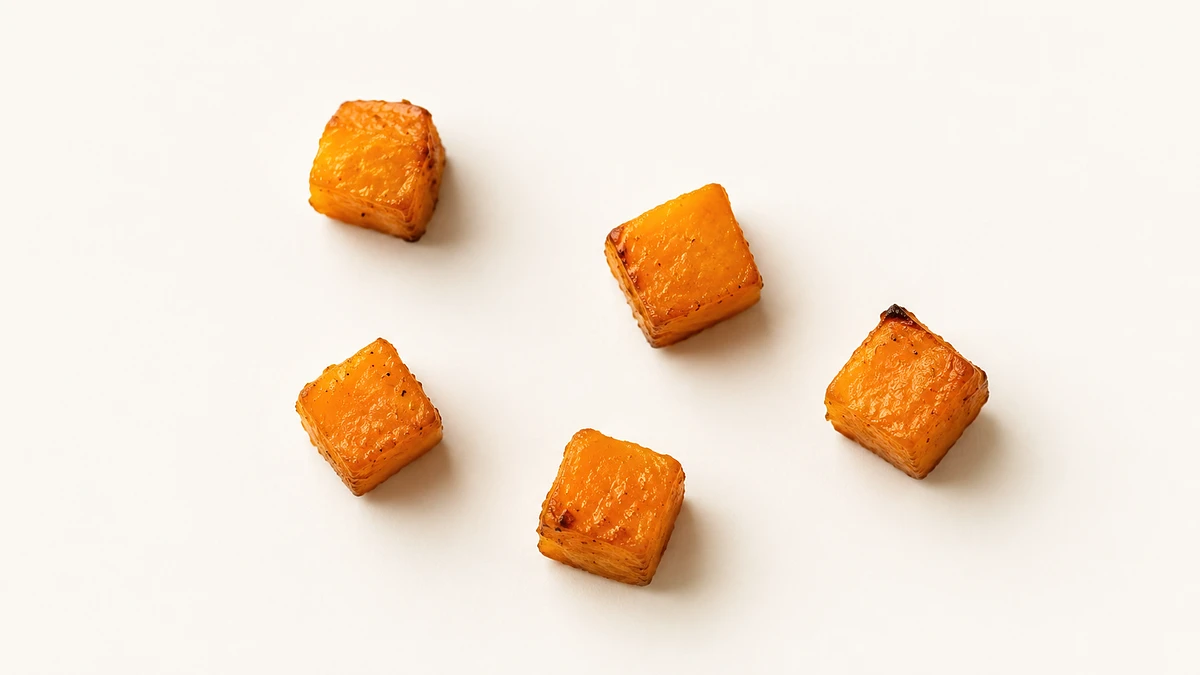
Small soft pieces
Bite-sized pieces, about 1/2 inch
Cut into small soft pieces for pincer-grasp practice, or keep offering a larger wedge alongside. It also mashes well with a little texture, stirred into oatmeal or mixed with soft-cooked lentils or chickpeas.
How to cook
Roast peeled chunks at 400°F for about 20 to 25 minutes, or steam until tender. Pieces should still squash easily between two fingers.
12+ months old
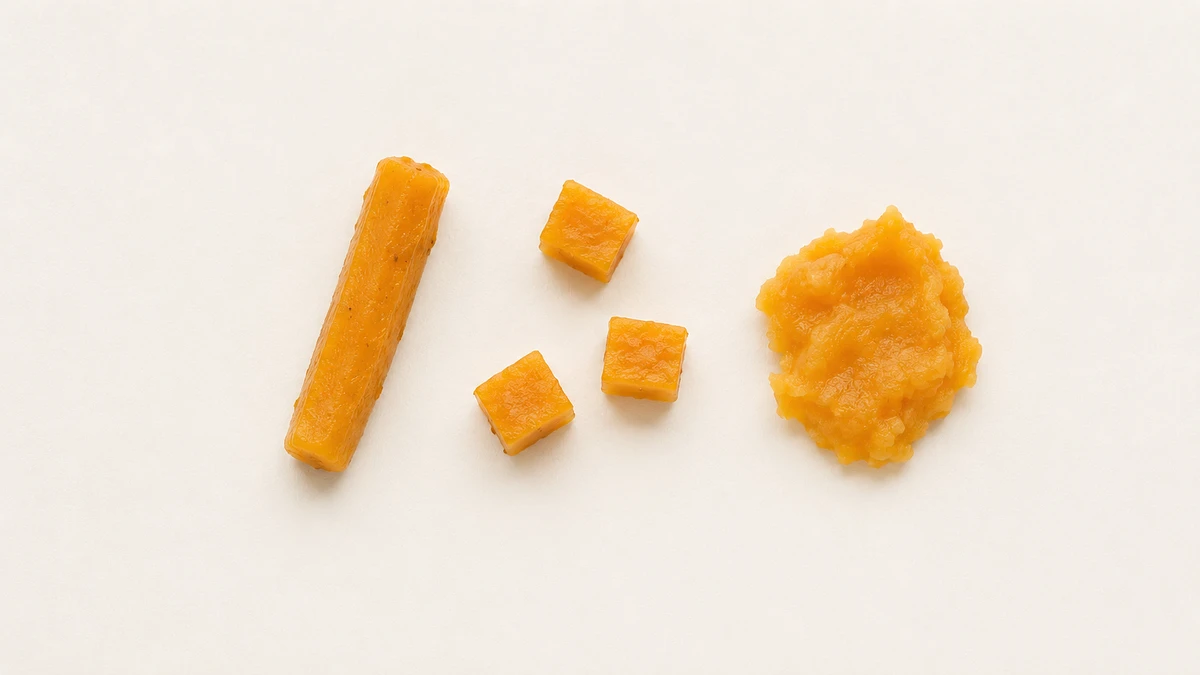
In family meals
Bite-sized or as served
Offer bite-sized pieces alongside a fork for utensil practice. Squash fits easily into family meals now - roasted wedges, mashed next to chicken or fish, or stirred into soups, risotto, pasta sauces, and curries. Mild spices like cumin, cinnamon, and nutmeg work well.[
How to cook
Roast at 400°F, steam, boil, or microwave depending on the dish. With more chewing skill you can leave a little more texture, but keep pieces soft and bite-sized.
Tips
Microwave it first to beat the peel. Raw butternut is the toughest peeling job in the kitchen - pierce the skin a few times and microwave the whole squash for 2 to 3 minutes, and the skin softens enough to peel safely. Or skip peeling entirely: roast it in halves and scoop.