 HeySolids
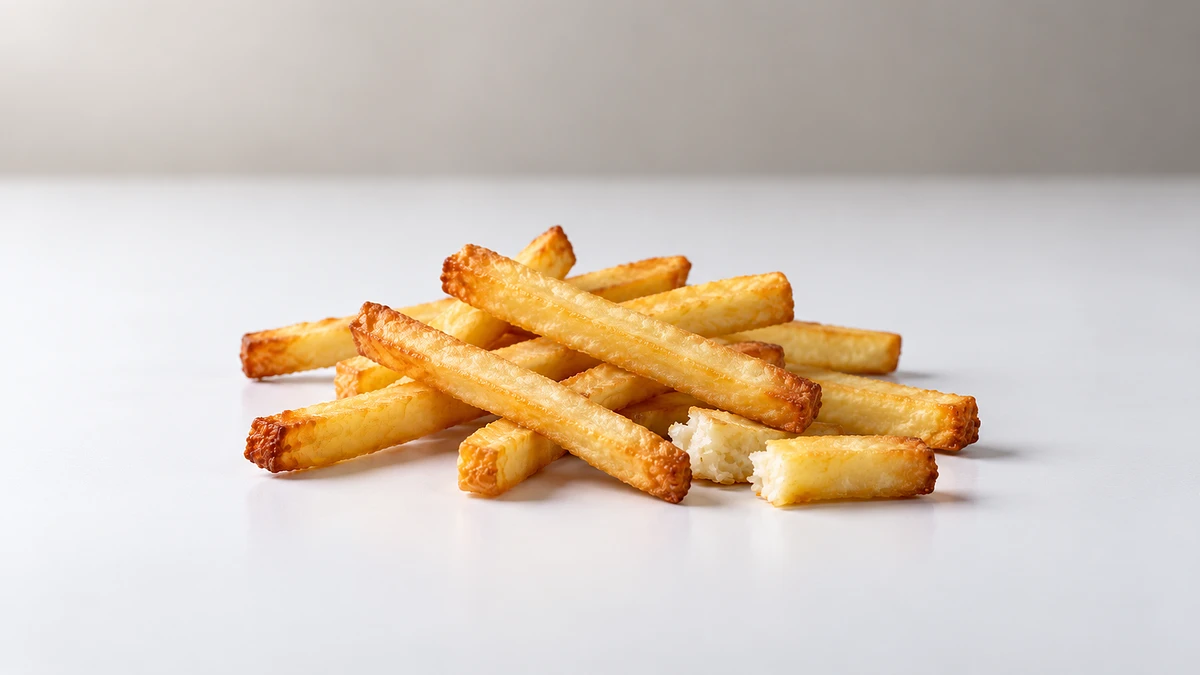
Can babies have french fries?
Not before 12 months, and after that only once in a while.
The problem is salt. Fries are deep-fried and salted, and a small fast-food serving (about 2.5 oz) has around 150 mg of sodium. Between 7 and 12 months, a baby’s guide for the whole day is 370 mg.[1][3] The CDC advises keeping salty foods away from young children, and the Dietary Guidelines note that a taste for salt may start early in life.[4][5]
If you want something fry-shaped, bake soft potato wedges in the oven with no salt.
From 12 months the daily guide rises to 800 mg, so a few plain fries now and then are fine.[3] Keep plain potato as the everyday side and fries as the occasional extra. Sweet potato fries get the same answer. Tater tots are firmer and saltier, so cut them up.[2][1]
Choking risk
French fries are a moderate choking risk - a soft fry squashes easily, but crisp ends and dark, hard fries behave like the potato chips on the CDC's hazard list, and a tater tot is a firm, nugget-sized lump that can lodge whole.
Offer only the soft fries, halved, leave the crisp ends off the plate, and quarter tater tots lengthwise. See how to serve for age-by-age prep.
Allergens
French fries are not a common food allergen, so a true allergy to them is rare.[8]
Fast-food fries aren’t always just potato. McDonald’s fries in the US, for example, contain a natural beef flavor made with wheat and milk.[9] Fries are also often cooked in the same oil as breaded chicken, which FARE uses as a classic example of cross-contact.[7] If your child has a known allergy, check the chain’s allergen page before ordering, and read the label on seasoned or battered fries for wheat.[8]
Start with a small amount and watch for a reaction.
Food safety
Salt is the main reason to wait. Nine tater tots have about 450 mg of sodium. That’s more than a baby’s whole-day guide of 370 mg, and more than half of a toddler’s 800 mg. When you do buy frozen potato products, the Dietary Guidelines suggest picking low-sodium versions where you can.[2][3][5]
There’s also acrylamide, a chemical that forms when plant foods are cooked at high heat. Fried potatoes produce the most of it. The FDA suggests cooking frozen fries until golden yellow rather than brown, because the brown bits hold more acrylamide, and eating fewer fries and potato chips overall.[6] It’s one more reason to keep fries an occasional thing.
How to serve
Up to 12 months old
Skip fries and tots - offer soft unsalted baked wedges instead
Skip restaurant, fast-food and frozen fries in the first year. They’re salty and oily, and crisp ends and tot-sized pieces are a choking risk.
What to offer instead
Soft, unsalted potato wedges baked in the oven give your baby the same easy-to-hold shape. Cut a potato into wedges about the width of two adult fingers, toss them in a little olive oil, and bake until a wedge squashes easily between your fingers. Sweet potato works the same way.
12+ months old
A few plain soft fries, halved; tots quartered lengthwise
From 12 months, a small handful of plain, soft fries is fine now and then at a family meal. Halve each one, skip the crisp dark ones, and let them cool to warm. Tots are firm and nugget-shaped, so quarter each one lengthwise.
2+ years old
A small side at a family meal, still the exception
A child-sized handful; soft fries halved, tots still quartered
From 2, fries can be an occasional small side: a child's handful of the softer ones, halved, with tots still quartered. The sodium guide for 1 to 3 years is 800 mg a day, with advice to cut back if intake runs above 1,200 mg; a medium fast-food order carries about 250 mg.
How to serve
Share one order. Split a single portion across the table rather than getting your child their own carton.
Pick the lowest-sodium bag. For frozen fries at home, compare labels and bake them until golden yellow, not brown, as the FDA advises to cut acrylamide.
Tips
- Ask for them unsalted. Many places will cook a fresh batch without salt if you ask. If not, shake a few fries in a napkin before giving them to your child.
- Soak homemade fries first. Soaking cut potatoes in water for 15 to 30 minutes before roasting lowers acrylamide. Drain and pat them dry before they go in the oven.[6]
Sources
- Fast foods, potato, french fried in vegetable oil (FDC 170698; small 71 g: about 150 mg sodium, 10.4 g fat) - USDA FoodData Central
- Ore-Ida Golden Tater Tots, Kraft Heinz (FDC 1727638; potatoes, vegetable oil blend, salt; 9 pieces / 86 g: 450 mg sodium, 8 g fat) - USDA FoodData Central
- Dietary Reference Intakes for Sodium and Potassium (AI 370 mg at 7-12 months, 800 mg at 1-3 years; CDRR 1,200 mg at 1-3 years) - National Academies 2019
- Foods and Drinks to Avoid or Limit (honey, added sugar, salt) - CDC
- Dietary Guidelines for Americans 2020-2025 (birth-24 months: no added sugar/salt under 2) - USDA/HHS
- Acrylamide and Diet, Food Storage, and Food Preparation (fry to golden yellow, soak potatoes 15-30 minutes) - FDA
- Prevent Cross-Contact poster (deep fryers and cooking oils) - FARE 2023
- Food Allergies (the 9 major US allergens) - FDA
- World Famous Fries ingredients and allergens (Natural Beef Flavor with hydrolyzed wheat and milk; Contains: Wheat, Milk) - McDonald's US