 HeySolids
Choking risk
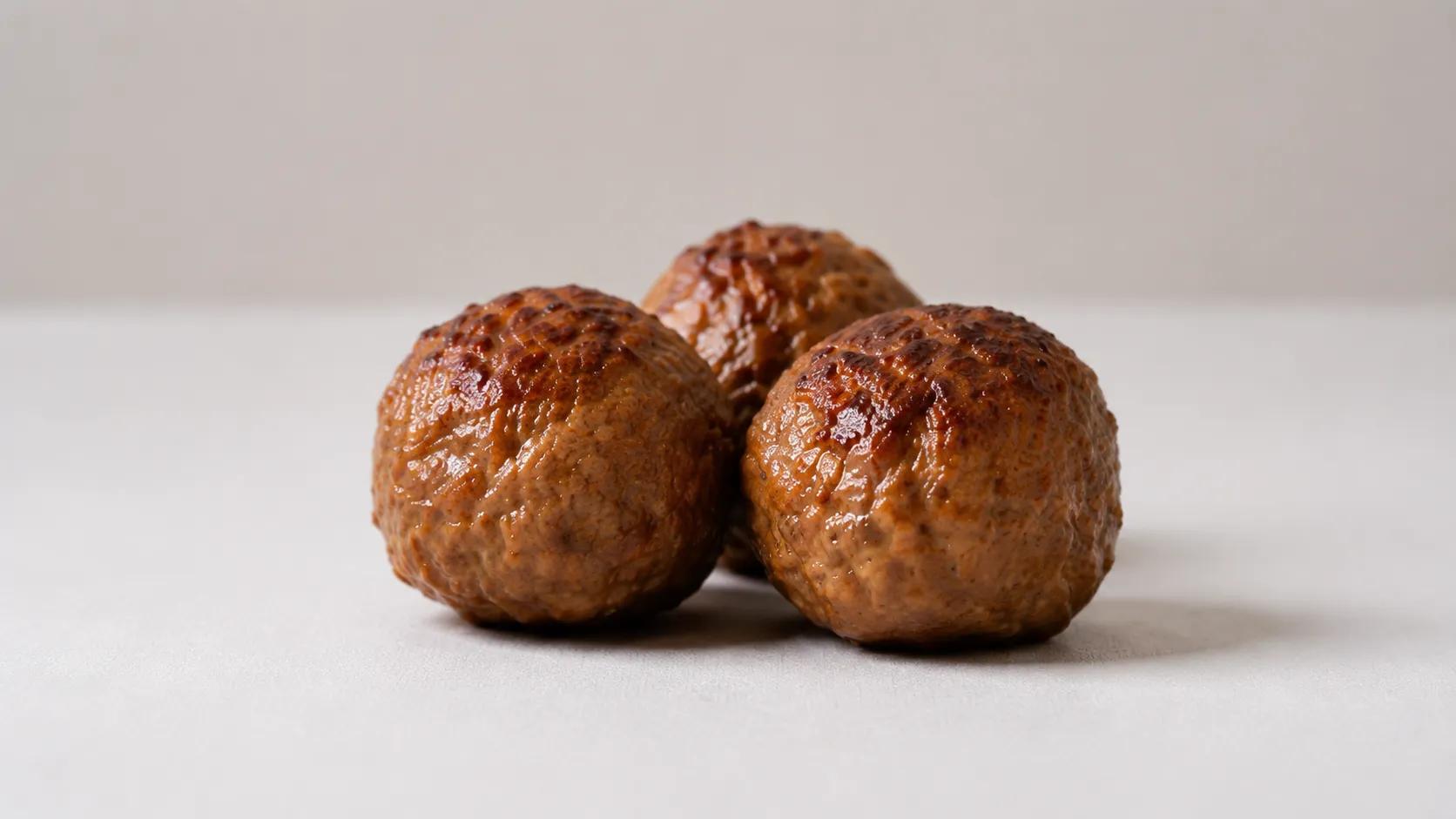
A whole, round meatball is a moderate choking risk - the firm, bite-sized ball can block a small airway.
Never serve a whole round ball: squash, flatten, or quarter it so it is no longer ball-shaped. See how to serve for how to prep at each age.
Allergens
Meat is not a common allergen, but most meatballs add wheat from breadcrumbs, egg as a binder, and milk to soak them, all common allergens.[2]
Introduce wheat, egg, and any milk or cheese one at a time, so a reaction points to one food and check store-bought labels.[3]
Offer each allergen on its own, start with a small amount, and watch for a reaction. Once your baby is comfortable with it, keep it in their regular diet.[4]
If baby refuses
Meatballs usually get refused when dry, so simmer them in a tomato or vegetable sauce, fold in grated vegetables or ricotta to keep them soft, and stir small pieces through a familiar pasta or mash.
Food safety
Cook meatballs to 160°F - grinding spreads surface bacteria through the meat, so they can never be served pink.[5]
Use a thermometer or check they are steaming hot, with no pink meat and with clear juices, then cool to lukewarm. After raw meat, wash hands, boards, and utensils and keep it from ready-to-eat food.[6]
How to serve
6+ months old
Flattened patty, or a graspable patty to hold
Never offer a whole, round meatball at this age. Flatten a soft meatball into a little patty so it is no longer ball-shaped, or press a portion of the mix into a finger-length patty baby can hold in the fist and gnaw.
Keep baby's batch unsalted and bind it with milk-soaked breadcrumbs and an egg so it stays soft. Simmering in a tomato or vegetable sauce keeps everything moist and easy to manage.
How to cook
Mix ground meat with milk-soaked breadcrumbs, egg, and grated vegetables (no salt), shape, and bake or simmer in sauce until very soft. Check that they are steaming hot, with no pink meat and with clear juices, then cool to lukewarm.[5]
9+ months old
Quartered into small soft pieces
About 1/4 inch pieces
Quarter soft meatballs into small pieces for the developing pincer grasp, still never serving a whole round ball as covered in the choking risk section. Keeping the pieces in a little sauce that makes them moist and easier to chew.
How to cook
Cook all the way through until it's steaming hot, with no pink meat , then quarter into small pieces. Simmering in a tomato or vegetable sauce keeps them tender.[5]
12+ months old
Quartered or halved soft pieces
Bite-sized soft pieces, about 1/2 inch
Keep cutting meatballs into quarters rather than offering a whole round ball, which stays a choking shape well into toddlerhood, and encourage bites and fork practice. Keep baby's portion low in salt.
How to cook
Cook to 160°F and serve with pasta, in soup, or alongside vegetables, cut into halves or quarters. A tomato or vegetable sauce keeps them soft and moist.[5]
Sources
- Choking Hazards (Infant & Toddler Nutrition) - CDC
- Food Allergies (the 9 major US allergens) - FDA
- When to Introduce Egg, Peanut Butter & Other Common Food Allergens - AAP HealthyChildren
- Wheat - FARE
- Ground Beef and Food Safety (cook to 160°F) - USDA FSIS
- Safe Minimum Internal Temperature Chart - USDA FSIS
- When, What, and How to Introduce Solid Foods - CDC
- Meatballs, beef, cooked (FDC 2706876) - USDA FoodData Central