 HeySolids
Choking risk
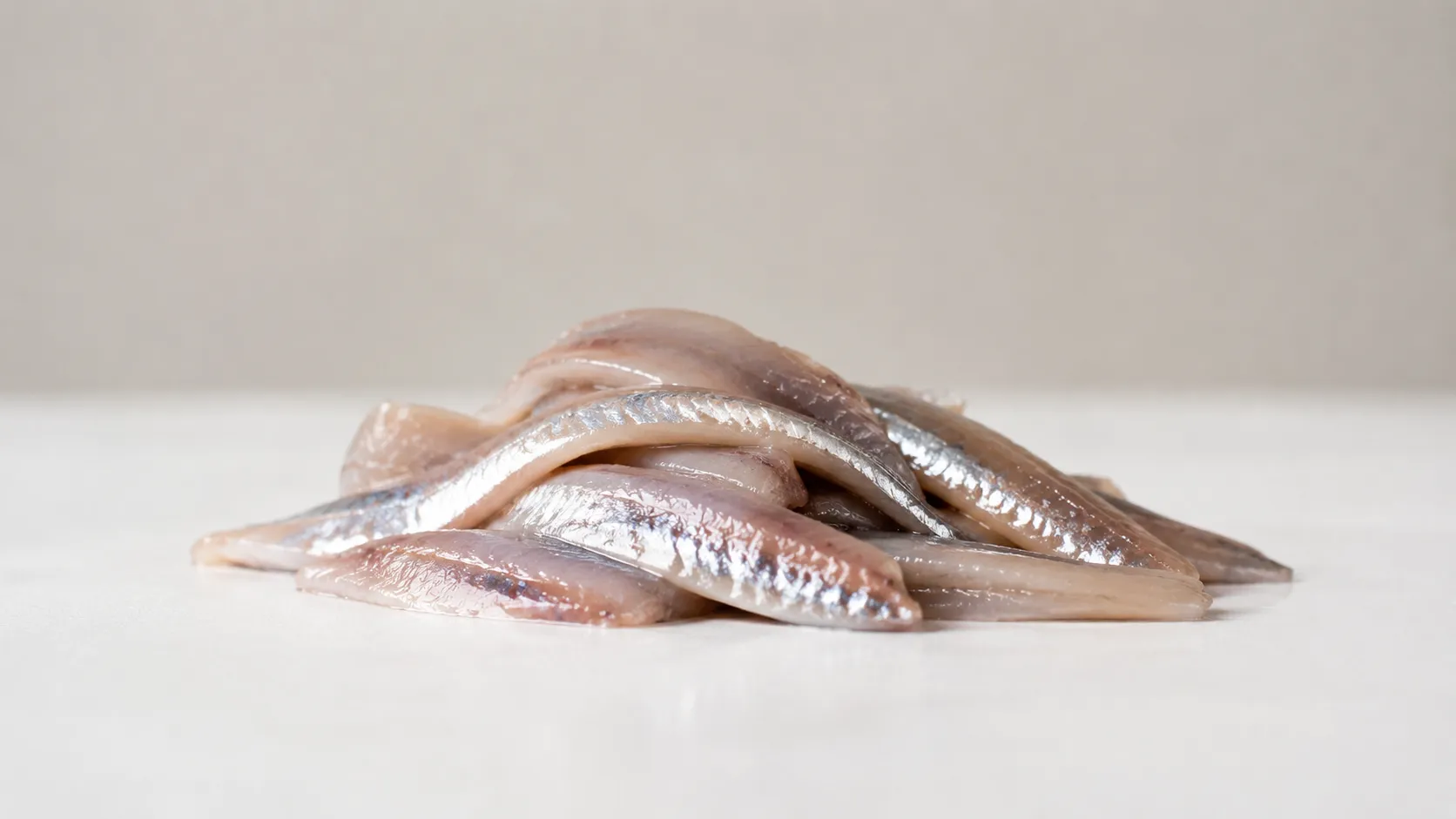
Anchovies are a moderate choking risk for babies - the flakes are soft, but the small bones need managing.
Flake cooked anchovy finely, remove every bone, and serve it moist. See how to serve for age-by-age prep.
Allergens
Anchovy is a fish, and fish is a common food allergen. There's no reason to delay fish itself, though - waiting doesn't prevent allergies, and allergens can start alongside other solids from around 6 months.[2]
Fish and shellfish are separate allergens, so doing fine with one doesn't tell you anything about the other - though fish do run together: a reaction to one fish usually means checking with your pediatrician before trying others.
If your baby has severe eczema or an existing food allergy, check with your pediatrician before starting allergens.
Introduce fish as a plain, mild one first - tilapia, trout, or salmon, well cooked and finely flaked - not as anchovy, which is a cured, salty food best kept for later.
Once fish is comfortably in the diet, anchovy counts as the same allergen - no separate introduction needed, just the trace amounts this card describes, from the age given below.[3] Keep fish in the diet a few times a week.
If baby refuses
Anchovy is the strongest flavor in the fish family - salty, intense, a punch. If it's refused, don't fight it: sardines and mackerel carry the same omega-3s and calcium with far milder taste, and they're the better everyday fish anyway. Where anchovy earns its keep is dissolved - a tiny rinsed fragment melted into a tomato sauce disappears as fish and stays as savory depth.
Food safety
Anchovy comes two ways, and they're different foods. Fresh anchovies are small oily fish like sardines - cook them to 145°F, opaque and flaking, never raw or undercooked, and babies are more vulnerable to food poisoning than adults.
Tinned and cured anchovies are a salt product: the cure runs all the way through, so rinsing helps only a little, and they're too salty to be a food for a baby at all.[5]
From 12 months, a tiny rinsed fragment dissolved into a family dish works as a flavor - one fillet seasons a whole pot of sauce. Anchovies are among the lowest-mercury fish you can buy, so the fresh kind can be a regular fish.[6]
How to serve
6+ months old
Smooth mashed paste, fresh and low-salt
A thin layer on a finger food, or stirred into a scoopable food
Cook fresh anchovies through, lift out the spine - it comes away in one piece from a cooked fish - and mash the flesh into mashed potato or avocado to keep it moist.
The fine soft bones that remain can mash right in, like a sardine's: they're where the calcium is. Peel off the skin first if it comes away easily; on a fish this small it's thin enough to leave. Fresh only at this age - the tinned and cured kind is a salt product, and it waits.
How to cook
Bake, grill, or pan-fry fresh anchovies until opaque and flaking easily all the way through - 145°F - and never serve them raw or undercooked. Babies are more vulnerable to food poisoning than adults. Cool to lukewarm, lift out the spines, and mash.
9+ months old
Soft flakes stirred into dishes
Small flaked pieces, mixed through a soft dish
As the pincer grasp develops, stir finely flaked fresh anchovy through mashed potato, pasta, or cooked grains, kept moist with a little yogurt or olive oil - and small soft flakes work for picking-up practice too. Lift out the spine - it comes away in one piece from a cooked fish - and the fine soft bones that remain can mash right in.
Fresh only still: the tinned and cured kind is a salt product, and it waits.
How to cook
Bake, grill, or pan-fry fresh anchovies until opaque and flaking easily all the way through - 145°F - and never serve them raw or undercooked. Babies are more vulnerable to food poisoning than adults. Cool to lukewarm, lift out the spines, and flake.
12+ months old
Small amounts in low-salt family meals
A small flaked amount, or a trace of cured
Offer flaked fresh anchovy in family meals - stirred through pasta or mixed into a tomato sauce.
The cured fillet gets its turn now too: rinse one well and melt it into the sauce as it cooks, where it dissolves completely - one fillet seasons a whole pot, and that's the right dose, since even rinsed it stays a salty food.
Salt stays low after 12 months, so cook the sauce without added salt and season the grown-ups' bowls at the table. For fresh anchovy, lift out the spine and let the fine soft bones mash in.
How to cook
Bake, grill, or pan-fry fresh anchovies until opaque and flaking easily all the way through - 145°F - and never serve them raw or undercooked. Babies are more vulnerable to food poisoning than adults. Cured fillets aren't cooked again - rinse well, then melt one into the sauce early so it dissolves as the pot simmers.
Sources
- Choking Hazards (Infant & Toddler Nutrition) - CDC
- Fish - FARE
- When to Introduce Egg, Peanut Butter & Other Common Food Allergens - AAP HealthyChildren
- When, What, and How to Introduce Solid Foods - CDC
- Foods and Drinks to Avoid or Limit (honey, added sugar, salt) - CDC
- EPA-FDA Advice about Eating Fish and Shellfish (Best/Good/Avoid chart) - EPA
- Advice About Eating Fish - FDA
- Fish, anchovy, european, raw (FDC 174182) - USDA FoodData Central