 HeySolids
Choking risk
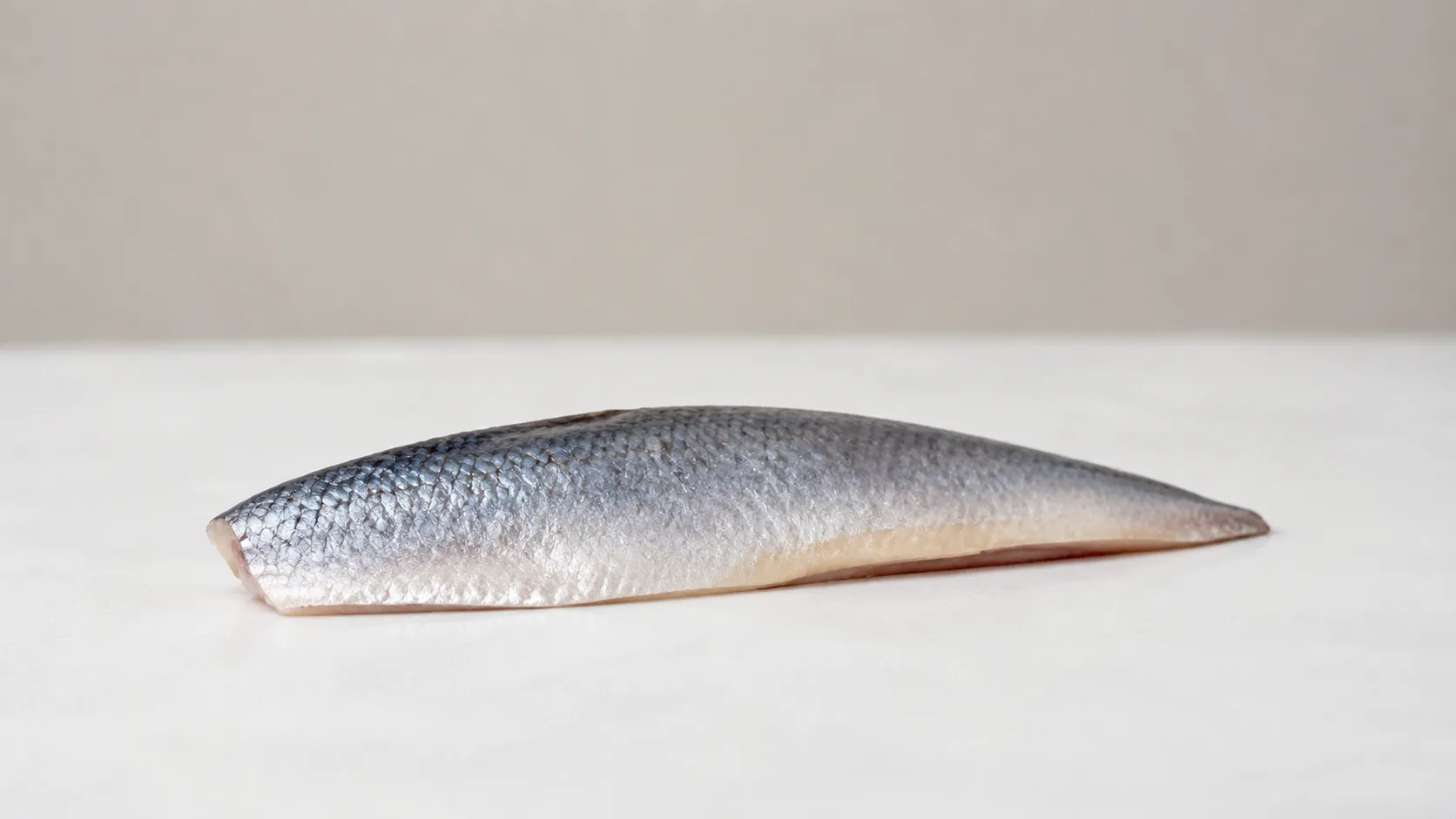
Herring is a moderate choking risk - the hazards are bones, tough skin, and dry, overcooked pieces that are hard to swallow.
Cooked through, the spine lifts out in one piece, and the fine soft bones that remain can mash right in, like a sardine's. Peel off the skin, flake the fish, and keep it moist with a little sauce, oil, or yogurt. See how to serve for age-by-age prep.
Allergens
Herring is a fish, and fish is a common food allergen. There's no reason to delay it, though - waiting doesn't prevent allergies, and allergens can start alongside other solids from around 6 months.[1]
Fish and shellfish are separate allergens, so doing fine with one doesn't tell you anything about the other - though fish do run together: a reaction to one fish usually means checking with your pediatrician before trying others.
If your baby has severe eczema or an existing food allergy, check with your pediatrician before starting allergens.
Start with about 1/4 teaspoon of well-cooked, finely flaked fresh herring mixed into a familiar food, earlier in the day, not near bedtime. Wait 10 minutes, and if all looks well, carry on with the meal. Watch for a reaction over the next couple of hours. Build up gradually from there, and keep fish in the diet a few times a week.[2]
If baby refuses
Herring is a rich, oily fish, and the flavor can be a lot at first. Stir the flakes into mashed potato or pasta, or bake them into soft fish cakes made without added salt. If it keeps coming back, sardines carry the same oils with a milder taste - start there and work up. Keep offering it - tastes change with repeat tries.
Food safety
Cook fresh herring until opaque and flaking easily all the way through - 145°F - and never serve it raw or undercooked. Babies are more vulnerable to food poisoning than adults.
Herring also needs to stay cold from the store to the pan. Here's why: when oily fish sits at room temperature, bacteria on the flesh produce histamine - the same compound involved in allergic reactions - and once it forms, no amount of cooking removes it. A child who eats that fish can develop flushing, hives, or an upset stomach that looks exactly like a fish allergy, even though it isn't one. The prevention is simple: buy herring very fresh or frozen, refrigerate it as soon as you're home, keep it cold until it's cooked, and don't serve fish that's been left sitting out.[5]
Pickled, smoked, and cream herring are a different matter - they're cured, salty foods, better saved for later childhood and mostly for the grown-ups. Fresh herring, though, is among the lowest-mercury fish you can buy, so it can be a regular fish.[4]
How to serve
6+ months old
Flaked into a soft food, or a finger-sized piece
Stirred into mash, or a piece about the width of two adult fingers
Flake well-cooked herring and stir it through a mild, scoopable food like mashed potato, then offer it on a pre-loaded spoon. A finger-sized piece of the cooked fish, about the width of two adult fingers, also works for baby to grip and gnaw.
Flake the fish through with your fingers to find and remove every pin bone, and take off the skin. Use fresh or frozen herring, not smoked kippers or pickled rollmops.
How to cook
Bake, grill, or pan-fry to 145°F until the fish is opaque and flakes easily. Cool to lukewarm, then flake and check carefully for bones.
9+ months old
Small flakes or soft low-salt fish cakes
Bite-sized soft pieces, or a finger-length strip to hold
As baby's pincer grasp develops, offer small flakes or bite-sized soft pieces of cooked herring for picking-up practice. Soft homemade fish cakes, made without added salt, mellow the strong flavor. Stir flakes into mashed potato or a little olive oil to keep them moist.
Keep flaking through and removing every pin bone, and take off the skin. Stick to fresh or frozen herring rather than smoked or pickled, which are high in salt.
How to cook
Bake, grill, or pan-fry to 145°F until opaque and flaking, then cool and flake into pieces.
12+ months old
Small soft pieces, flakes, or fish cakes
Bite-sized soft pieces, or flaked into dishes
Offer small soft pieces or flakes of cooked herring on their own or mixed into family dishes like fish cakes, pasta, and traybakes, and let your toddler practice with a fork. Keep it moist and avoid dry, firm pieces.
Still flake through and remove every pin bone. Keep to plain fresh or frozen herring rather than smoked kippers or pickled rollmops, which are high in salt.
How to cook
Bake, grill, pan-fry, or poach to 145°F as part of a family meal, cooked until opaque and flaking, with all bones removed.
Sources
- Fish - FARE
- When to Introduce Egg, Peanut Butter & Other Common Food Allergens - AAP HealthyChildren
- When, What, and How to Introduce Solid Foods - CDC
- Advice About Eating Fish - FDA
- Scombrotoxin Poisoning and Decomposition (oily fish histamine) - FDA
- Fish, herring, Atlantic, cooked, dry heat - USDA FoodData Central