 HeySolids
Can babies have artificial sweeteners?
No. Not because any one sweetener is known to be dangerous, but because there’s no reason to use them and some reasons not to. The current Dietary Guidelines say no amount of added sugar or non-nutritive sweeteners is part of a healthy diet, and the expert consensus on drinks for children up to age 5 rules out sweetened drinks of either kind. The AAP’s review found that the long-term effects of sweeteners on children simply aren’t known.[1][2][3]
The practical concern is taste. A baby’s sense of what food should taste like is forming now, and sucralose, stevia or aspartame push it toward sweet just as sugar does, without the fiber and nutrients that come with fruit. Sugar alcohols like xylitol, sorbitol and erythritol bring a second problem: in small bodies, they often cause gas and loose stools.
They show up in diet and “zero” sodas, sugar-free drink mixes and flavored waters, light yogurts, sugar-free gelatin and syrups, some chewing gum, and children’s gummy vitamins. “No added sugar” on a label often means a sweetener has been used instead, so check the ingredient list.[4]
Why to avoid sweeteners
They teach a taste for sweet without adding any nutrition. Sugar is kept out of a baby’s diet partly to protect their teeth and partly so plain foods taste normal to them. A sweetener solves the teeth problem but not the taste one.
The science isn’t settled. The FDA allows aspartame, sucralose, acesulfame K, saccharin, neotame, advantame, stevia extracts and monk fruit as safe at normal intakes, but almost none of that testing was done in young children.[4] The AAP and the American Heart Association both advise against regular sweetened drinks for children until more is known, and the AHA recommends against children drinking them over long periods.[3][6]
What to offer instead is simple: water and milk as drinks, and fruit for something sweet. If your child has a sip of a diet drink at a party, it’s not a problem, but it’s not a habit to build, and drinks with sweeteners are best avoided until age 5.[2]
Choking risk
Sweeteners are a low choking risk - they're liquids, powders or dissolved into food.
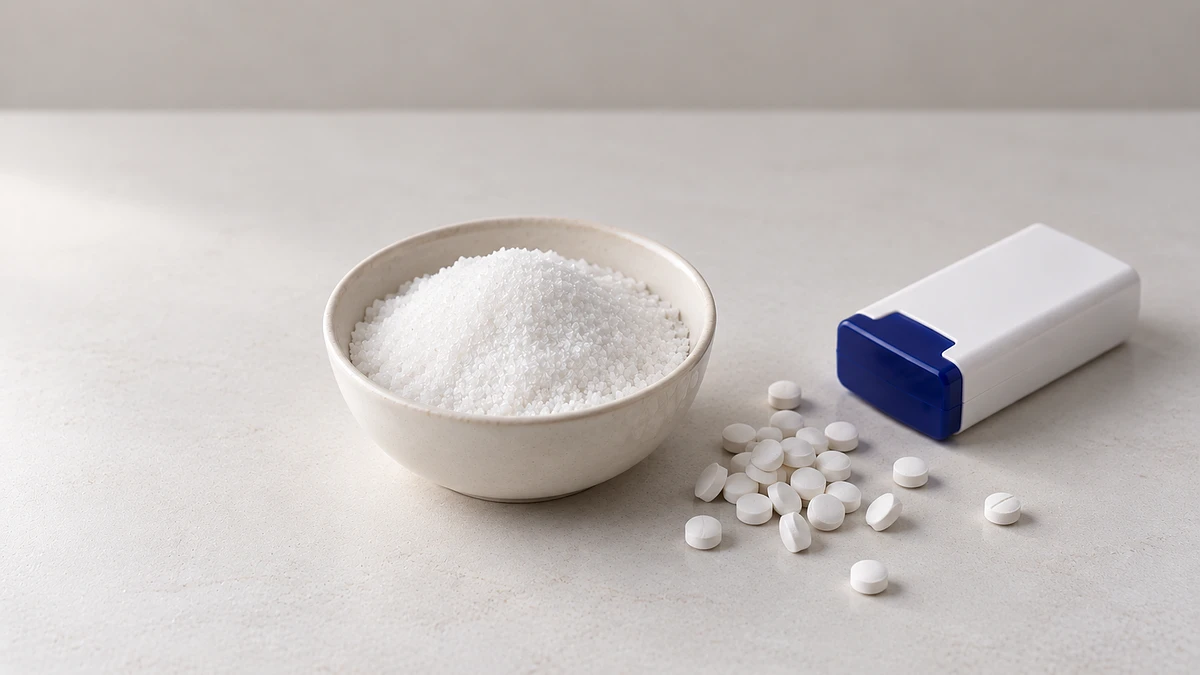
The one physical hazard is the tablets: sweetener tablets and sugar-free mints are small and hard, so keep the dispenser out of reach. See how to serve for what to use instead at each age.
Allergens
Artificial sweeteners are not food allergens, so there's no allergic reaction to watch for.[5]
The one medical warning is about aspartame, which contains phenylalanine. Babies with PKU (phenylketonuria), a rare inherited condition where the body can’t break down phenylalanine, must avoid it. PKU is picked up by the routine newborn blood screen, and it’s why products with aspartame carry a phenylalanine warning. For every other child, the reason to skip sweeteners is about diet, not safety.[4]
How to serve
Up to 24 months old
No sweeteners - water, milk and fruit cover sweet
Skip anything sweetened with sucralose, stevia, aspartame, saccharin, acesulfame K, monk fruit or sugar alcohols. It’s the same rule as for added sugar, for the same reason: they teach a taste for sweet. Sugar alcohols can also cause gas and loose stools. Check products labeled “no added sugar”, like drink mixes, flavored water, light yogurt and sugar-free gelatin, since they often contain a sweetener instead.
How to prepare
Sweeten with food instead: mashed banana or pear in oatmeal, or a spoonful of fruit purée in plain yogurt.
24+ months old
Still not needed, but a sip is no emergency
The Dietary Guidelines don’t count sweeteners as part of a healthy diet at any age, and the experts’ advice on drinks for children under 5 rules out sweetened drinks of any kind. Water and milk stay the drinks. A taste of someone’s diet soda now and then won’t hurt, but a daily sugar-free drink is the habit to avoid.
How to prepare
When your child wants something sweet, offer whole fruit, plain yogurt with fruit, or a small cup of milk.
Sources
- Dietary Guidelines for Americans 2025-2030 (no amount of added sugars or non-nutritive sweeteners is part of a healthy diet) - USDA/HHS (PDF)
- Healthy Beverage Consumption in Early Childhood: Consensus Recommendations (AAP, AHA, AND, AAPD; no sweetened drinks of any kind for ages 0-5)
- The Use of Nonnutritive Sweeteners in Children (policy statement; long-term effects in children unknown) - AAP, Pediatrics 2019;144(5):e20192765
- Aspartame and Other Sweeteners in Food (approved high-intensity sweeteners; phenylalanine warning) - FDA
- Food Allergies (the 9 major US allergens) - FDA
- Low-Calorie Sweetened Beverages and Cardiometabolic Health: A Science Advisory (advises against prolonged consumption by children) - AHA, Circulation 2018
- Recommended Drinks for Children Age 5 & Younger - AAP HealthyChildren