 HeySolids
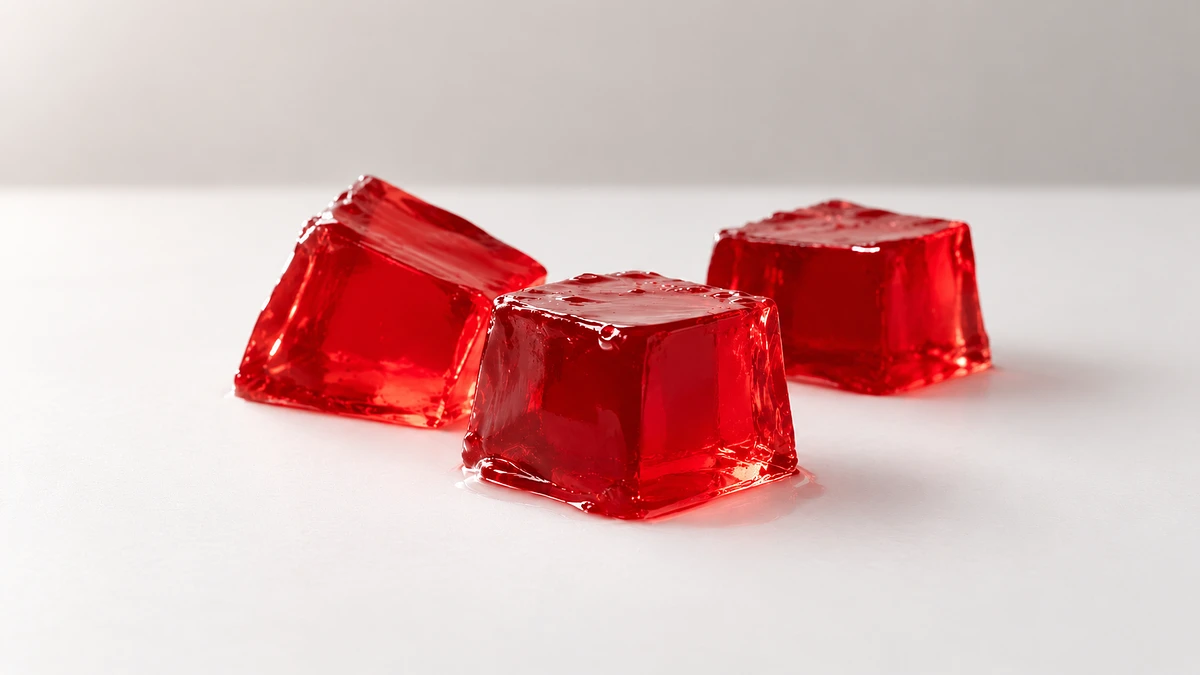
Can babies have jelly or Jell-O?
Not before age 2. A gelatin dessert like Jell-O is sugar, water, gelatin, flavoring and coloring, and children under 2 shouldn’t have added sugar. There’s nothing nutritional in it to make an exception for.[1][2]
Texture matters too. Firm-set shapes like Jigglers are springy in the same way as gummy candy, which the CDC lists as a choking hazard.[4]
After age 2, soft-set gelatin eaten with a spoon is fine as an occasional treat, like at a party. Sugar-free versions use sweeteners instead, which young children don’t need either.
Choking risk
Jelly is a moderate choking risk - soft-set jelly eaten from a spoon breaks up easily, but raw jelly cubes and firm, rubbery jiggler shapes hold together in the mouth like a gummy sweet and are the forms to keep away from young children.
Serve only fully set, soft jelly in small spoonfuls, never cubes or strips to hold, and keep the raw block out of reach. See how to serve for what applies at each age.
Allergens
Jelly is not a common food allergen - sugar, water and gelatin don't trigger the usual allergies, and gelatin allergy is rare.[5]
Gelatin is made from pork or beef collagen, which matters for some families for dietary or religious reasons, and a child with alpha-gal syndrome (a tick-acquired red-meat allergy) can react to it. Vegetarian jellies set with agar or carrageenan avoid gelatin but are still sugar.
Food safety
Sugar is the main reason to wait. A half-cup serving of prepared gelatin dessert has around 18 g of sugar, almost all of it added. Children under 2 shouldn’t have any added sugar, and older children should have as little as possible.[6][1]
Sugar-free gelatin isn’t the answer. It uses sweeteners like aspartame or sucralose, which experts advise against for young children.[7] Many gelatin desserts also use synthetic colors, which the AAP has flagged for possible effects on behavior in some children.[9]
How to serve
Up to 2 years old
No jelly - and keep the raw cubes out of reach
Don’t offer Jell-O or other gelatin desserts before age 2. They’re added sugar with nothing else to offer. At a party, a baby does fine with soft fruit and water while everyone else has dessert.
If you want the wobble
Fruit purée set with a little gelatin or agar, with no added sugar, makes a soft gelatin that’s more fruit than dessert. It gives a toddler the fun texture without the sugar. Keep it very soft and serve it with a spoon.
2+ years old
Soft-set jelly by the spoonful, occasionally
From age 2, a small bowl of soft-set gelatin now and then is fine as a party treat. Serve it with a spoon while your child is sitting down, not as cubes or strips to hold. Firm Jigglers wait until around 4, since they’re springy like gummy candy, which is a choking hazard until then. It’s still all added sugar, so keep it for special occasions.
How to serve
Use a little more water than the packet says so it sets softer and breaks up easily, and serve it in small spoonfuls. Add some soft fruit for something to chew. Skip the sugar-free packets, which just swap sugar for sweeteners.
Sources
- Dietary Guidelines for Americans 2020-2025 (birth-24 months: no added sugar/salt under 2) - USDA/HHS
- Foods and Drinks to Avoid or Limit (honey, added sugar, salt) - CDC
- Foods to avoid giving babies and young children (salt, stock cubes, gravy, raw jelly cubes) - NHS
- Choking Hazards (Infant & Toddler Nutrition) - CDC
- Food Allergies (the 9 major US allergens) - FDA
- Gelatin desserts, dry mix, prepared with water - USDA FoodData Central
- Healthy Beverage Consumption in Early Childhood: Consensus Recommendations (AAP, AHA, AND, ADA) - Healthy Eating Research 2019
- Recommended Drinks for Children Age 5 & Younger - AAP HealthyChildren
- Healthy Beverage Consumption in Early Childhood: Recommendations from Key National Health and Nutrition Organizations