 HeySolids
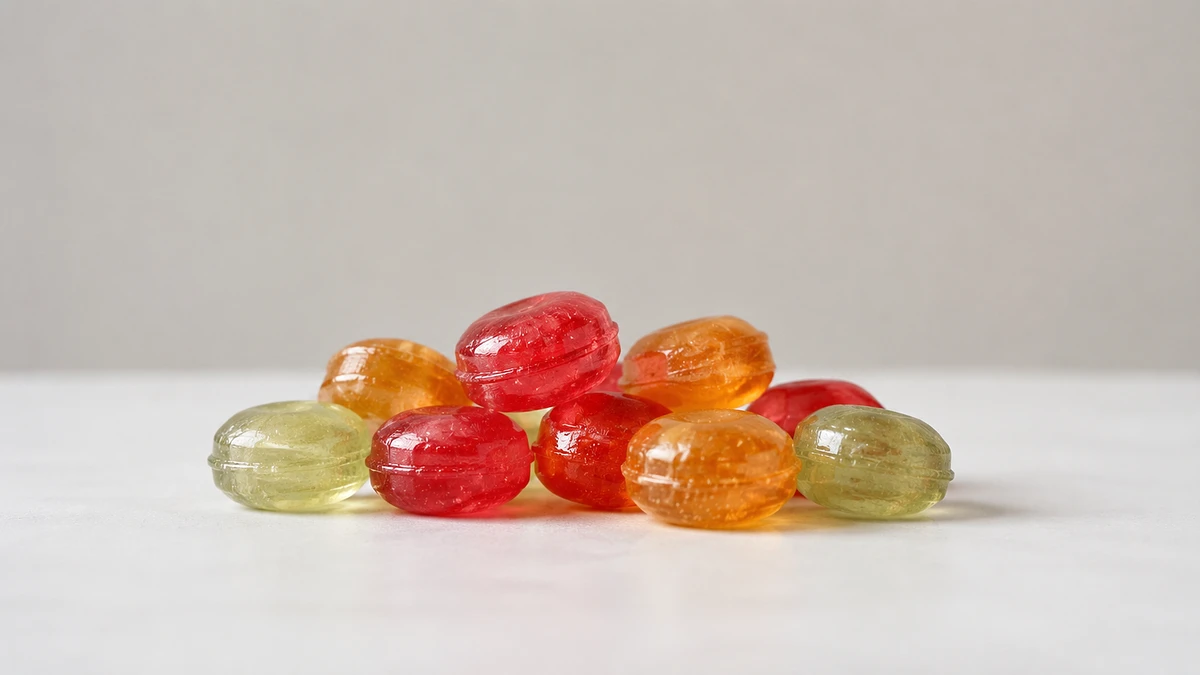
Can babies have candy?
No. Added sugar isn't recommended before age 2, so candy is off the menu until then. After that it depends on the kind, and the difference is about shape and texture rather than sugar.
Hard candy and gummies stay out until age 4. Both hold their shape under a bite, and both are about the width of a small child's airway. Caramel, taffy and marshmallows wait until 4 as well. They're soft, but sticky enough to press into a plug that's hard to shift.
Plain chocolate is the one that clears at 2. Break it into thin flat pieces rather than small round ones, and skip anything with whole nuts, which stay out until 4. Have your child sit down to eat it, and stay with them.
Choking risk
Candy is a high choking risk - hard candies, lollipops, gummies, jelly beans, and caramels are among the foods the CDC and AAP say to keep from children under 4.
There's no prep that fixes it: hard candy sits in the mouth for minutes as a smooth, slippery plug, and gummies have exactly the size and springiness that block a small airway. This one waits until at least age 4 - see how to serve for what happens then.
Allergens
Candy is not a common food allergen - sugar itself doesn't trigger allergies.[3]
The candy aisle is still dense with allergens: peanuts, tree nuts, milk, and soy fill many candies, and shared production lines make "may contain" warnings common. If your child has a food allergy, read every wrapper - especially around holidays, when unlabeled minis circulate.[3]
Food safety
The other reason candy waits is sugar: it's added sugar in its purest form, and the guidance before age 2 is none at all - small and occasional after.[4][5]
Storage matters too: toddlers find candy in purses, diaper bags, and low drawers. Keep it high and out of sight.
How to serve
Up to 4 years old
No candy - and keep it out of reach
Don't give candy before about age 4. Hard candies, lollipops, gummies, jelly beans, and caramels are classic airway-blockers with no safe way to cut or soften them - and candy is pure added sugar besides.[1][2]
Keep it genuinely out of reach - purses, diaper bags, and party bowls are where toddlers find it. When something sweet is called for, fruit covers the moment.
4+ years old
Rarely, seated and supervised
From around age 4, occasional candy can happen - seated, supervised, and never in the car or on the move. Chocolate that melts is the lower-risk kind to start with.
Hard candy, lollipops, and gummies stay the riskiest shapes even now - if you can hold those back a while longer, do. And keep candy an occasion, not a routine: it's still concentrated added sugar.
Sources
- Choking Hazards (Infant & Toddler Nutrition) - CDC
- 4.5.0.10 Foods that Are Choking Hazards (Caring for Our Children) - AAP/APHA
- Food Allergies (the 9 major US allergens) - FDA
- Dietary Guidelines for Americans 2020-2025 (birth-24 months: no added sugar/salt under 2) - USDA/HHS
- Foods and Drinks to Avoid or Limit (honey, added sugar, salt) - CDC