 HeySolids
Choking risk
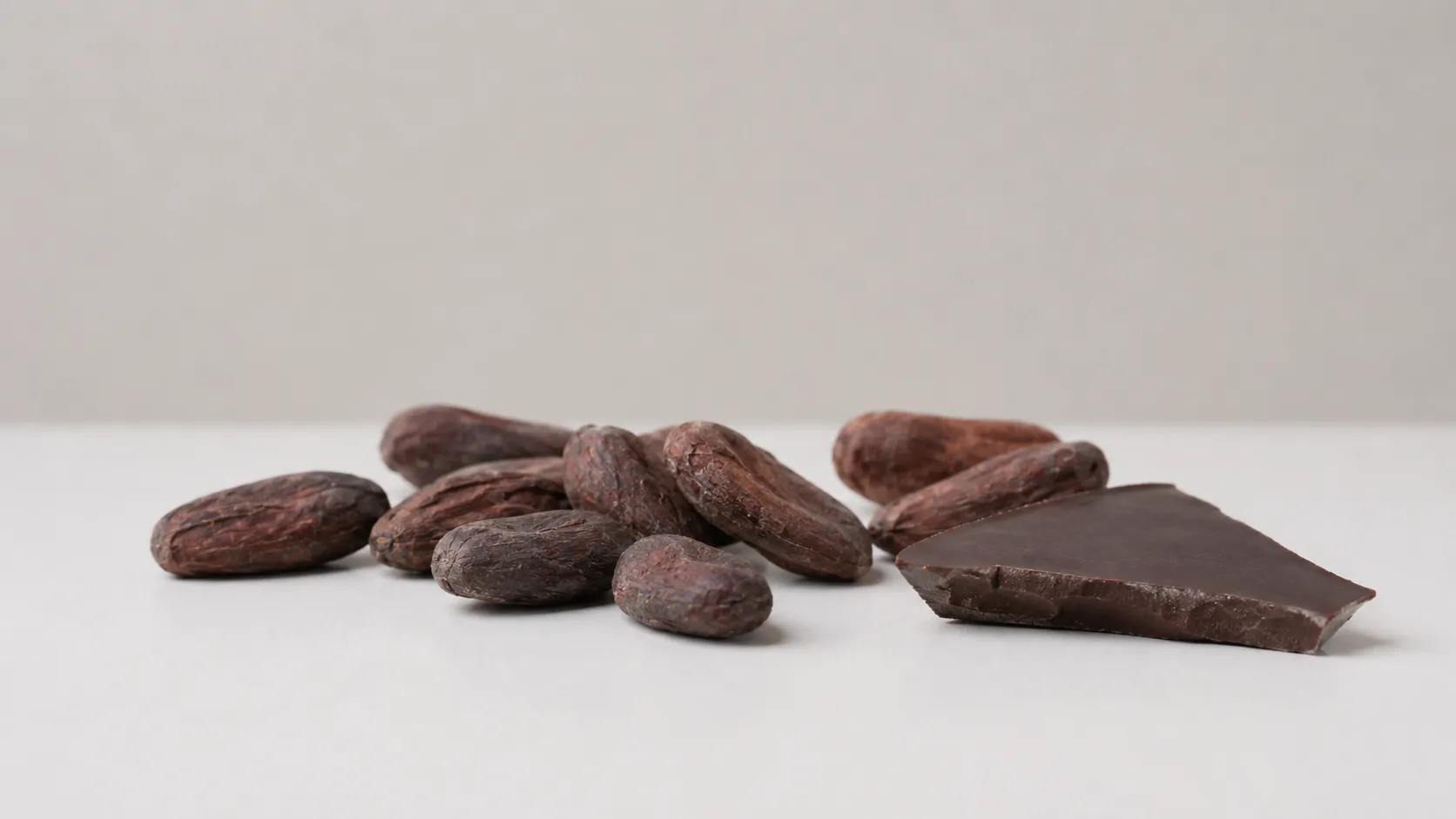
Chocolate is a low choking risk in the forms a young child should meet it - melted, shaved, or baked in.
A firm chunk, square, or button is different: chocolate melts slowly, and until it does, it's a hard candy in the mouth. The bigger reason chocolate waits is sugar, not choking. See how to serve for age-by-age prep.
Allergens
Cocoa isn't one of the major allergens, though any food can cause a reaction, so introduce new foods one at a time.[1]
Chocolate is more than cocoa - the bar is cocoa plus milk, sugar, usually soy, and often traces from shared nut lines, which makes chocolate one of the most allergen-dense foods on the shelf.
Read the label with care if your baby has any food allergy, and treat "may contain" seriously here: chocolate production lines often share equipment with nuts.[1]
Always start with a small amount and watch for a reaction.
Food safety
Chocolate carries two things a young child doesn't need. The first is added sugar - chocolate is one of its most concentrated forms, and added sugar is best avoided before age 2.[2]
The second is caffeine: a small taste of milk chocolate carries only a trace, but dark chocolate and cocoa carry several times more, and young children have no place for caffeine at any dose - one reason the dark bar isn't the "healthier" choice here.
When chocolate does arrive, it counts against the sugar budget like anything sweet: a treat sometimes, not a daily food.
How to serve
Up to 2 years old
No chocolate yet
Hold off on chocolate before age 2. It's added sugar in one of its most concentrated forms - best avoided entirely before 2 - and it carries caffeine, which young children shouldn't have.
If you want the flavor
A little plain, unsweetened cocoa baked or stirred into food gives the chocolatey taste with no added sugar - and at a spoonful-in-a-whole-batch scale, the caffeine is only a trace.
It's also fine to skip entirely: a baby isn't missing chocolate, and the taste for it is learned.
2+ years old
Keep it very low
A sometimes-treat, not a daily one
From age 2, occasional small amounts of chocolate are okay - a treat sometimes, never a daily routine.
For scale: the current guidance caps added sugar at about 10 grams per meal, and a small chocolate treat can use that up on its own.
Choose milk chocolate over dark for a toddler. Dark chocolate sounds like the healthier option, but it carries several times more caffeine, which matters more for a small child than the extra sugar in milk chocolate.
For everyday chocolate flavor, use plain unsweetened cocoa instead - a spoonful in pancakes, oatmeal, or fruit-sweetened baking gives the taste with no added sugar at all. Keep chocolate itself for occasions, and the chocolate birthday cake can just be birthday cake.
How to serve
Melted, shaved, or baked in - never firm chunks, squares, or buttons, which sit in the mouth as hard candy until they melt. Whole chocolate pieces wait until around age 4, when chewing and managing hard sweets is established.
Tips
- Buy cocoa, not chocolate, for everyday use. A tin of plain unsweetened cocoa powder covers the chocolate flavor for baking, pancakes, and warm milk, with no added sugar and only a trace of caffeine per serving. Check the label - "cocoa mix" and "hot chocolate mix" are mostly sugar, so the tin should list one ingredient: cocoa.
- Read the label for hidden allergens. Chocolate is one of the most allergen-dense foods on the shelf - milk and soy are in most bars, and nut warnings are common because production lines are often shared. If your child has any food allergy, take "may contain" seriously on chocolate in a way you might not for other foods.
- Keep chocolate out of sight between occasions. Toddlers ask for what they can see. A treat that lives in a high cupboard and appears on occasions stays an occasion - a bar in the fruit bowl becomes a daily negotiation. Where the chocolate lives does more work than any rule about how much.