 HeySolids
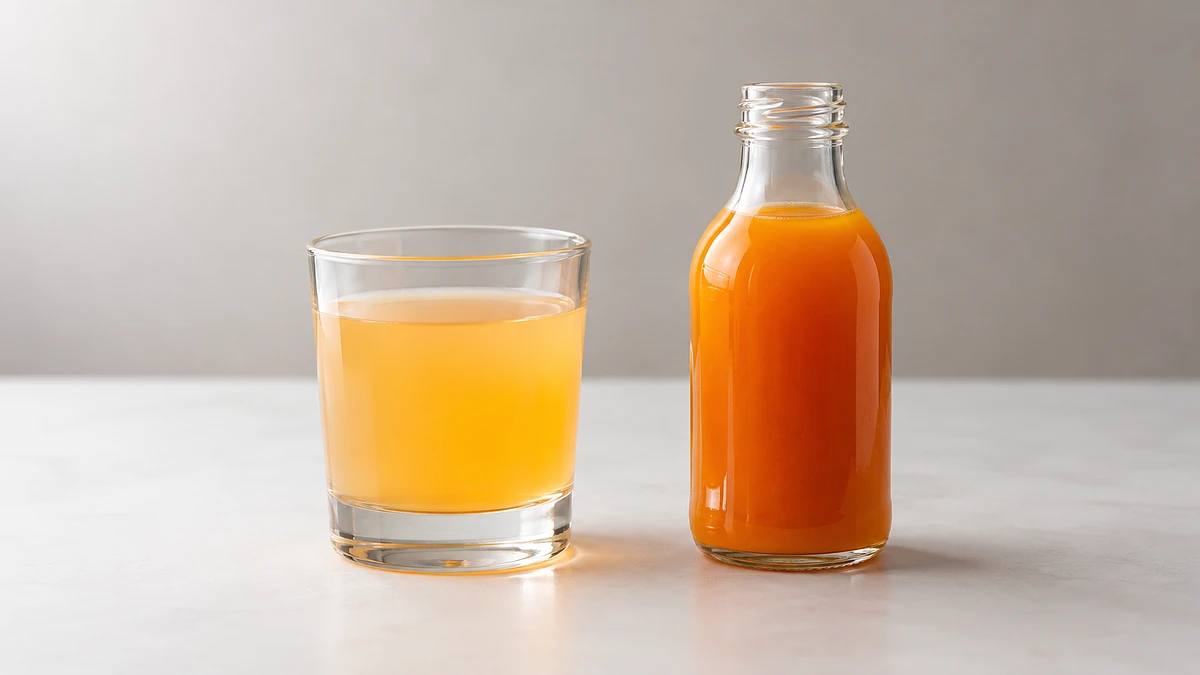
Can babies have squash or drink mixes?
No. Squash, cordial, Kool-Aid, Crystal Light, water enhancers and “fruit drinks” are all water with sugar or sweeteners and flavoring added. The AAP’s drinks guidance for children up to age 5 says to avoid both sugary drinks and drinks with low-calorie sweeteners.[1] Sugary drinks cause tooth decay even when they’re diluted.[3]
Parents ask most about the sugar-free versions. They don’t have sugar, but they do have sweeteners like sucralose or acesulfame potassium, which haven’t been well studied in young children. They also teach a baby that water should taste sweet.[3]
What babies need is simple: breast milk or formula, plus small sips of water with meals from 6 months. From 12 months, water and plain whole milk.[4]
Choking risk
Squash and drink mixes are thin liquids, so they are a low choking risk - the concern here is sugar and sweeteners, not choking.
Water in an open or straw cup is the drink to practice with. See how to serve for what applies at each age.
Allergens
Squash and drink mixes are not a common food allergen - they're sugar or sweetener, acid, flavoring and color.[5]
Some families also watch the additives. Many drink mixes use synthetic colors, and the AAP has raised concerns that they may affect behavior in some children.[8] Plain water has none of that.
Food safety
Sugar is the first reason. A standard squash or drink mix made up to taste is several teaspoons of sugar per cup, and the guidance before age 2 is no added sugar at all. Sugary drinks sipped through the day are the pattern most strongly tied to early tooth decay, because the teeth never get a break between exposures.[6][1]
Sweeteners are the second. "No added sugar", "zero" and "light" versions replace sugar with low-calorie sweeteners; the AAP and the drinks consensus advise against them from birth to 5, and the NHS says to avoid food and drink with sweeteners up to age 4.[3][7]
If a flavored drink is going to happen at a party, make it a one-off in a cup at the table rather than a bottle that travels, and don't water it down into a daily habit - the NHS puts even diluted juice at mealtimes only, one part juice to ten parts water, and squash isn't juice.[2]
How to serve
Up to 5 years old
No squash or drink mixes - water and milk
Don’t offer drink mixes or squash, including the no-added-sugar and sugar-free kinds. Under 6 months, breast milk or formula is all a baby needs. From 6 months, add small sips of plain water with meals. From 12 months, water and plain whole milk are the only drinks a toddler needs.
If water is refused
Put a cup on the tray at every meal and let your baby play with it. Drinking from a cup is a skill they learn, not a sign they dislike water. Try both an open cup and a straw cup to see which works, and drink water yourself where they can see you. Very cold water, or a slice of cucumber in the cup, can make it more interesting. Don’t switch to a sweet drink to get them drinking; most babies take to water with practice.
5+ years old
Still water first - an occasional diluted drink at most
From 5, sugar-sweetened drinks stop being an absolute avoid and become an occasional thing - a cup at a party, not a daily bottle. Diluted much weaker than the label says, with a meal, in a cup. Water stays the everyday drink, and sweetener-based squash still isn't needed.
Sources
- Recommended Drinks for Children Age 5 & Younger - AAP HealthyChildren
- Drinks and cups for babies and young children (squash, flavoured milk, no-added-sugar drinks) - NHS
- Healthy Beverage Consumption in Early Childhood: Consensus Recommendations (AAP, AHA, AND, ADA) - Healthy Eating Research 2019
- Water and Healthier Drinks (Infant & Toddler Nutrition) - CDC
- Food Allergies (the 9 major US allergens) - FDA
- Dietary Guidelines for Americans 2020-2025 (birth-24 months: no added sugar/salt under 2) - USDA/HHS
- Foods to avoid giving babies and young children (salt, stock cubes, gravy, raw jelly cubes) - NHS
- Food Additives and Child Health