 HeySolids
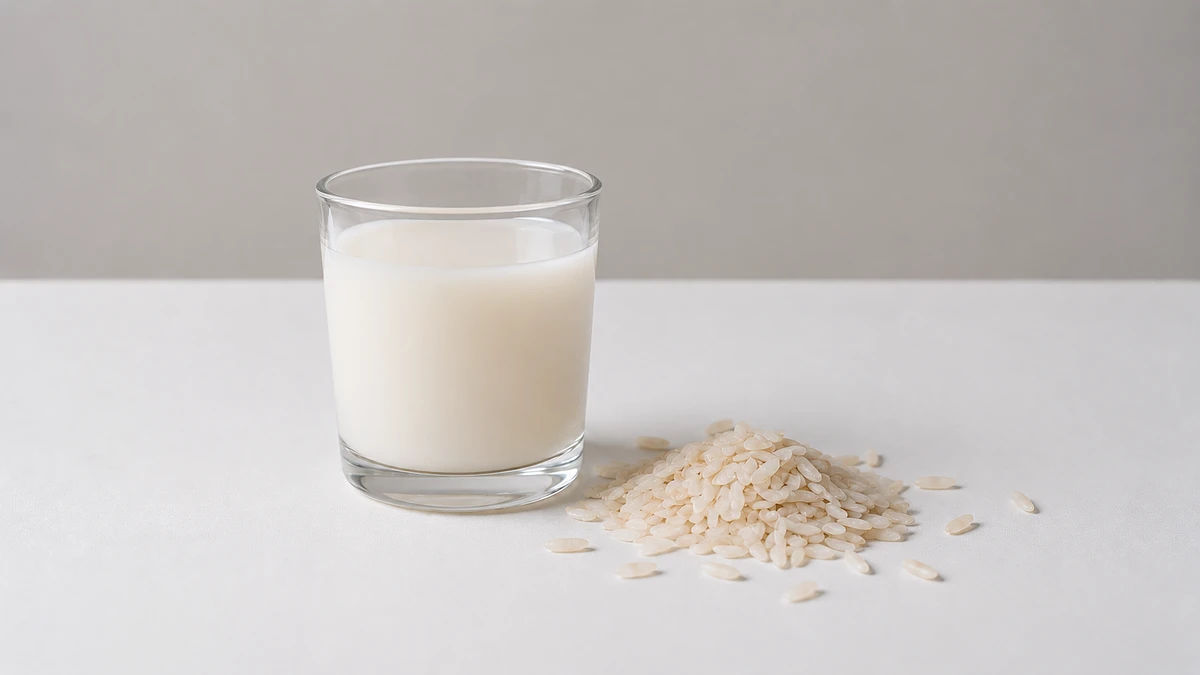
Choking risk
Rice milk is a thin liquid, so there's nothing to choke on - it is a low choking risk.
The real question with rice milk is what's in it - see how to serve for age-by-age guidance.
Allergens
Rice milk is not a common food allergen, so a true allergy to it is rare - it's actually the fallback drink for older children with multiple food allergies.[1]
As with any new food, start with a small amount and watch for a reaction.
Food safety
Skip rice milk as a drink for babies and toddlers. Rice takes up more inorganic arsenic from soil and water than other grains, and a daily cup of rice milk concentrates that exposure - the AAP specifically advises against rice drinks as a milk substitute for young children.[2][3]
It's also the weakest milk nutritionally - almost no protein or fat, mostly water and carbohydrate. A splash in a recipe isn't dangerous, but there's no age at which it's the smart pick: if your family needs a dairy-free milk, unsweetened fortified soy milk is the one that measures up.[5]
How to serve
Up to 2 years old
No rice milk - milk feeds, then whole milk or soy milk
Don't offer rice milk in the first two years. Before 12 months, breast milk or formula is the drink; from 12 months, whole cow's milk or unsweetened fortified soy milk takes over. Rice milk brings almost no protein or fat, and it's the plant milk highest in inorganic arsenic - the wrong trade at an age when every cup counts.
If a recipe calls for it, a splash cooked into food now and then isn't a worry - the concern is rice milk as a regular drink.
2+ years old
Still not a regular drink
The advice doesn't loosen much at 2: rice milk stays an occasional thing, not the daily cup. An arsenic load that's tolerable as a rare splash adds up in a child who drinks it every day, and there's still no nutrition to show for it.
If it does appear, choose unsweetened and keep it small and infrequent. For a child with dairy and soy both off the menu, ask your pediatrician about the best alternative rather than defaulting to rice milk.