 HeySolids
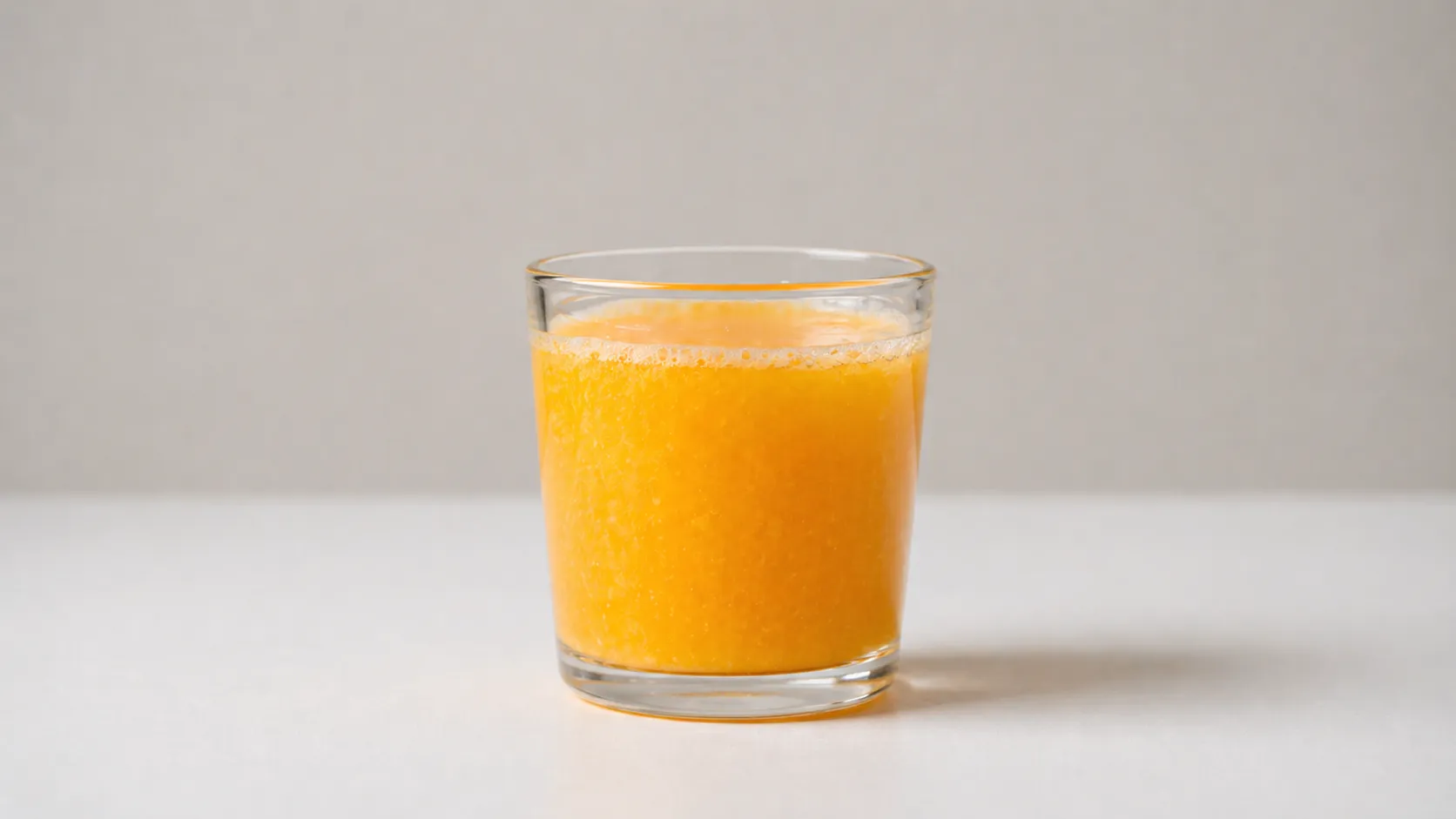
Choking risk
Juice is a thin liquid, so there's nothing to choke on.
The real question with juice is sugar: juicing strips away the fruit's fiber and leaves the sugar behind, so even 100% juice is closer to a sweet drink than to fruit - and babies don't need it at all.
Allergens
Juice is not a common food allergen, so a true allergy to it is rare. Any reaction usually traces back to the fruit it is made from, not the juice itself.
Start with a small amount and watch for a reaction.
Food safety
Skip juice entirely before 12 months - that's the official pediatric guidance, not just caution. Even 100% juice is the fruit's sugar with the fiber stripped out, and baby's drinks are milk and water.[1]
From age 1, if juice happens at all, keep it to about 4 oz a day, served with meals in an open or straw cup. Both rules protect teeth, and here is why: every sip of juice coats the teeth in sugar, and teeth need quiet time between meals to recover. Juice with lunch is one exposure, finished and cleaned up. The same juice in a sippy cup that travels around the house becomes dozens of small exposures all afternoon - the teeth never get a break, and that is the pattern that causes early decay. When you buy, check the label too: juice drinks, punches, and "-ades" are mostly added sugar, not juice. These rules apply to 100% juice - the sweetened kinds are simply best skipped.[2]
Choose only pasteurized juice. Unpasteurized juice - fresh-pressed at markets, juice bars, or farm stands - can carry bacteria, and babies are more vulnerable to food poisoning than adults.[3]
How to serve
Up to 12 months old
No juice - breast milk or formula, and water
Don't give fruit juice before 12 months. It offers nothing that whole fruit doesn't, it can crowd out milk feeds, and the sugar is hard on new teeth.
All a baby needs to drink is breast milk or formula, plus a little water in a cup once solids start - and to be specific about milk: cow's milk isn't a drink until 12 months, though it's fine in cooking from 6.
12+ months old
If given, cap it at about 4 oz a day
From age 1, if you offer juice at all, choose 100% pasteurized juice, serve it in an open or straw cup with a meal, and keep it to about 4 oz a day. Each part of that has a reason.
The cap exists because juice is concentrated sugar - 4 oz carries the sugar of two or three whole fruits, and a growing child does better eating their calories than drinking them.
The cup and the mealtime matter for teeth: juice sipped through the day keeps sugar sitting on new enamel, while one serving with a meal is a single exposure the mouth can recover from. And whole fruit is still the better choice every time - the fiber comes with it, it fills a child up the way juice doesn't, and eating an orange does everything drinking one does and more.
2+ years old
Still small, still with meals
The rules don't change much at 2 - about 4 oz a day at most, 100% juice only, with a meal in an open or straw cup - and the cap doesn't age out: it rises a little as children grow, but juice stays a with-meals, small-serving drink at every age. Water is the drink that's always free.
What does change is the world around your toddler: juice starts appearing at daycare, parties, and grandma's house. A cup at a birthday party is a fine occasion - the daily habit is the thing to hold the line on. If juice has become the expected drink, water it down gradually over a week or two rather than switching cold; taste adjusts quietly in that direction.
Worth knowing at the shelf: pouches and juice boxes marketed for toddlers are usually juice drinks, not juice.