 HeySolids
Choking risk
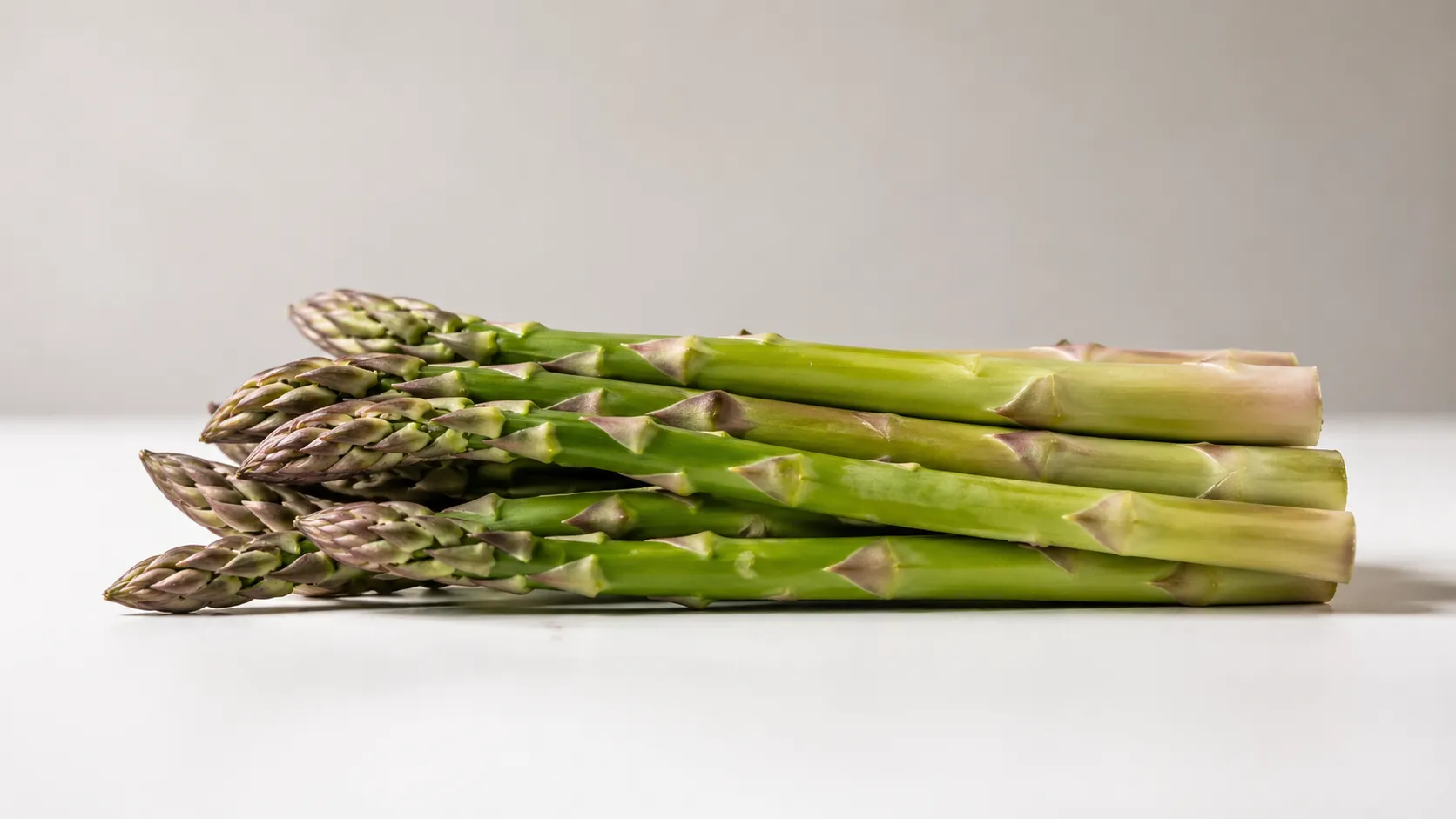
Asparagus is a moderate choking risk - raw it's firm and fibrous, and the woody base is especially stringy and tough to chew.
Snap off the woody ends, and peel the lower stalk if the spears are thick, since the strings stay chewy even after cooking.
Cook until the spears squash easily between two fingers, then serve a whole soft spear or smaller soft pieces - never raw or firm asparagus. See how to serve for age-by-age prep.
Allergens
Asparagus is not a common food allergen, so a true allergy to it is rare.[2]
Start with a small amount and watch for a reaction.
If baby refuses
Asparagus can taste a little bitter at first. Roasting brings out more sweetness than boiling, so that's worth trying first - or serve it with a little olive oil, or chop it finely into egg, mash, or pasta. Keep offering it now and then; new foods often take a good few goes before they land.
How to serve
6+ months old
Whole soft spear or smooth mash
A whole spear, woody end removed, about 4 inches long
Snap off the woody base, and peel the lower stalk if the spears are thick - the strings stay chewy even after cooking. Offer a whole soft-cooked spear for baby to grip and gnaw; the long shape suits little hands, and the softer tip is easiest to manage. You can also mash or blend the soft tips smooth and serve on a pre-loaded spoon, or mix with a milder vegetable like sweet potato.
How to cook
Steam, boil, or roast at 400°F until very soft, about 8 to 12 minutes depending on thickness. It's done when a spear presses easily between two fingers - avoid serving it al dente.
9+ months old
Soft chopped pieces or soft tips
Bite-sized, about 1/2 inch, cut lengthwise
Cut soft-cooked asparagus lengthwise, then into bite-sized pieces for pincer-grasp practice - splitting it along its length keeps the pieces flat rather than round and shortens the stringy fibres. Offer the soft tips too, which are easiest to chew. A whole soft spear still works well alongside.
How to cook
Steam, boil, or roast at 400°F until soft, then split lengthwise and chop. Keep the pieces soft enough to press easily between two fingers.
12+ months old
Soft spears or chopped pieces
Whole spears, or pieces cut lengthwise
Offer soft asparagus whole or chopped for self-feeding, and let your toddler practise with a fork. Piece size matters less now, but keep cutting lengthwise - the fibres run the length of the spear, so cutting across them leaves chewy strings. It folds well into egg dishes, pasta, and rice, or sits alongside fish or a mash. You can cook it a little less as chewing improves, but keep it soft rather than crisp.
How to cook
Roast at 400°F for 12 to 15 minutes, or steam until tender. Family textures are fine now - no added salt in baby's portion, and keep it low across the day.
Tips
- Buy thin spears. They're far less stringy than thick ones, cook softer in less time, and save you peeling the stalk entirely. The fat spears look more impressive but need more work to make baby-friendly.
- Let it snap where it wants to. Hold a spear at both ends and bend it - it breaks naturally right where the woody part ends, so you're not guessing how much to trim. Do the first one that way, then line the rest up and cut them to match.