 HeySolids
Choking risk
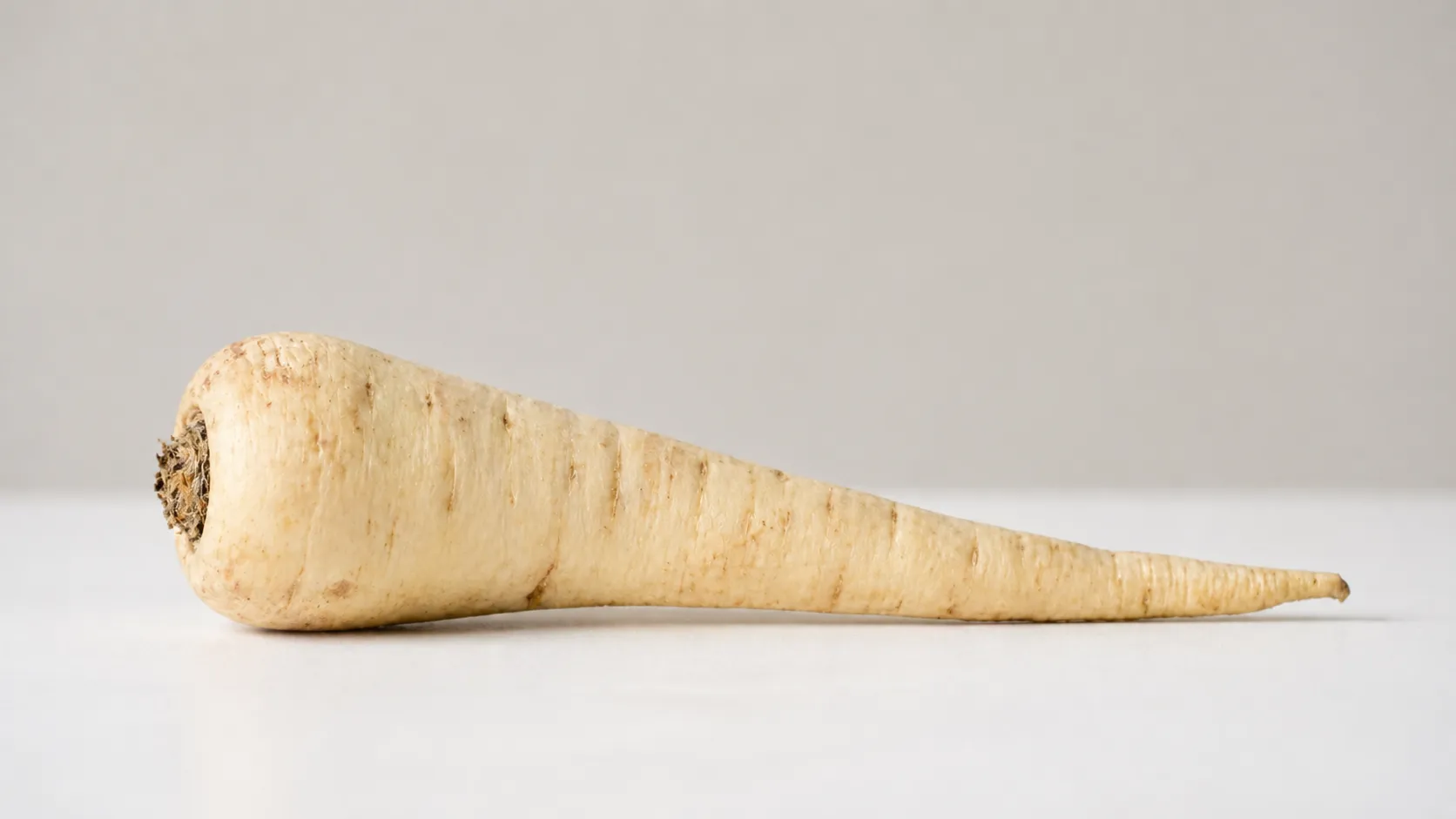
Parsnip is a low choking risk once cooked soft, but raw or undercooked parsnip is hard and round like raw carrot, which both the CDC and AAP name a top choking food.
Peel it, cut out the woody core, and cook until a piece squashes easily between two fingers, then serve smooth mash or large soft sticks cut lengthwise. See how to serve for age-by-age prep.
Allergens
Parsnip is not a common food allergen, so a true food allergy to it is rare.[3]
Start with a small amount and watch for a reaction.
If baby refuses
Roast it instead of steaming for more sweetness, or mash it with a food baby already likes such as carrot or sweet potato. It can take many tries before a new flavor is accepted.
How to serve
6+ months old
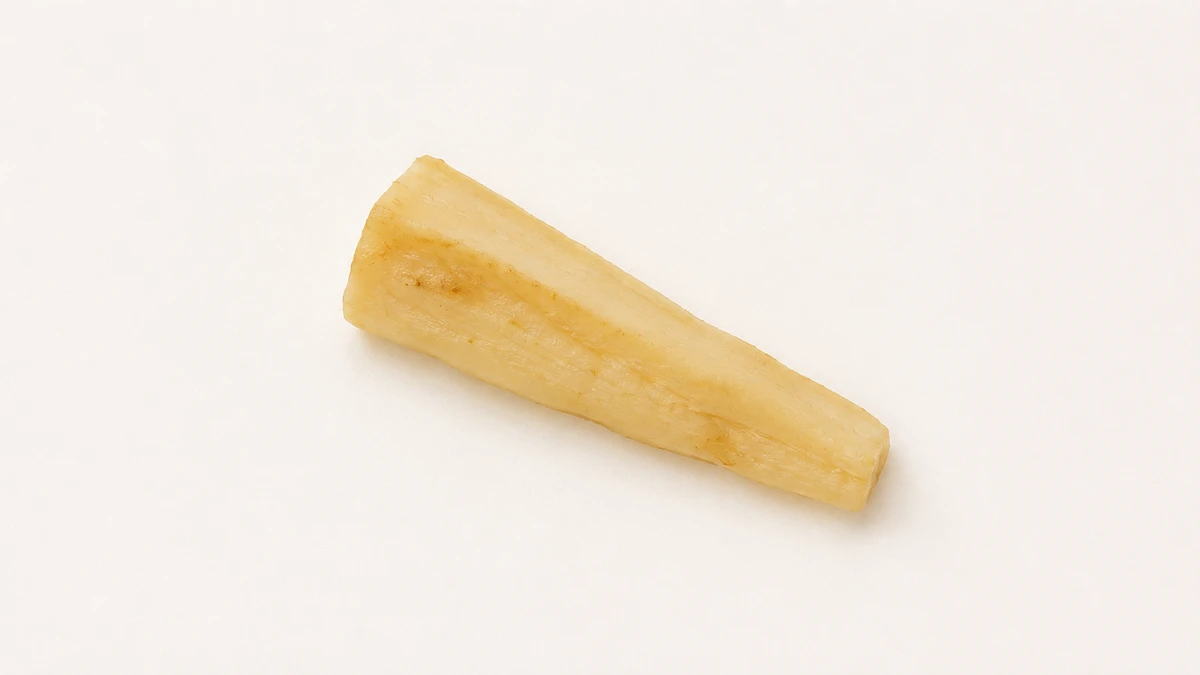
Large soft stick or smooth mash
Finger-length stick, about the width of two adult fingers
Peel a parsnip and, if the core is woody, cut it out, then cook it soft and halve it lengthwise into a large stick for baby to grip and gnaw - or blend it smooth and serve on a pre-loaded spoon. Mixing with carrot or sweet potato makes a naturally sweeter mash. If a piece breaks off, stay calm and give baby a moment to move it forward.
How to cook
Roast peeled batons at 375°F for 25 to 30 minutes, or steam for about 15 minutes, until a piece presses easily between two fingers. Blend with a little cooking water or breast milk for a smooth mash.
9+ months old
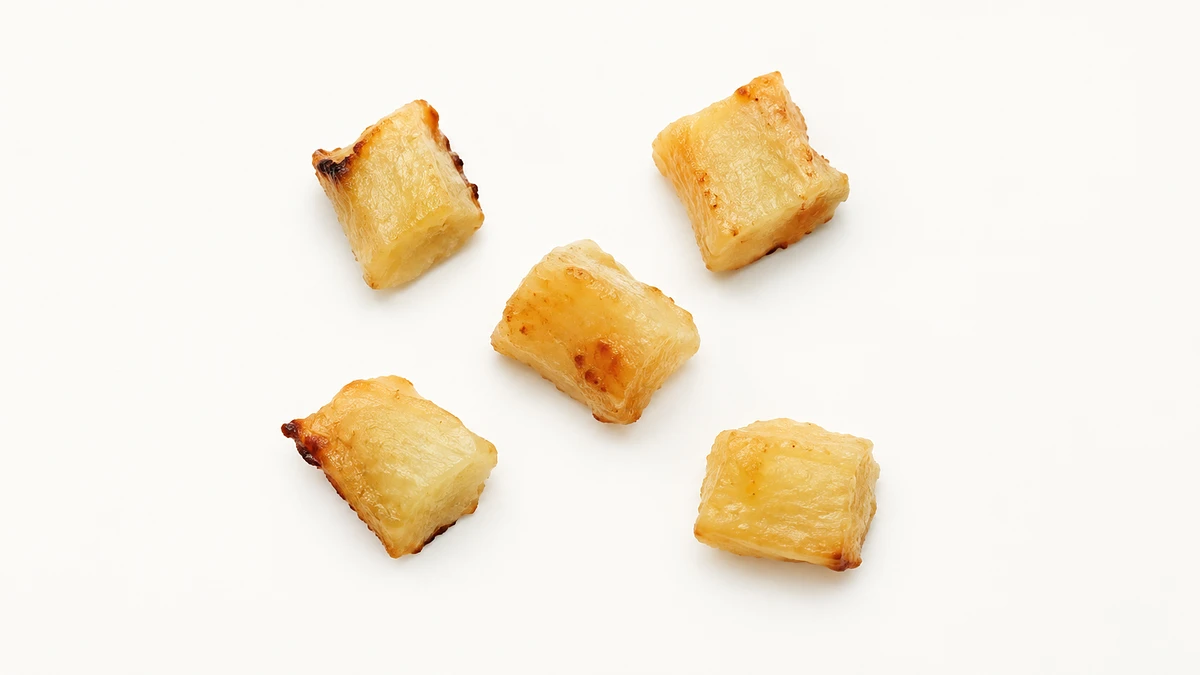
Small soft pieces
Bite-sized pieces, about 1/2 inch
Cut soft-cooked parsnip into small pieces for pincer-grasp practice, and keep offering a larger soft stick alongside if baby struggles with them. It also mashes well with a little texture.
How to cook
Peel, cut out the core if it's woody, and roast pieces at 375°F for 25 to 30 minutes until soft and lightly golden, or steam and mash with a fork. Pieces should still press easily between two fingers.
12+ months old
Small pieces or soft sticks
Bite-sized, about 1/2 to 1 inch
Offer soft pieces alongside a fork for utensil practice. Parsnip fits easily into family meals now - roasted, mashed, or stirred into soups and stews. Mild spices like cumin and nutmeg work well. Keep it cooked soft, since raw parsnip is still too firm to chew safely.
How to cook
Roast pieces or sticks at 375°F for 25 to 30 minutes until soft and lightly caramelized. As chewing improves you can cook it a little less for more texture.
Tips
Roast to bring out the sweetness. Parsnip turns sweet and mellow when roasted - a toss in a little olive oil and it caramelizes into something naturally sweet, no seasoning needed. It's the easiest way to win a baby over, and it doubles as a soft finger food or a base for mash. Steaming works and keeps it paler and softer, but roasting is where the flavour is.
Sources
- When, What, and How to Introduce Solid Foods - CDC
- Choking Hazards (Infant & Toddler Nutrition) - CDC
- Food Allergies (the 9 major US allergens) - FDA
- Pollen Food Allergy Syndrome - ACAAI
- Plant food allergy in mugwort-sensitised patients (carrot/celery/spice) - PMC3354215
- Parsnips, raw (FDC 170417) - USDA FoodData Central