 HeySolids
Choking risk
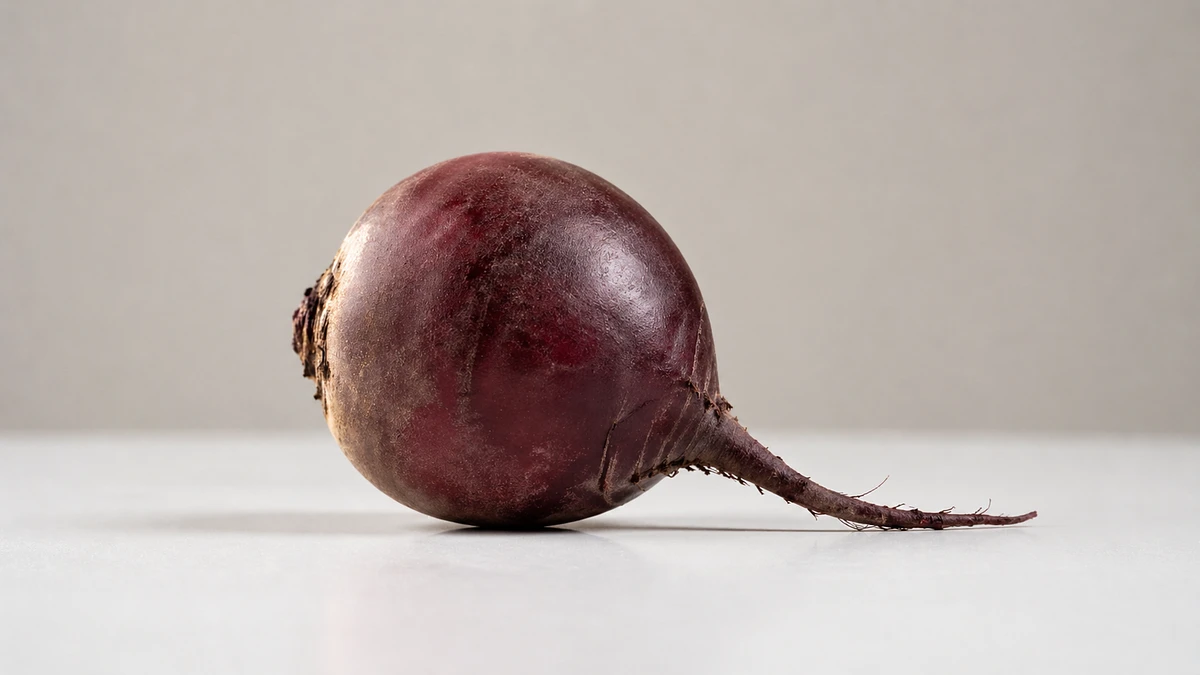
Cooked beet is a low choking risk - the risk comes from raw or undercooked pieces, which are firm and round.
Cook beet until it presses easily between two fingers, then serve as a smooth mash or large soft batons.
Skip raw chunks, coins, and raw grated beet, which stay firm and fibrous. See how to serve for age-by-age prep.
Allergens
Beet is not a common food allergen, so a true food allergy to it is rare.[2]
Start with a small amount and watch for a reaction.
If baby refuses
Beet has an earthy taste, and not every baby takes to it straight away. Roasting brings out more of its sweetness than boiling, so that's worth trying first. Or stir a little cooked grated beet into something familiar - mashed potato works, and apple pairs particularly well. Keep offering it now and then; new foods often take several goes before they land.
How to serve
6+ months old
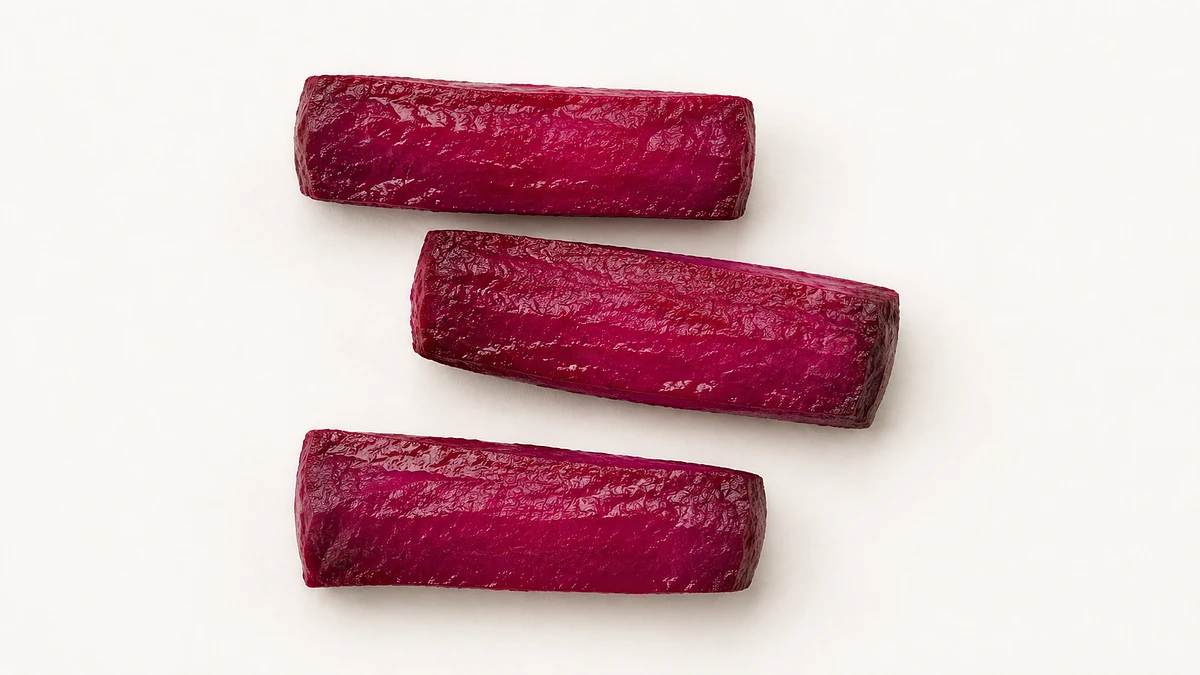
Large soft baton or smooth mash
Finger-length baton, about the width of two adult fingers
Cook beet until completely soft, peel it, then cut into large batons for baby to grip and gnaw, or mash the flesh smooth and serve on a pre-loaded spoon. It blends well into potato or apple, which mellows the earthy flavor. If a piece breaks off, stay calm and give baby a moment to move it forward.
How to cook
Roast whole and scrubbed, wrapped in foil at 400°F for 45 to 60 minutes, or boil for 40 to 50 minutes, until a knife slides in easily. Peel once cool. It's done when a piece presses easily between two fingers.
9+ months old
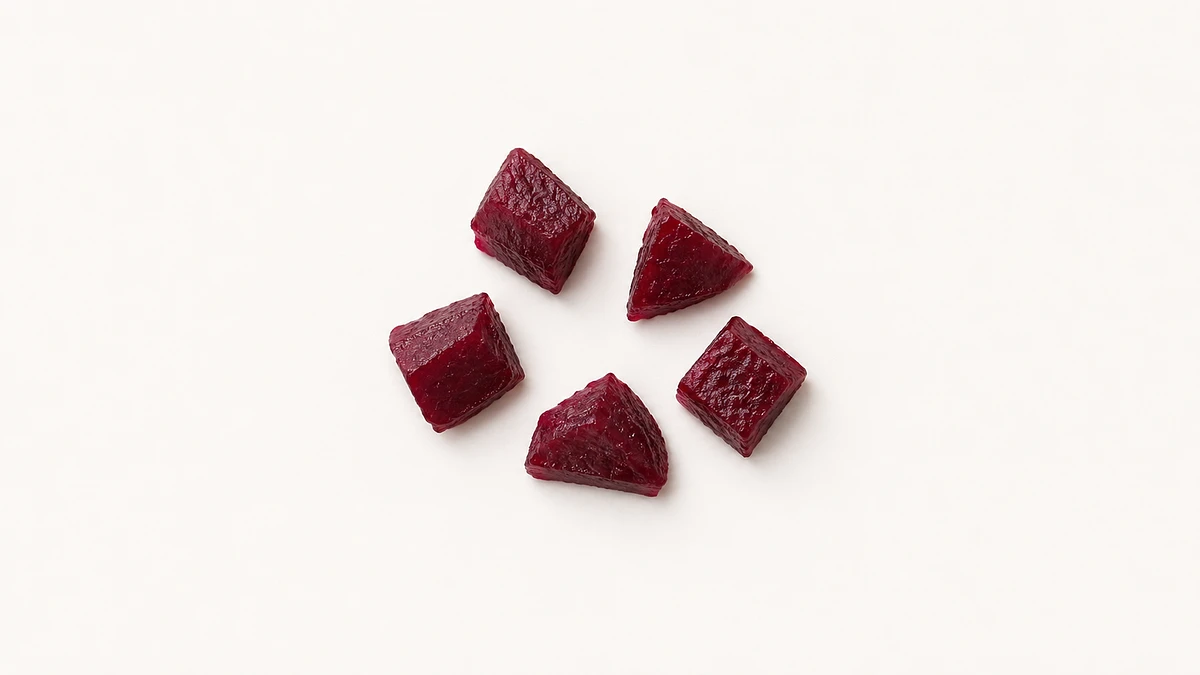
Small soft pieces
About 1/2 inch, bite-sized
Cut soft-cooked beet into small pieces for pincer-grasp practice, and keep offering a larger baton alongside if baby struggles with the small pieces. Keep it cooked soft at this stage.
How to cook
Roast or boil until completely soft, then peel and cut into bite-sized pieces. Pieces should still press easily between two fingers.
12+ months old
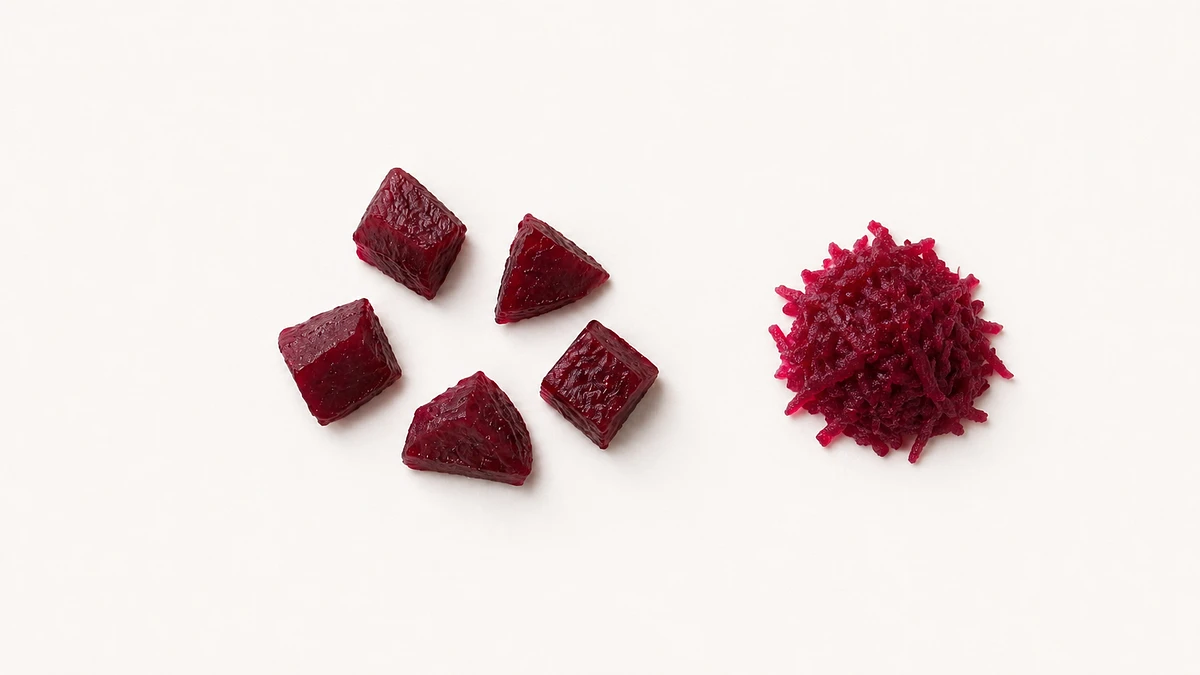
Small pieces or grated cooked beet
Bite-sized, about 1/2 to 1 inch
Offer soft-cooked beet in family dishes like salads, stews, or warm grains, cut into bite-sized pieces or cooked and grated. Grated cooked beet stirs nicely through mash, hummus, or yogurt. This is a good age for fork practice, and soft beet works well pre-loaded.
How to cook
Roast, boil, or steam until soft, then peel. Roasting with a little olive oil deepens the sweetness for family meals.
Tips
- Roast it whole, then rub the skin off. Wrap a scrubbed beet in foil and roast it whole - the skin slips off with a paper towel once it's cool enough to handle, no peeling a slippery raw beet with a knife. Easier, less mess, and it keeps more of the flavour in.
- Everything stains, so plan for it. Beet turns hands, bibs, high chairs, and wooden boards pink. Use a plastic board rather than wood, get things into cold water quickly rather than letting stains set, and accept that a beet dinner means a bath. Cooking it in the skin cuts the mess considerably.
- Vacuum-packed cooked beets are a real shortcut. The pre-cooked packs in the chiller aisle are already peeled and soft, ready to cut into batons or grate - just check the label says cooked in water, not pickled in vinegar, which is far too sharp and salty for a baby.