 HeySolids
Choking risk
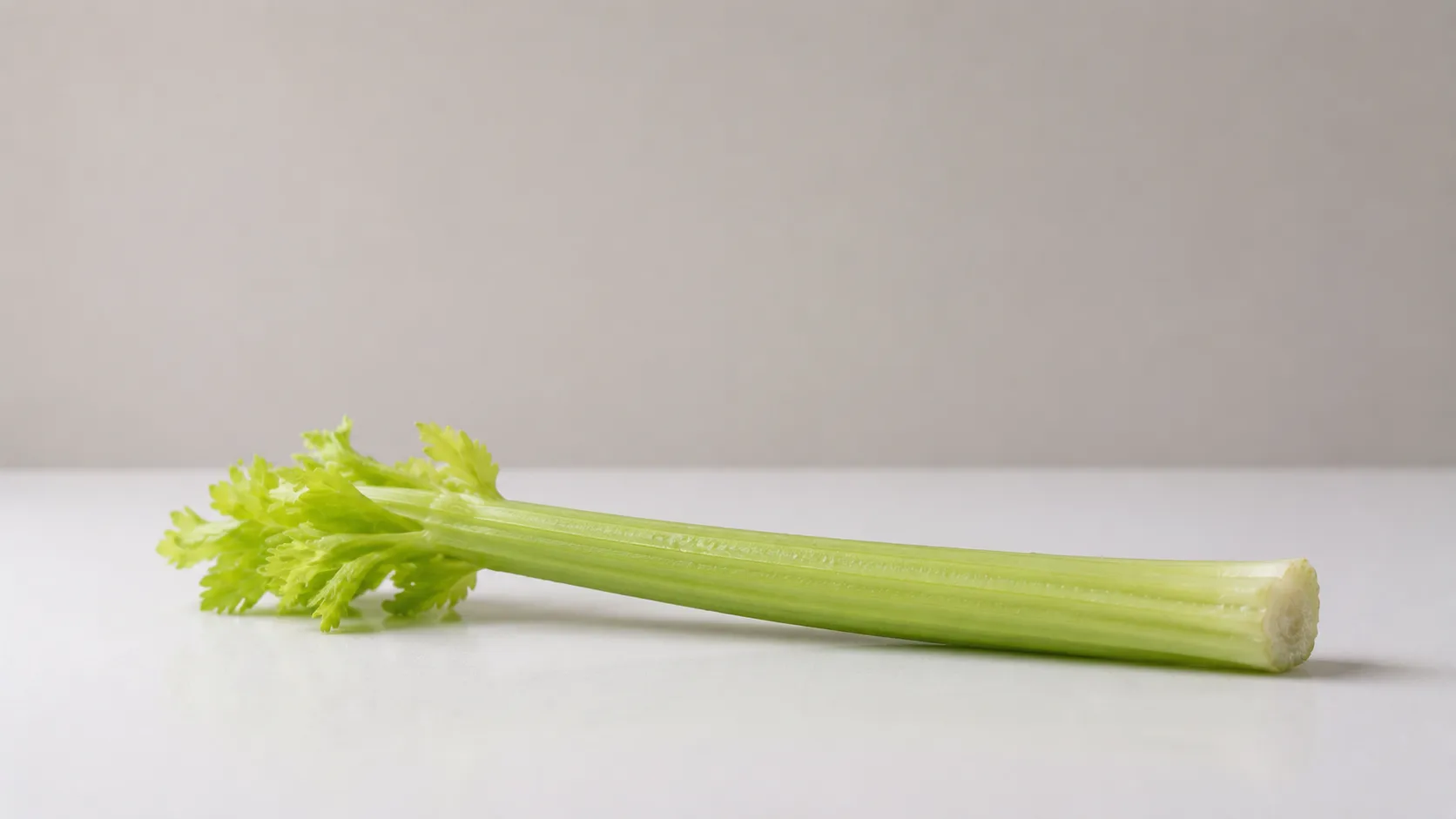
Raw celery is a moderate choking risk - it's firm, crunchy, and laced with long tough strings a baby can't chew apart. Peel away the strings, cook celery until very soft, then chop it finely.
Raw celery sticks stay off the menu for young children. See how to serve for age-by-age prep.
Allergens
Celery isn't one of the nine most common food allergens in the US, so a true celery allergy is rare - though it's more common in Europe, where celery is a declarable allergen on labels.[3]
Start with a small amount and watch for a reaction.
If baby refuses
Celery has a strong, distinctive flavour that some babies find too much on its own. Blended finely into soups, sauces, and stews it seasons the dish without dominating, which is the easiest way for a baby to eat it.
How to serve
6+ months old
Finely chopped or blended into cooked dishes
Use celery as a flavour base rather than a finger food. Finely chop or blend it into cooked soups, sauces, and stews, where it softens completely. Skip raw celery sticks - they're firm and stringy, and a choking risk.
How to cook
Peel the stringy outer side, then chop finely. Sauté or simmer in a soup, sauce, or stew for 10 to 15 minutes until very soft. Use fresh celery, with no added salt or stock cubes.
9+ months old
Very soft cooked pieces, strings removed
Bite-sized, about 1/2 inch
Offer very soft cooked celery in small pieces for pincer-grasp practice, with the strings peeled away first. It still works well finely chopped into soups, sauces, and stews. Keep avoiding raw, crunchy celery sticks for now.
How to cook
Peel off the strings, then steam or simmer until very soft, around 10 to 15 minutes. A piece should press easily between two fingers before serving.
12+ months old
Soft cooked celery, finely diced
Bite-sized, about 1/2 inch
Serve celery cooked soft and finely diced, stirred into family dishes like soups, stews, risottos, and pasta sauces, with the strings removed. Raw celery is still too firm and stringy to chew safely, so keep it cooked for now - even finely sliced, raw celery is one to hold back until your child is chewing confidently.
How to cook
Peel the strings, finely dice, then sauté or simmer until soft. Celery is a classic base for soups, stocks, and sauces. Keep using fresh celery, and avoid celery salt and salty stock cubes.
Tips
- Peel it, don't just wash it. A vegetable peeler run down the rounded outer side takes the strings off in one pass - that's the part a baby can't chew apart, and it's the whole reason celery needs work. Two seconds per stalk, and it changes the food entirely.
- The inner stalks are the tender ones. The pale stalks from the middle of the bunch are far less stringy than the thick outer ribs, so they need less peeling and cook softer. Save the tough outer ones for stock, where the strings don't matter.
- It's a base, not a side. Celery earns its place in baby food as one third of a soffritto - onion, carrot, celery, softened slowly - which gives soups, sauces, and stews a savoury depth without any salt. That's how babies get the benefit of it, rather than as a vegetable in its own right.
Sources
- Choking Hazards (Infant & Toddler Nutrition) - CDC
- When, What, and How to Introduce Solid Foods - CDC
- Food Allergies (the 9 major US allergens) - FDA
- Pollen Food Allergy Syndrome - ACAAI
- Plant food allergy in mugwort-sensitised patients (carrot/celery/spice) - PMC3354215
- Celery, raw (FDC 169988) - USDA FoodData Central