 HeySolids
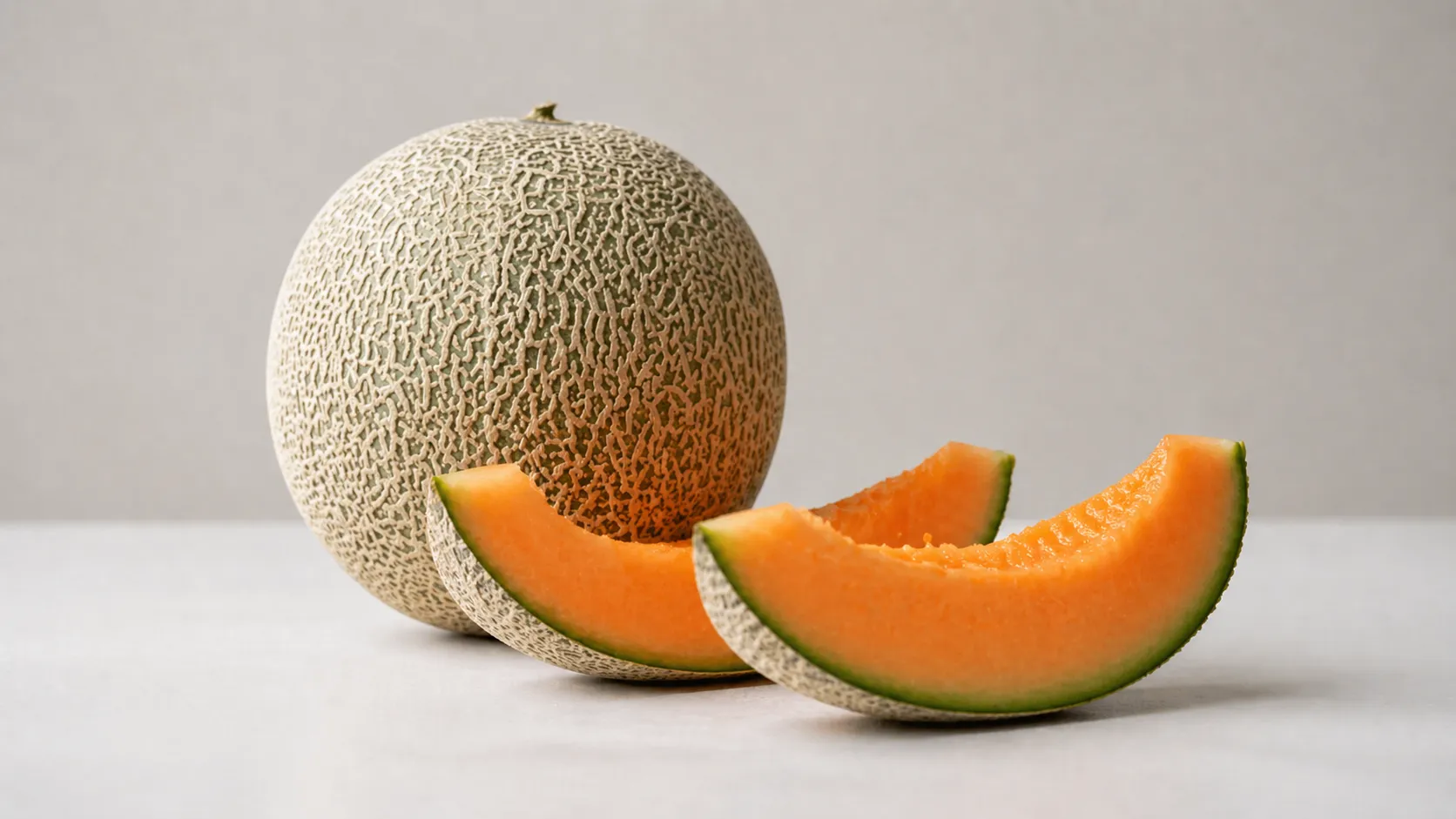
Choking risk
Cantaloupe is a moderate choking risk - ripe melon is soft but slippery, and underripe melon is firm and can lodge in the airway.
Choose a very ripe, soft melon, scoop out the seeds, and serve it as a large spear rather than balls, coins, or small cubes that can slip to the back of the mouth. See how to serve for age-by-age prep.
Allergens
Cantaloupe is not a common food allergen, so a true food allergy to it is rare.[3]
Start with a small amount and watch for a reaction.
If baby refuses
Cantaloupe is mild and sweet, so refusal is usually about the slippery, wet texture rather than the taste. Try it lightly chilled, which makes it more refreshing, or mash ripe melon into plain whole-milk yogurt - the yogurt tames the loose juice and gives it more body while baby gets used to it.
Food safety
Cantaloupe needs more care than most fruit. Its rough, netted rind traps salmonella and listeria, and cutting drags that bacteria into the flesh - melon has caused several outbreaks, and babies are especially vulnerable. Scrub the whole melon under running water with a produce brush before cutting, use a clean knife, and refrigerate the pieces rather than leaving them out.
Don't leave cut melon at room temperature over two hours. Buy whole and cut it yourself - pre-cut carries more risk.[6]
How to serve
6+ months old
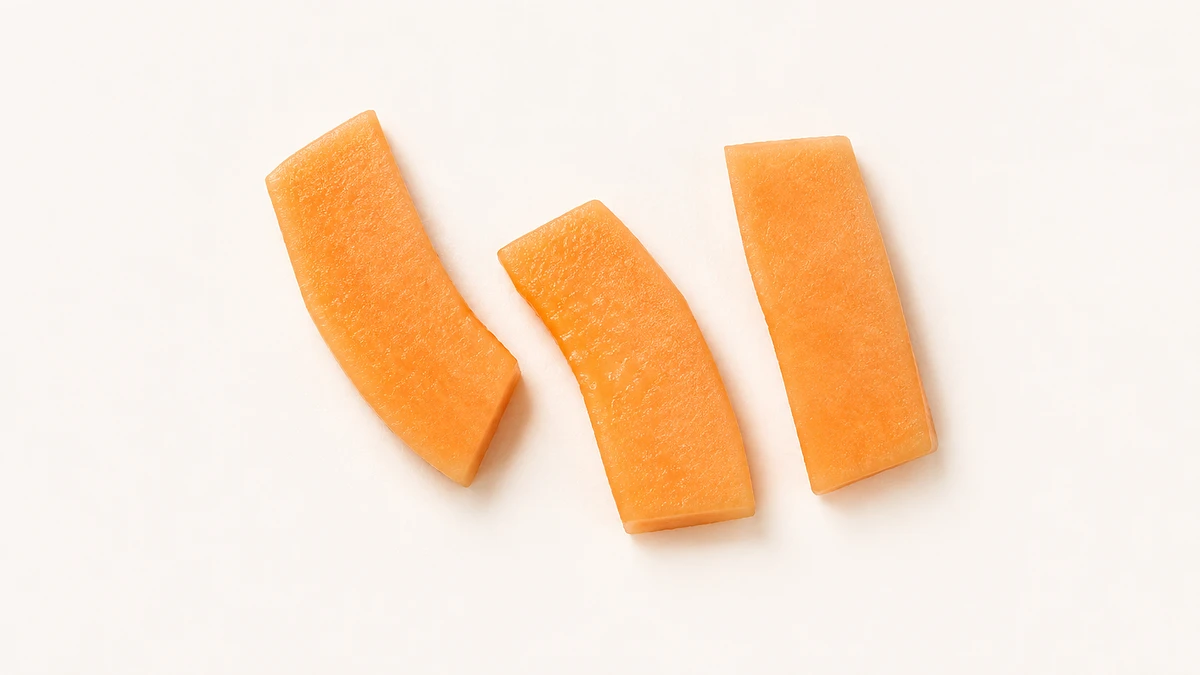
Large soft spear, seeds removed
Finger-length spear, about as thick as an adult finger
Choose a very ripe, soft melon and cut a thick, finger-length spear with the seeds and rind removed, thick enough for baby to grip in a fist and gnaw the end. If it's too slippery to hold, roll it in a little baby cereal or finely ground oats. Don't worry if not much goes in at first.
How to prepare
No cooking needed. Scrub the whole melon under running water first, then remove the seeds and rind and cut into large spears - washing before cutting keeps bacteria off the flesh. Serve fully ripe and soft; a chilled spear can soothe sore gums.
9+ months old
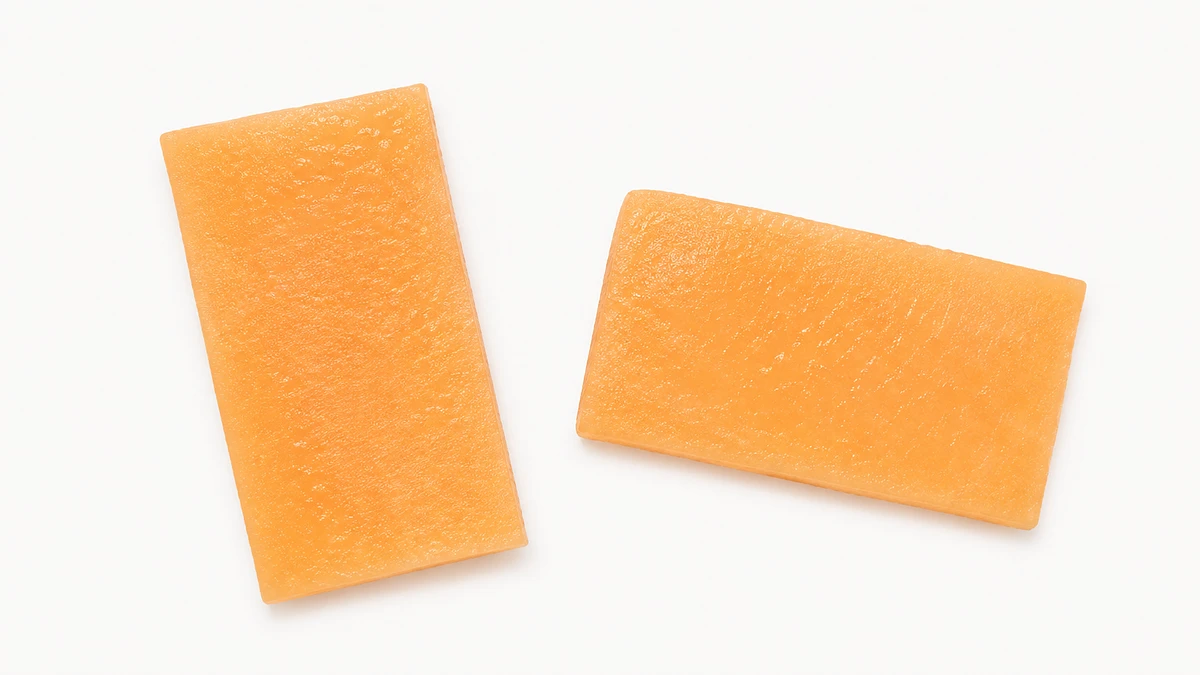
Thin, flat spears or strips
Finger-length, flat rather than chunky
Keep offering long, flat spears or strips of soft, ripe melon that baby can hold and gnaw - flat shapes are easier to manage than cubes, which stay slippery and firm in a small mouth. If pieces slip, rolling them in a little baby cereal or ground oats still helps with grip. Skip melon balls and chunks: round, firm, slippery shapes are exactly what small airways struggle with.
How to prepare
No cooking needed. Scrub the whole melon under running water before cutting, then remove the seeds and rind and cut into flat spears or strips. Mashed melon also stirs nicely through plain whole-milk yogurt.
18+ months old
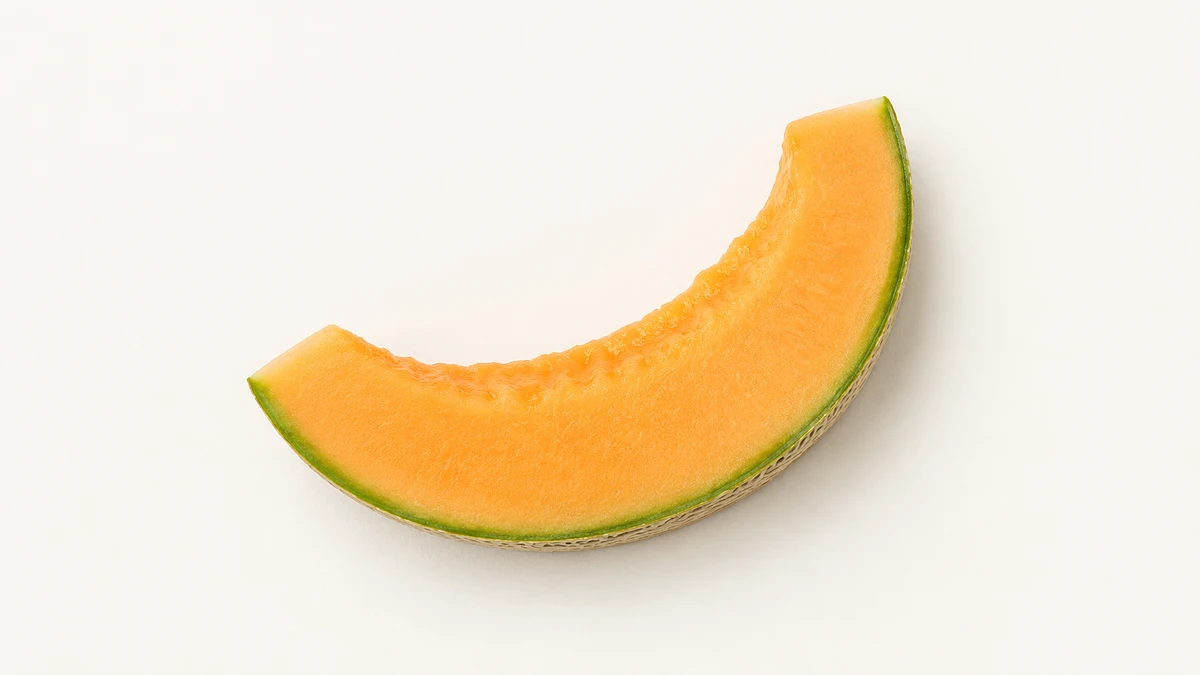
Large wedge with the rind left on as a handle
A classic melon wedge works now: the rind gives your toddler a solid handle, and biting the flesh off it is good practice for taking measured bites instead of stuffing. Show them how first - take a bite from your own wedge so they see the idea, and for the first few tries you can hold the rind while they bite. Remove any lingering seeds, and if they manage to bite off a piece of rind, stay calm and let them work it forward and spit it out.
How to prepare
Scrub the rind especially well here - hands and mouth will be all over it, so the wash-before-cutting rule matters even more when the rind stays on. Cut a ripe melon into wedges, flick out the seeds, and serve. Smaller flat pieces are still fine alongside for less confident chewers.
Tips
- Ripe is a safety feature, not just taste. Underripe melon is firm - and firm plus slippery is the choking combination. Pick one that smells sweet at the stem end and gives slightly when pressed; if it's rock hard and scentless, let it sit on the counter a couple of days.
- Buy whole, not pre-cut. Pre-cut melon has been behind several outbreaks and you can't know how it was handled. A whole melon scrubbed and cut at home is the safer version of the same fruit.
- Frozen melon is a teething trick. Blend ripe melon and freeze the puree in small baby-size popsicle moulds - a quick rinse under water before serving stops it sticking to lips. Cold on sore gums is one of the easier wins in a teething week.
Sources
- Choking Hazards (Infant & Toddler Nutrition) - CDC
- When, What, and How to Introduce Solid Foods - CDC
- Food Allergies (the 9 major US allergens) - FDA
- Pollen Food Allergy Syndrome - ACAAI
- Melon allergy in ragweed-allergic subjects - PubMed 21262100
- Selecting and Serving Produce Safely (washing) - FDA
- Melons, cantaloupe, raw (FDC 169092) - USDA FoodData Central