 HeySolids
Choking risk
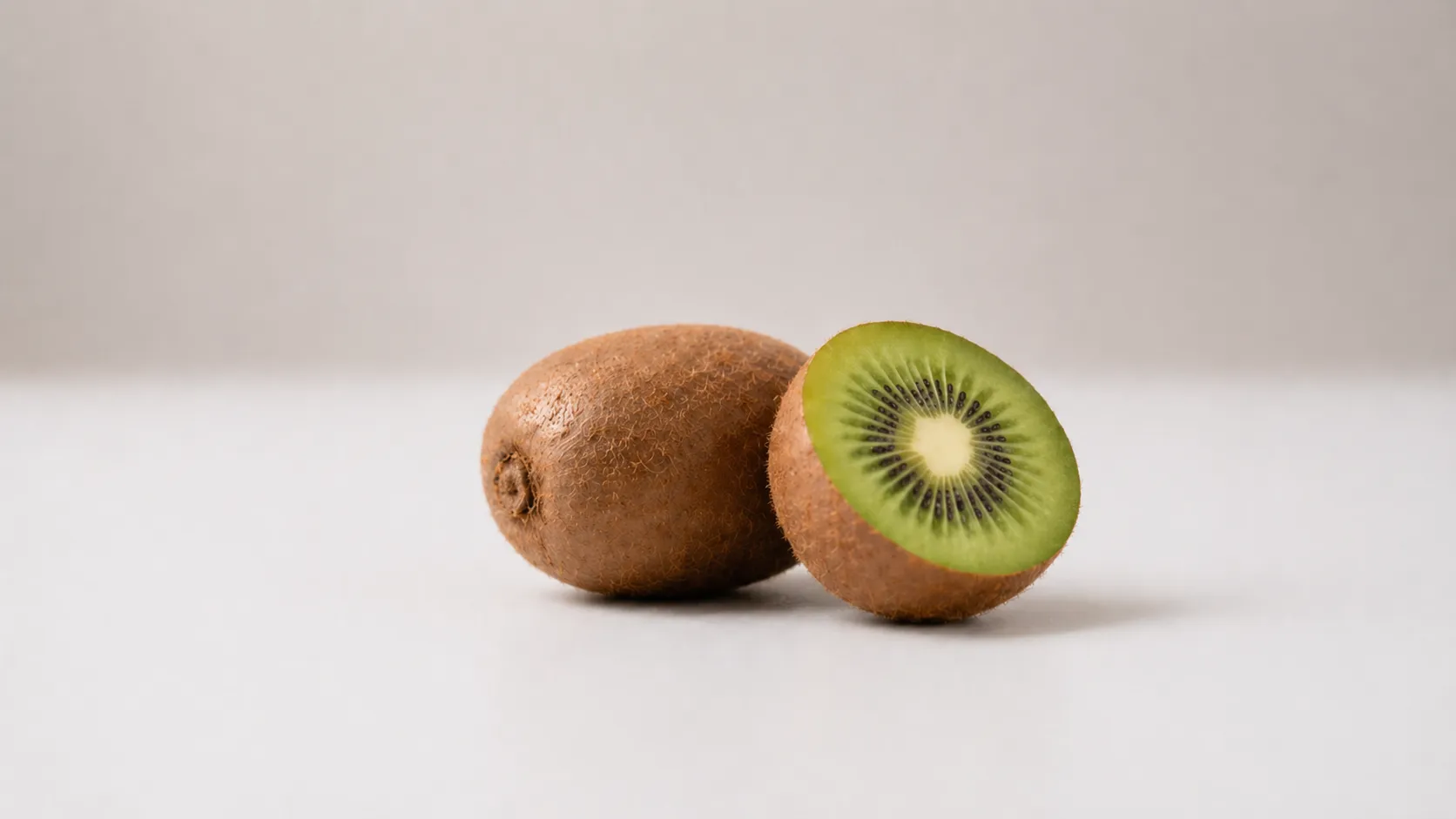
Ripe, peeled kiwi is a low choking risk.
Peel the fuzzy skin and serve only ripe kiwi that squashes between two fingers. See how to serve for prep by age.
Allergens
Kiwi is not a common allergen, but causes true allergies more than most fruits, and reactions can be more than mild.[3]
A red patch around the mouth or wherever the juice touches is different - kiwi is acidic, and that's contact irritation, not an allergy. It fades on its own. A spreading rash or swelling is another matter. Start with a small amount and watch for a reaction.
If baby refuses
It's usually the sourness. An underripe kiwi is properly sharp, so check yours gives to gentle pressure like a ripe avocado - the softer, the sweeter. Still a no? Mash it into yogurt or banana to take the edge off. Or try gold kiwi, which is sweeter than green.
How to serve
6+ months old
Peeled half to scoop, or large wedge
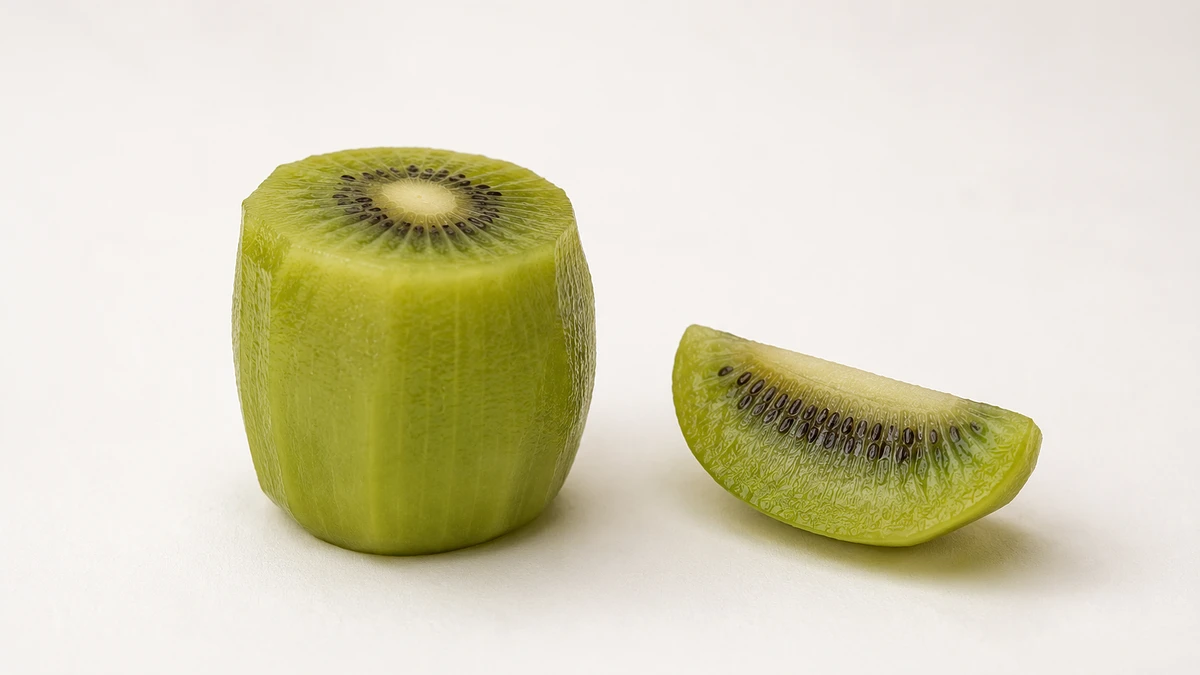
A peeled half, or a wedge about finger length
Peel the kiwi and offer a soft, ripe half for baby to scoop and gnaw, or a large wedge so a piece sticks out of the fist. Kiwi is slippery - rolling a wedge in a little ground oat helps small hands keep hold. You can also mash ripe kiwi into oatmeal or plain whole-milk yogurt on a pre-loaded spoon.
How to prepare
No cooking needed. Peel, then check the flesh squashes easily between your fingers before serving. The small black seeds are soft and fine to leave in.
9+ months old
Peeled bite-sized soft pieces
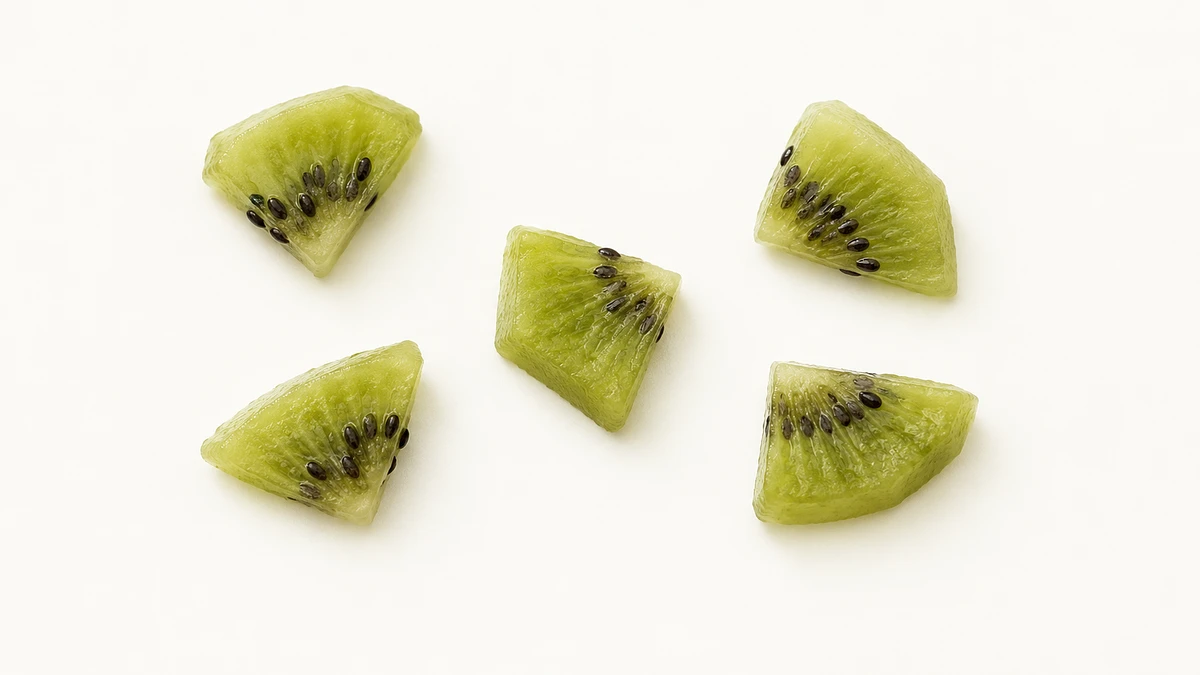
About 1/2 inch pieces as the pincer grasp develops
Peel the kiwi and cut the soft flesh into small pieces for pincer practice. The kiwi should be very soft - fully ripe, almost squishy - since firm kiwi is too much for early chewing. The pieces are slippery, so a light coating of ground oat helps, or keep a larger wedge going alongside. Halve any round, grape-sized pieces so nothing is an airway-sized shape.
How to prepare
No cooking needed. The kiwi should squash easily between your fingers - if it doesn't, let it ripen another day or two. Peel and cut into soft pieces.
12+ months old
Bite-sized pieces
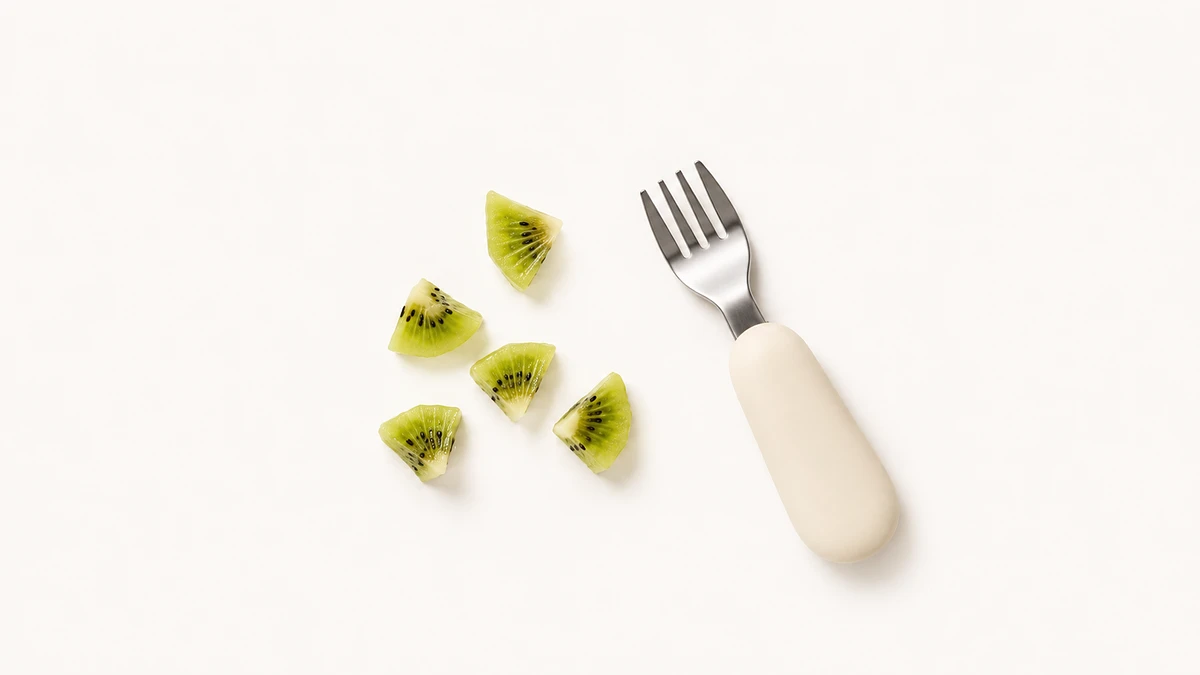
About 1/2 inch pieces
Offer bite-sized pieces of ripe, peeled kiwi as finger food, or load a few onto a fork for utensil practice. Kiwi also works stirred through oatmeal, yogurt, and fruit salads, or blended into a smoothie. Keep halving any round, grape-sized pieces.
How to prepare
No cooking needed. Serve ripe peeled kiwi raw, diced or sliced, or blend it into a smoothie.
Tips
- Ripen it in a bag with a banana. A rock-hard kiwi softens in a day or two sealed in a paper bag with a banana or apple - the ethylene does the work. On the counter alone it takes most of a week.
- Gold kiwi is the gateway kiwi. It's noticeably sweeter and less acidic than green - if green keeps getting refused, gold usually lands better. Same nutrition, softer flavour.
- Cut around the hard core if it's woody. The white core is usually fine to eat, but in some kiwis - especially less ripe ones - it's firm and chewy. If it doesn't squash with the rest of the flesh, slice it out.
Sources
- When, What, and How to Introduce Solid Foods - CDC
- Choking Hazards (Infant & Toddler Nutrition) - CDC
- Food Allergies (the 9 major US allergens) - FDA
- Pollen Food Allergy Syndrome - ACAAI
- Latex Allergy and Foods (latex-fruit: banana, avocado, kiwi, chestnut) - Allergy & Asthma Network
- Kiwifruit, green, raw (FDC 168153) - USDA FoodData Central