 HeySolids
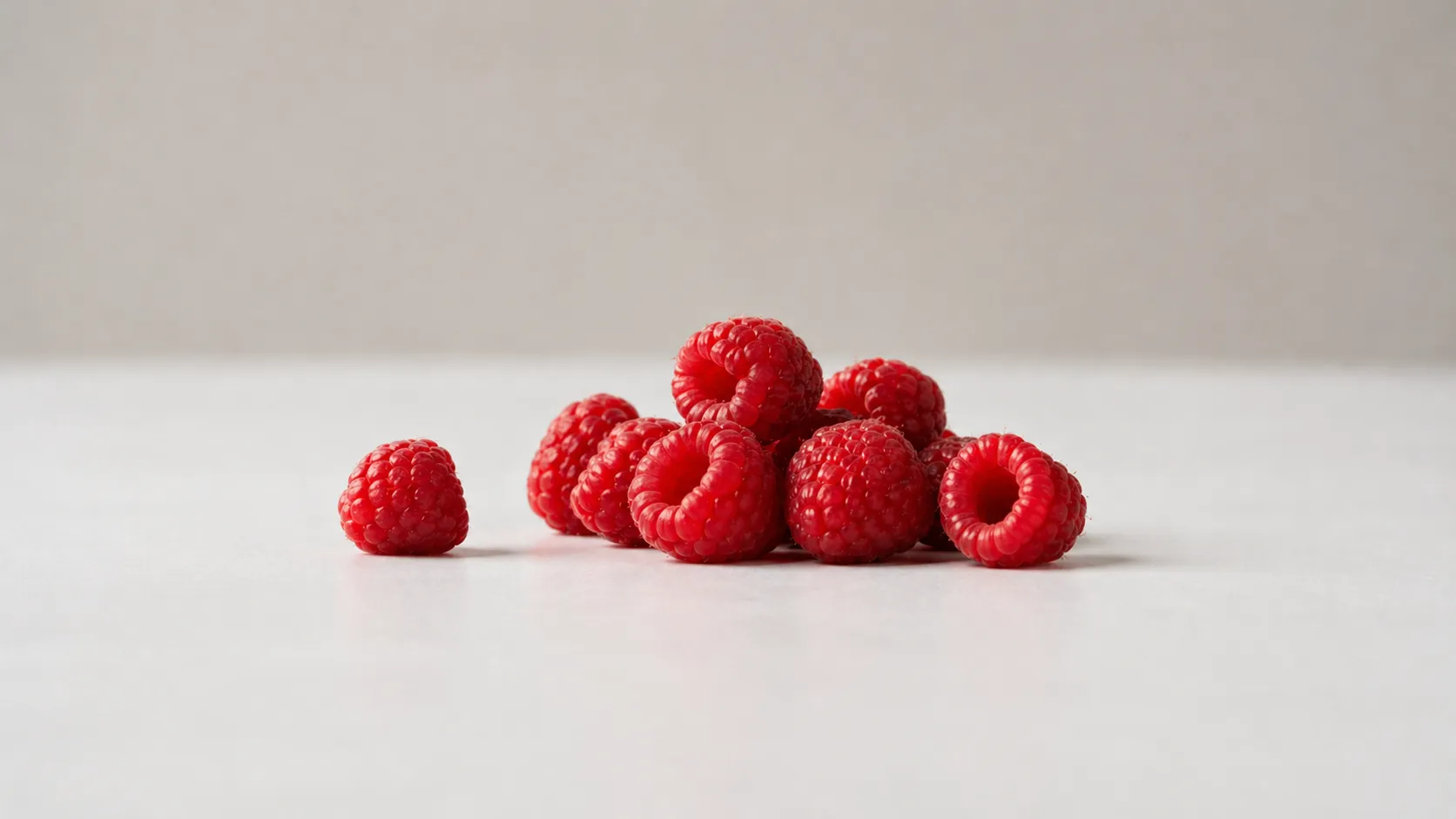
Choking risk
A ripe raspberry is a low choking risk - it is soft and hollow and collapses under gentle pressure, unlike the firm, round berries the CDC and AAP flag.
Offer fully ripe berries that squash easily, and flatten or mash any that feel firm. See how to serve for age-by-age prep.
Allergens
Raspberry is not a common food allergen, so a true food allergy to it is rare.[2]
Many babies get a harmless red rash where the fruit touches the skin around the mouth. It is irritation from the berry's natural acids, not an allergy, and fades on its own.
Start with a small amount and watch for a reaction.[5]
If baby refuses
Raspberries are tart, and an underripe one is sharp enough to put anyone off. Go for deep-red, soft berries - they're much sweeter than the firm pale ones. Still no? Mash them into yogurt, oatmeal, or some mashed banana, where the sourness mostly disappears.
How to serve
6+ months old
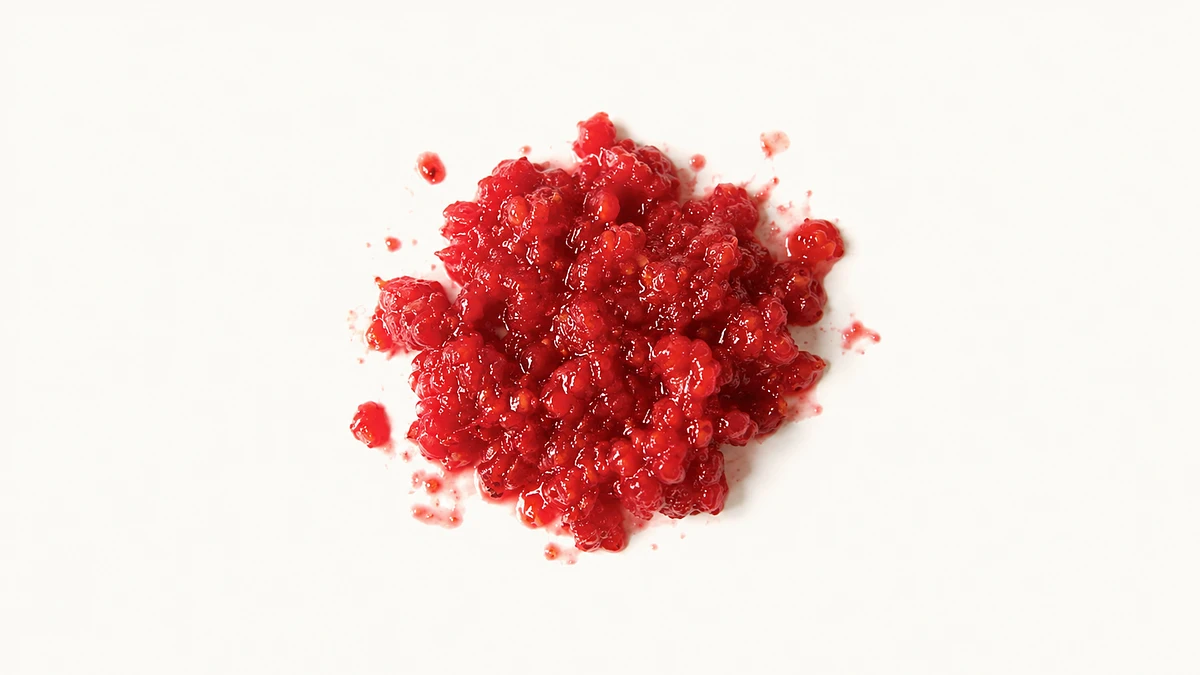
Whole soft berry, or mashed into soft food
Hand baby a whole soft, ripe raspberry to squash in their fist, or mash the berries into a scoopable food like oatmeal or plain whole-milk yogurt. Small pieces are hard to pick up at this age, so mashing into a soft food is often easiest to start.
How to cook
No cooking needed for ripe, soft berries. The seeds are tiny and fine for baby to eat, but if you want a smoother texture you can press the berries through a sieve. Firmer berries can be warmed briefly in a pan to soften, then cooled before serving. Frozen raspberries also work well - thaw them and they're soft straight away.
9+ months old
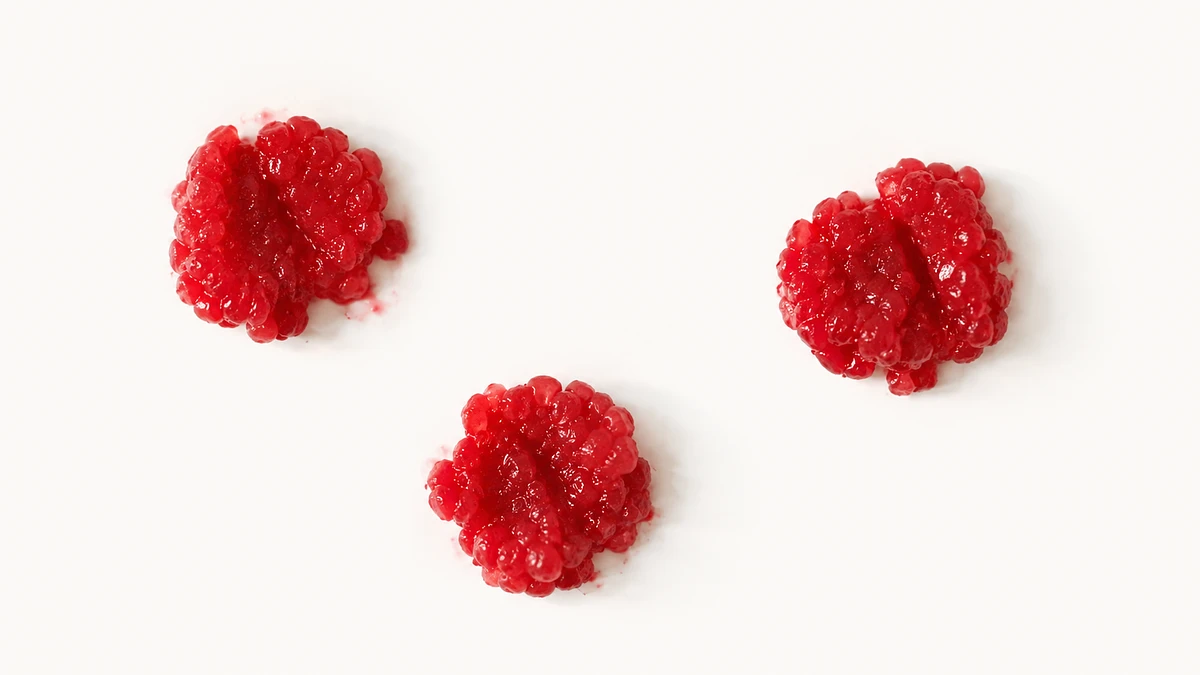
Soft, gently flattened raspberries
Put whole soft, ripe raspberries on the tray for pincer-grasp practice - picking up something this small between thumb and forefinger is exactly the skill babies are working on now. They squash easily, so they're forgiving at this stage. Flatten any firmer berries first, or mash them into oatmeal or yogurt.
How to cook
Ripe berries are served raw. Warm firmer ones briefly in a pan to soften, or cook them down into a soft sauce to stir through other foods.
12+ months old
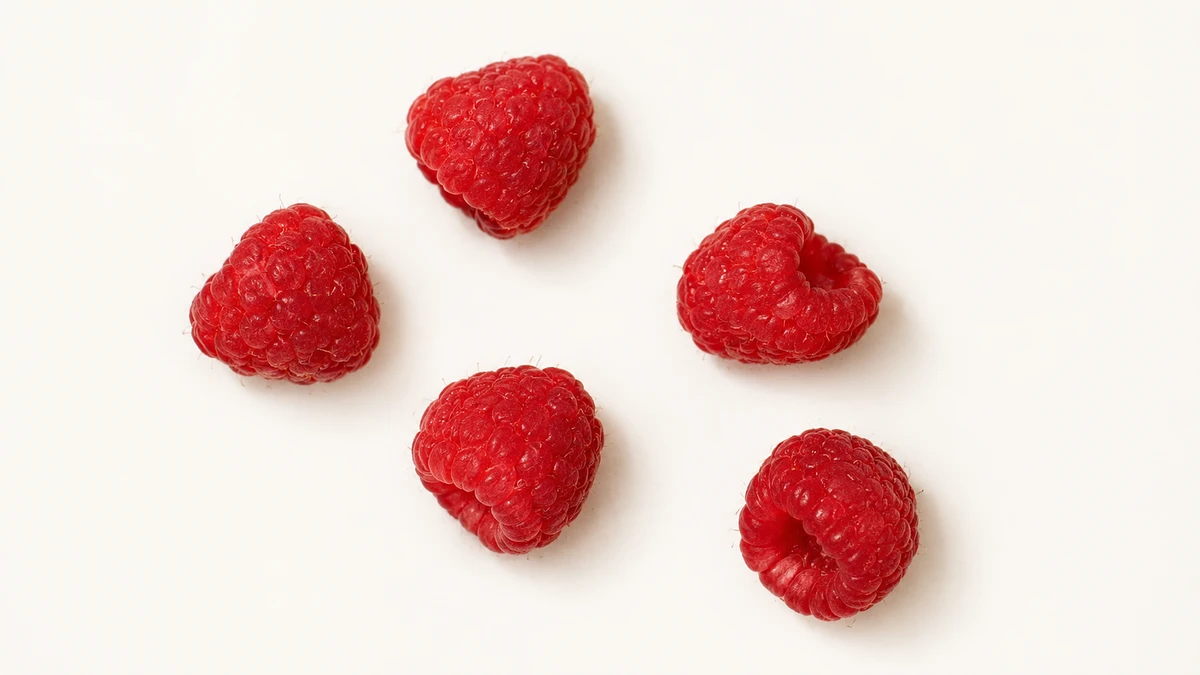
Whole ripe berries
Serve whole ripe raspberries as a simple finger food alongside family meals. Stir mashed berries into smoothies, oatmeal, muffins, or pancakes for variety.
How to cook
Ripe berries are served raw. Warm firmer ones briefly in a pan to soften, or cook them down into a soft sauce to stir through other foods.
Tips
- Frozen works just as well as fresh. Frozen raspberries are picked and frozen ripe, so they're a reliable option out of season - thaw and they're soft and ready, no prep. The cold also feels good on sore teething gums.
- Raspberry can tint poop. Pink stool or a few whole seeds in the diaper is just the fruit passing through. One thing worth knowing though: if there's red you can't trace to something they ate, or it comes with mucus, or it keeps happening, check with your doctor rather than assuming it's the berries.
- Store them dry. Raspberries mold fast - keep them unwashed in their vented container and rinse just before serving.
Sources
- When, What, and How to Introduce Solid Foods - CDC
- Food Allergies (the 9 major US allergens) - FDA
- Pollen Food Allergy Syndrome - ACAAI
- Oral Allergy Syndrome (OAS) - AAAAI
- When to Introduce Egg, Peanut Butter & Other Common Food Allergens - AAP HealthyChildren
- Raspberries, raw (FDC 167755) - USDA FoodData Central