 HeySolids
Choking risk
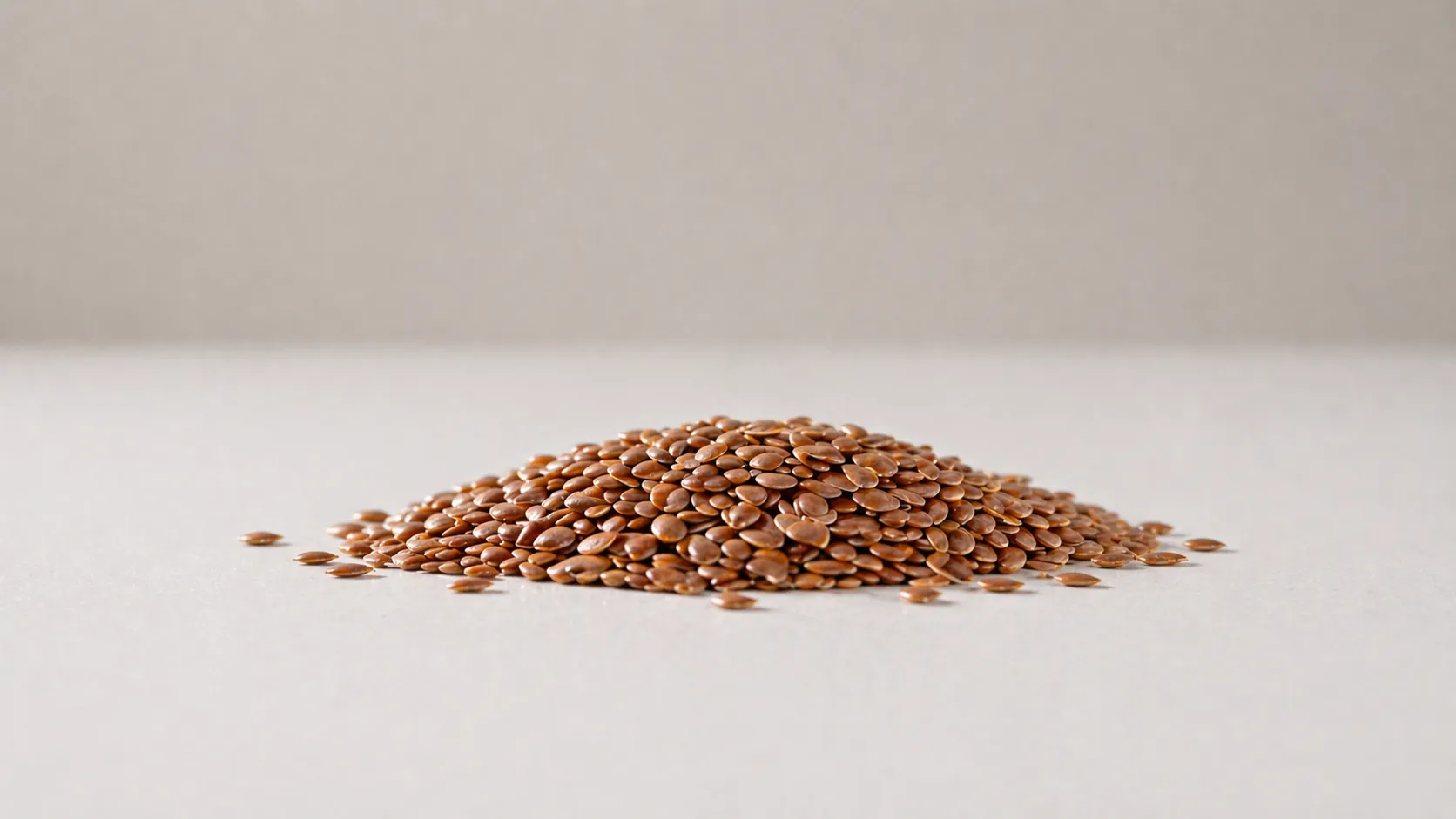
Ground flaxseed stirred into food is a low choking risk, but whole seeds are tiny, hard, and slippery - small enough to be a choking or aspiration risk for a baby.
Always grind flaxseed and stir it into a soft, wet food, rather than serving it whole or sprinkled dry. See how to serve for age-by-age prep.
Allergens
Flaxseed is not a common food allergen, so a true allergy to it is rare.[2]
Start with a small amount and watch for a reaction.
If baby refuses
Ground flax is mild and nutty, and pretty much vanishes once it's stirred in - so if a dish gets turned down, it's almost certainly the food it's in, not the flax. Just stir a spoonful into something they already like, like oatmeal or yogurt.
How to serve
6-24 months+
Ground and stirred into food
Flaxseed is always served ground, never whole - whole seeds pass straight through and are a choking risk. Stir a small amount of ground flax into a soft, wet food: oatmeal, yogurt, mashed fruit, purées, or into pancake and muffin batter. Around half a teaspoon to a teaspoon a day is plenty, since flax is high in fibre and a lot can loosen stools. Start small and mix it in well.
How to prepare
Grind whole flaxseed in a small grinder, or buy it pre-ground. Stir it into wet food or batter - no need to soak it, since flax doesn't swell the way chia does. Keep ground flax in the fridge or freezer, as it goes rancid quickly once ground.