 HeySolids
Choking risk
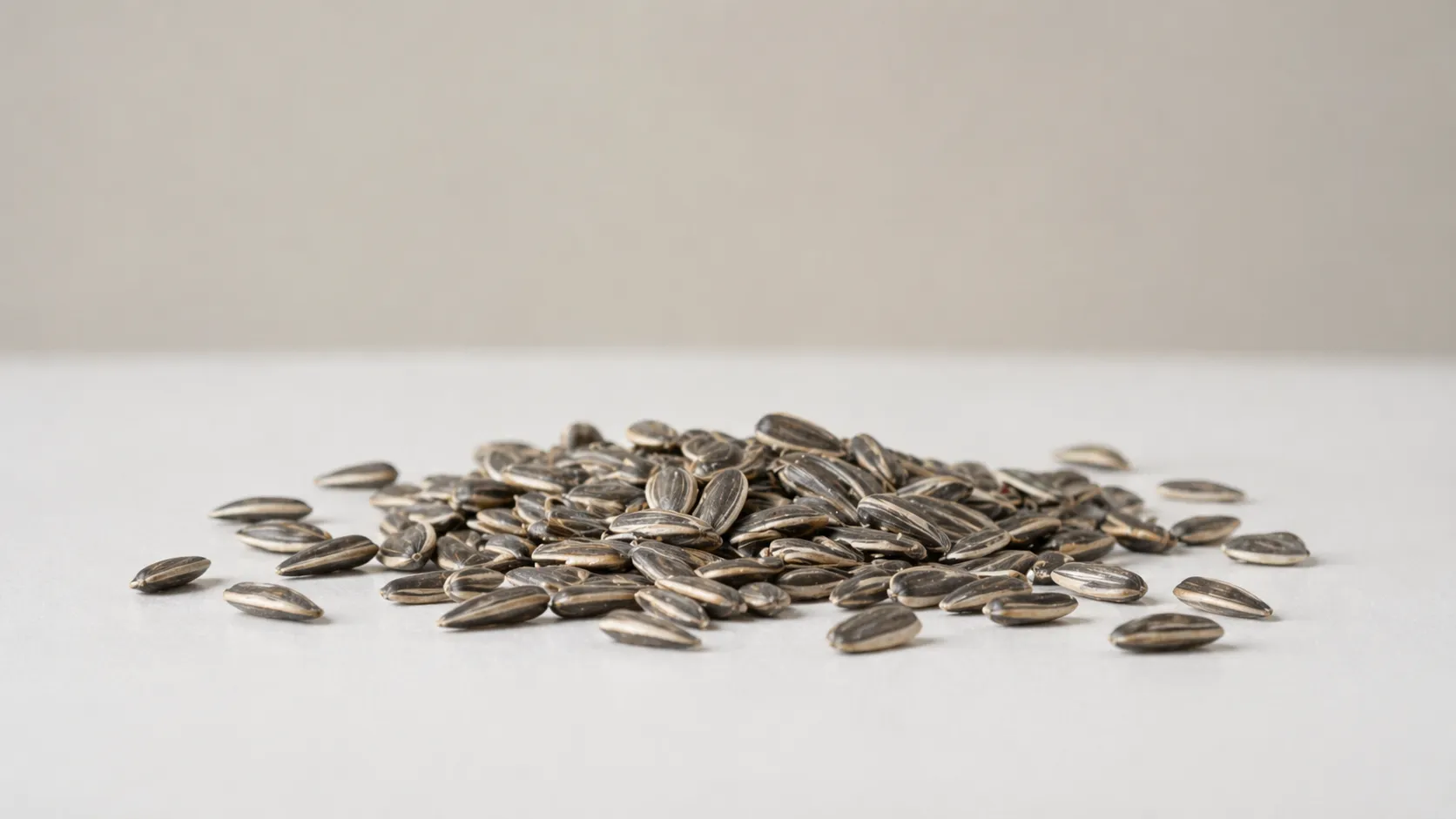
Whole sunflower seeds are a high choking risk - small, firm, and dry, they're hard for a baby to break down. The CDC lists seeds with whole nuts as a choking hazard, and whole seeds should wait until around age 4.
Thick sunflower seed butter is a hazard of its own - the same way a spoonful of peanut butter can be - so it's always thinned.
Until then, serve sunflower seed as thinned seed butter or finely ground seed. See how to serve for age-by-age prep.
Allergens
Sunflower seed is not a common food allergen, so a true allergy to it is rare.[2]
Start with a small amount and watch for a reaction.
If baby refuses
Sunflower seed butter is mild, a little nutty - not much to object to. If yours is unsure, it's usually the sticky texture, so loosen it more than you think and stir it through porridge or yogurt they already know, or spread it thin on a soft toast finger. Keep offering it - tastes change with repeat tries.
How to serve
6+ months old
Thinned seed butter or ground seed, stirred in
A small amount, mixed into soft food
Thin a little smooth sunflower seed butter with water, milk, or yogurt and stir it into porridge or yogurt, or sprinkle finely ground seed into soft, scoopable food. Offer it from a pre-loaded spoon. Use ground seed or smooth butter, never whole seeds, and introduce it on its own first so you can watch for a reaction.
How to prepare
No cooking needed. Whisk smooth seed butter with a little water until pourable, or grind hulled seeds finely in a clean spice or coffee grinder, then stir a small amount into wet food. Skip whole seeds and thick, sticky spoonfuls of butter.
12+ months old
Seed butter or ground seed across dishes
A thin layer, or 1 to 2 teaspoons stirred in
Use sunflower seed butter and ground seed freely in family food: spread thinned butter on soft strips, whisk it into sauces and dips, and stir or bake ground seed into porridge, yogurt, and bakes. Keep the butter loose rather than a thick, sticky spoonful. Save whole seeds for older children who chew well and sit calmly.
How to prepare
Whisk seed butter into dressings and sauces, spread it thinly, or grind hulled seeds finely and stir or bake into dishes. Keep it loose rather than a thick blob, and keep avoiding whole seeds for young toddlers.
24+ months old
Ground seed and seed butter across family food
Serve sunflower seed as smooth thinned butter or finely ground - sunflower butter as the sandwich spread, stirred into oatmeal and yogurt, folded into oat bars and muffins, or ground seed dusted over savory dishes. Let your toddler spread the thinned butter on toast themselves with a blunt knife.
Sunflower butter is also the usual stand-in where peanut butter can't go - nut-free homes and, later, school lunches.
Whole and chopped sunflower seeds wait until around age 4, when chewing can handle them.
Tips
- Read the jar before you buy. Sunflower butter should list sunflower seeds and little else - the big-brand jars are often sweetened and salted, and the difference between two shelves' worth is usually just the ingredients list. No-sugar-added versions sit right next to the sweetened ones.
- Don't be alarmed by green. Sunflower butter can turn baked goods and even leftovers a startling green - it's a harmless reaction between the seeds and baking soda, not spoilage. The muffins are fine.