 HeySolids
Choking risk
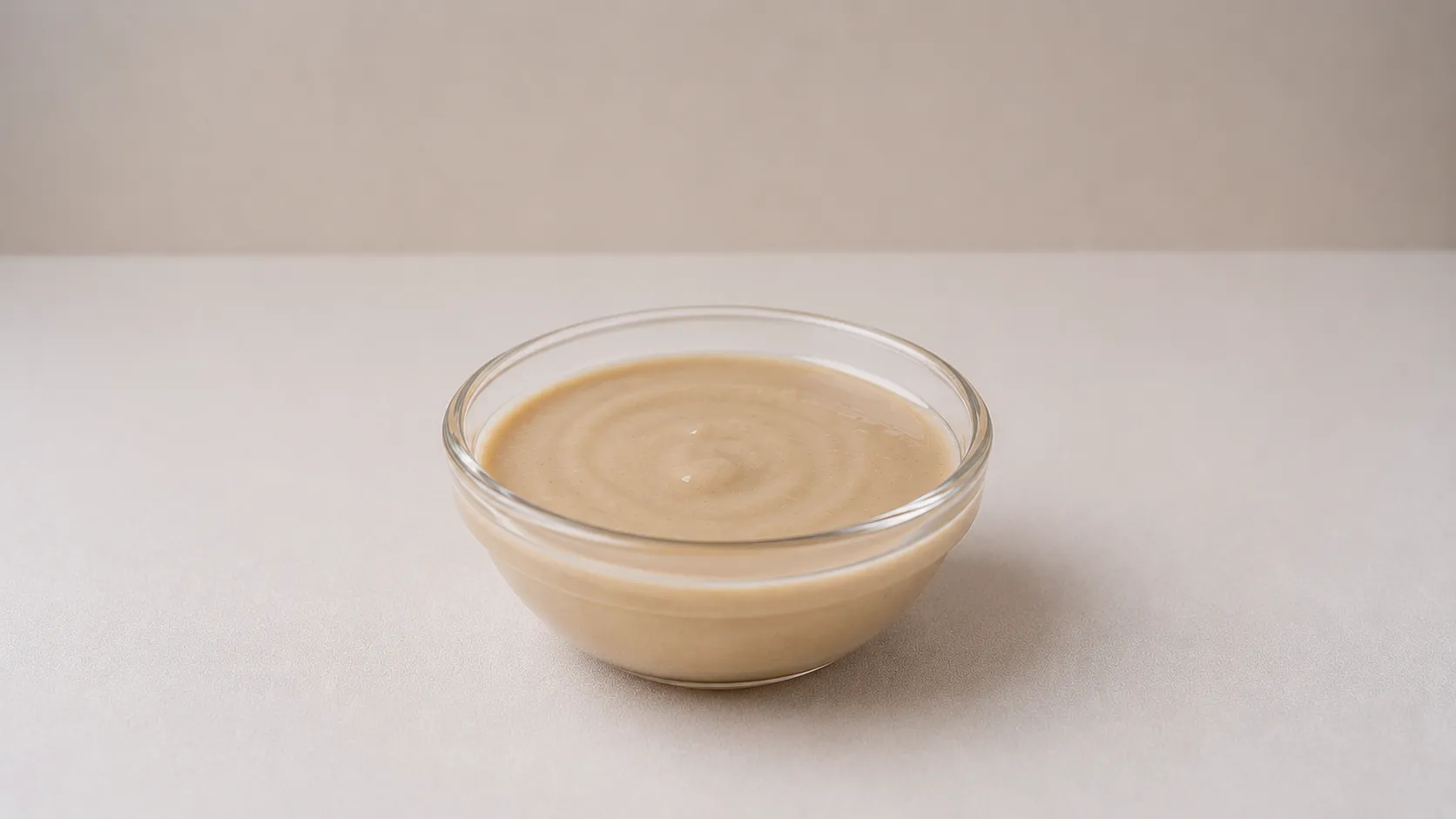
Thinned tahini is a low choking risk - smooth and easy to swallow, but a thick, sticky glob can be hard to manage, much like nut butter.
Loosen tahini into a pourable paste and drizzle, stir, or spread it thinly rather than serving it straight from the jar. See how to serve for age-by-age prep.
Allergens
Sesame is one of the nine most common food allergens, and tahini - ground sesame - is often a baby's first taste of it.[1]
There's no reason to delay it - offer it around 6 months, then keep it in your baby's diet regularly.
Offer tahini on its own the first time, earlier in the day and when you can watch baby for about two hours afterward. Start with a small taste, around a quarter teaspoon, and build up gradually if all's well. Always watch for a reaction.[3]
If baby refuses
Tahini is nutty but a little bitter on its own, and thick enough that babies often prefer it mixed into something. If it's turned down, thin it and stir it into a familiar food - swirl it through yogurt or oatmeal, blend it into a vegetable purée, or mix it into hummus. A drop of something sweet like mashed banana or a little fruit purée balances the bitterness.
How to serve
6+ months old
Thinned drizzle or stirred in
A small amount, thinned and mixed into food
Offer a small amount of well-stirred tahini, thinned with water, milk, or yogurt, then drizzled over puree or porridge, stirred into yogurt, or served from a pre-loaded spoon. Introduce sesame on its own first so you can watch for a reaction, then start mixing it into dishes.[3]
How to prepare
Stir the jar well, then whisk tahini with a little water - it stiffens at first, then loosens - until smooth and pourable. Mix into soft, scoopable foods rather than serving a thick blob.
12+ months old
Spread, dressing, sauce, or dip
A thin layer, or 1 to 2 teaspoons stirred in
Use tahini freely in family food - whisked into dressings and dips, stirred into hummus, swirled into porridge, or baked into bars and muffins. Spread it thinly on toast and soft strips. It pairs especially well with banana and apple.[3]
How to prepare
Whisk into dressings, sauces, and dips, stir into hummus, spread thinly on toast, or use in baking. Keep it loose rather than a thick, sticky blob.