 HeySolids
Choking risk
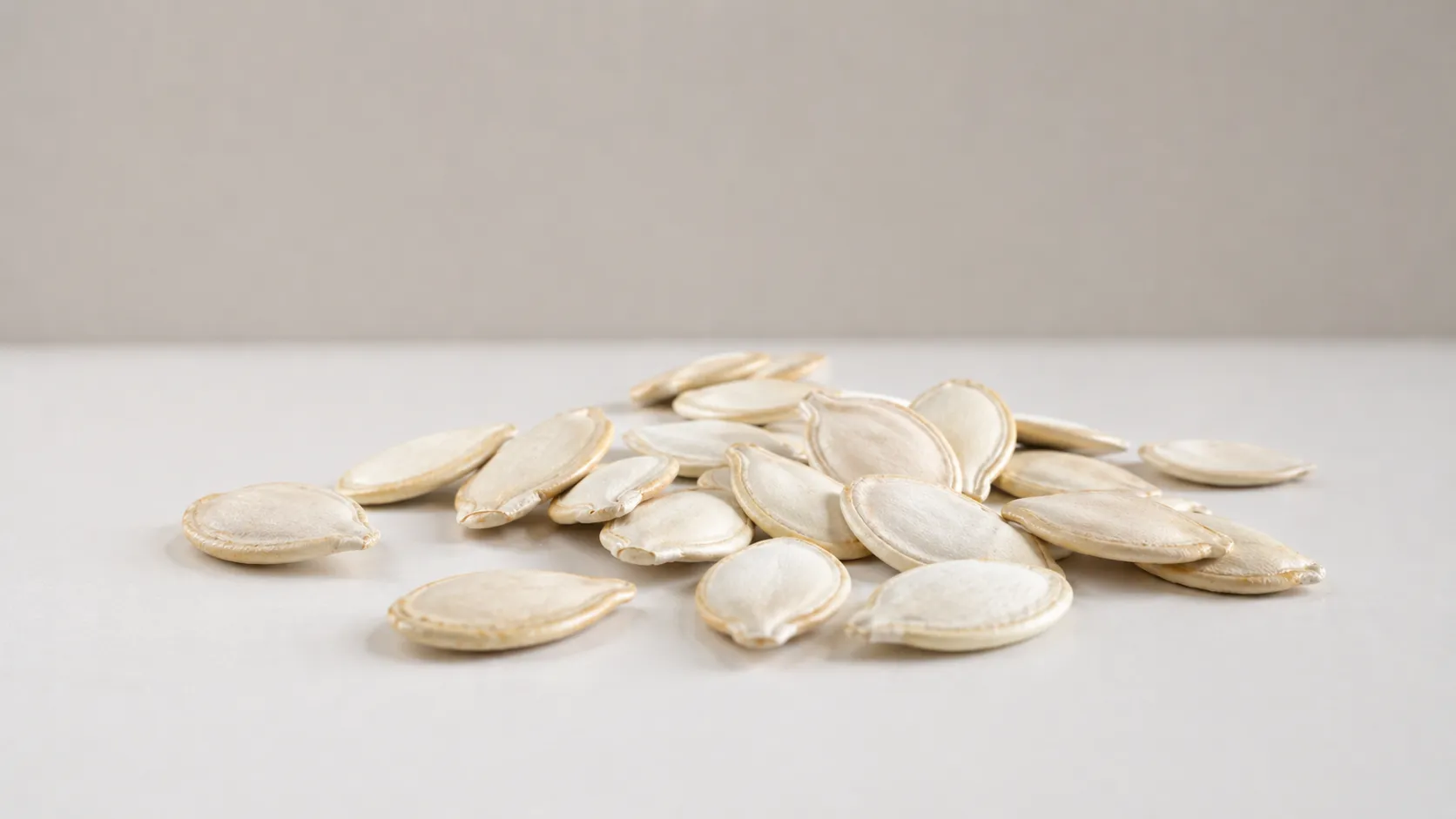
Whole pumpkin seeds are a high choking risk - small, firm, and dry, they're hard for a baby to break down, and that includes shelled green pepitas, which are no softer. The CDC lists seeds with whole nuts as a choking hazard, and whole seeds should wait until around age 4.
Until then, serve pumpkin seed ground completely fine, or as a smooth seed butter mixed into soft food. See how to serve for age-by-age prep.
Allergens
Pumpkin seed is not a common food allergen, so a true allergy to it is rare.[1]
Start with a small amount and watch for a reaction.
If baby refuses
Ground pumpkin seed has a mild, nutty taste that all but disappears once mixed in. If a dish is refused, the base food is the likelier reason than the seed - stir a small spoonful into something baby already enjoys instead, like oatmeal, yogurt, or a savory mash. Keep offering it - tastes change with repeat tries.
How to serve
6+ months old
Ground seed or thinned seed butter stirred into food
A small amount, spoon-fed or pre-loaded
Stir a small amount of finely ground pumpkin seed into oatmeal, yogurt, or puree, or thin smooth seed butter with a little breast milk, formula, or water and mix it into soft, scoopable food. Offer it from a pre-loaded spoon. Always use ground seed or smooth butter, never whole seeds, and keep the amount small since pumpkin seed is high in fiber.
How to prepare
No cooking needed. Grind shelled pumpkin seeds (green pepitas) fine in a clean spice or coffee grinder, or use a smooth seed butter, then stir a little into wet food. Toasting the seeds before grinding gives a milder, nuttier flavor.
12+ months old
Ground seed or seed butter across dishes
Use pumpkin seed as part of family meals: stir ground seed into oatmeal, mashes, and sauces, bake it into muffins, or spread thinned seed butter onto soft strips and into dips. Keep amounts modest - pumpkin seed packs a lot of fiber into a small spoonful. Never whole or chopped seeds - whole and chopped pumpkin seeds wait until around age 4, when chewing can handle them.
How to prepare
Grind shelled pumpkin seeds fine, or use smooth seed butter, then add a small amount to breakfasts, mashes, sauces, dips, or baking. Toasting the seeds before grinding deepens the flavor. Keep portions small, since pumpkin seed is high in fiber.
24+ months old
Ground seed and seed butter across family food
Serve pumpkin seed finely ground or as smooth seed butter, thinned - blended into a pumpkin seed pesto for pasta, stirred through granola and oat bars, folded into pancake and muffin batters, or dusted over savory dishes. Let your toddler spread the thinned butter on toast themselves with a blunt knife.
Pumpkin seed is also a handy stand-in where nuts can't go - its pesto is the classic nut-free version.
Whole and chopped pumpkin seeds wait until around age 4, when chewing can handle them.