 HeySolids
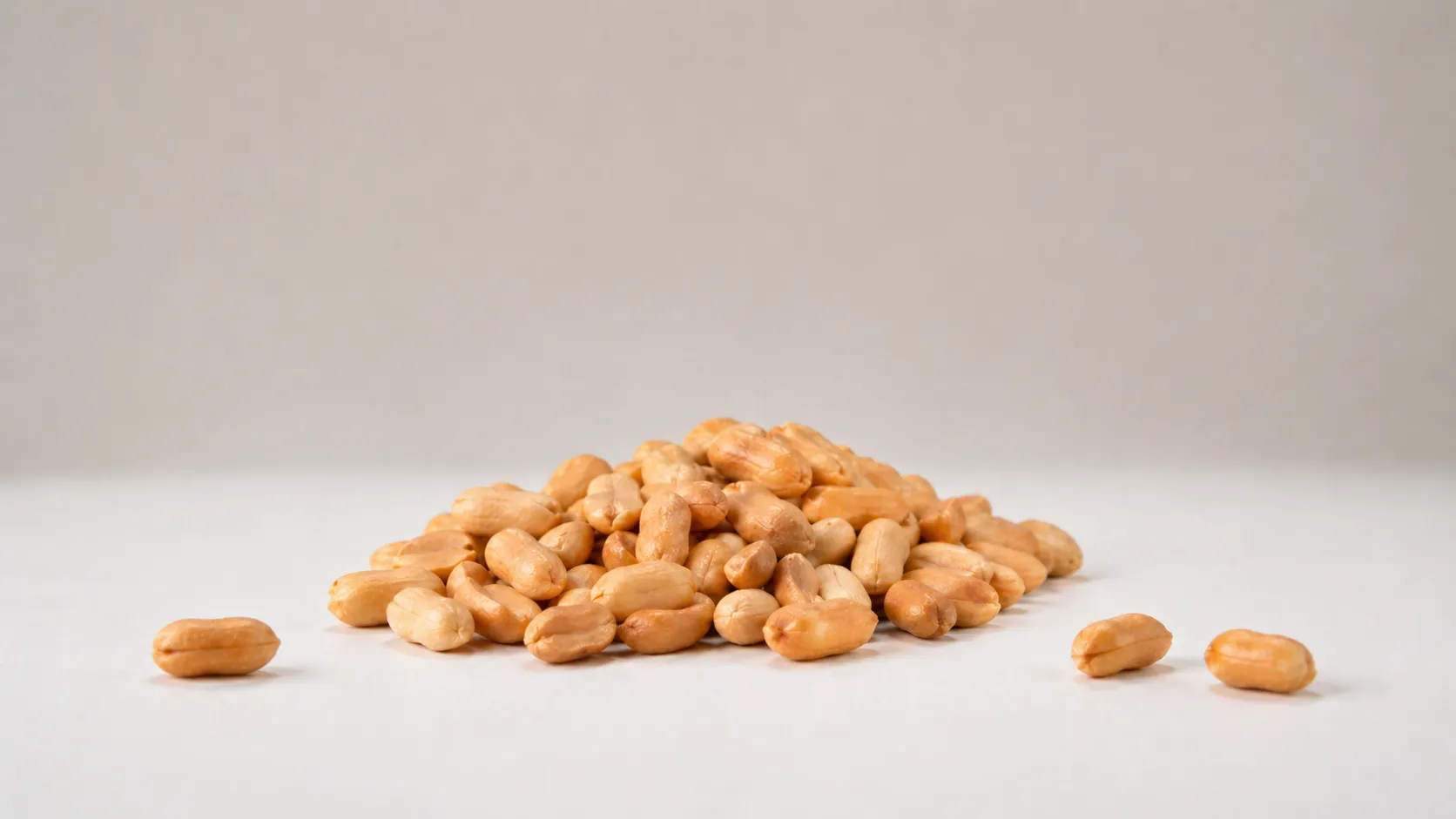
Choking risk
Whole peanuts are a high choking risk - they're hard, and exactly the size and shape to block a small airway.
The CDC lists whole and chopped nuts among the foods to avoid for young children, so hold off until at least age 4.
Thick peanut butter is a hazard too: a glob straight from the spoon is sticky enough to cause the same problem.
Serve peanut only as smooth peanut butter thinned or spread in a thin layer, or as peanut powder stirred into other food. See how to serve.
Allergens
Peanut is a common food allergen and a frequent cause of serious reactions in children.[2]
Don't delay it: introducing peanut around 6 months and keeping it in the diet lowers allergy risk rather than raising it.[3]
If your baby has severe eczema, an egg allergy, or both, the risk is higher - talk to your pediatrician first, who may suggest testing or a supervised first taste. For these babies, guidance supports starting peanut as early as 4 to 6 months - but only once your pediatrician has cleared it and baby is ready for solids.[4]
First taste
Give peanut by itself the first time, not mixed into a meal with other new foods - if there's a reaction, you'll know what caused it.
Introduce it early in the day rather than before a nap or bedtime, so you can watch in the hours after.
Start with a small amount, about a quarter teaspoon of thinned smooth peanut butter - and watch for a reaction.
Call 911 for trouble breathing, swelling of the lips or tongue, or if baby becomes pale or floppy.
Peanut needs to be eaten to count - a smear on the skin isn't a test and isn't a substitute for feeding it. If your baby has eczema, keep peanut butter off broken or inflamed skin where you can, and wipe hands and faces after meals.[7]
Why "keep it in the diet" matters
The protection doesn't come from the first taste - it comes from eating peanut regularly over months and years. In the study behind current guidance, babies who ate peanut a few times a week from infancy were far less likely to develop an allergy than babies who avoided it, and the protection lasted.[4] The immune system learns to treat peanut as food by meeting it often - regular exposure is what builds the tolerance, so make it a routine part of the diet rather than a one-off introduction.
How often and how much
Aim for peanut a few times a week - three servings is the target in the guidelines. A serving is about 2 teaspoons of smooth peanut butter, thinned with warm water or stirred into a puree, or roughly 2 teaspoons of peanut powder mixed into oatmeal, yogurt, or fruit.[4] It doesn't need to be a production: a peanut butter swirl in breakfast a few mornings a week does the job.
If you've had a gap
Life happens - a holiday, a fussy phase, you simply forgot. A pause of a few weeks isn't a reason to worry or to start over. Just bring it back into the rotation. If it's been many months, start with a smaller amount and watch as you would with any allergen.
If baby refuses
Refusing peanut butter doesn't mean stopping peanut. Rotate the format: powder stirred into porridge, thinned into a smoothie, mixed through mashed banana, baked into a soft pancake. The exposure counts the same whichever way it goes in.
How to serve
6+ months old

Thinned smooth peanut butter
About 1/4 teaspoon to start
Thin a little smooth peanut butter with warm water, breast milk, or formula until it's a loose paste. Let baby suck a small smear from your clean fingertip, offer it on a pre-loaded spoon, or stir it into oatmeal, yogurt, or a puree your baby already likes. Peanut powder is even easier - it just blends in.
Introduce it on its own, early in the day rather than before a nap or bedtime, so you can watch for a reaction in the hours after. Once tolerated, keep it coming a few times a week.[3]
How to cook
No cooking needed. Mix about 1 teaspoon of smooth peanut butter with 2 to 3 teaspoons of warm liquid until loose, never a thick blob. Use only smooth peanut butter or peanut flour, never whole or chopped nuts.[1]
9+ months old
Thinly spread peanut butter on soft strips
Keep peanut on the menu a few times a week. Spread smooth peanut butter thinly on a strip of soft toast, stir it into oatmeal or yogurt, or thin it into a satay-style sauce over soft vegetables. Peanut flour bakes well into pancakes or muffins.
How to cook
No cooking needed. Spread peanut butter thin rather than in a glob, or thin it into a sauce or batter. Still no whole or chopped nuts.[1]
12+ months old
Thinly spread peanut butter or peanut flour
Keep offering smooth peanut butter and peanut flour regularly to maintain tolerance. Spread it thin on toast or soft strips, stir it into food or smooth sauces, and offer water alongside to help wash down sticky bites. Whole and chopped nuts stay a choking hazard until at least age 4.
How to cook
No cooking needed. Keep peanut butter spread thin or loosened into a dip, or stir peanut flour into food and baking. Still no whole or chopped nuts.
Tips
- Choose natural, no-added-sugar-or-salt peanut butter. Check the label reads just peanuts (or peanuts + salt). Some brands add sugar, palm oil, or a lot of salt.
- Watch for hidden peanut once it's in the diet. It turns up in satay, some baked goods, granola, and Asian and African dishes. Once tolerated that's fine, but it matters for knowing what caused a reaction early on.
- "May contain" labels aren't a ban. Once your baby tolerates peanut, precautionary "may contain traces" labelling isn't something you need to avoid.
- Powder is your friend for consistency. Peanut powder stirs into almost anything, doesn't go sticky, and makes it easy to keep exposure regular without it being a whole thing.
- Don't switch to whole nuts as a shortcut. The tolerance-maintaining dose is easy to hit with butter or powder; whole nuts stay off the menu for years regardless of allergy status.
Sources
- Choking Hazards (Infant & Toddler Nutrition) - CDC
- Peanut Allergy - FARE
- When to Introduce Egg, Peanut Butter & Other Common Food Allergens - AAP HealthyChildren
- Addendum Guidelines for the Prevention of Peanut Allergy in the US - NIAID 2017 (PMC5217343)
- When, What, and How to Introduce Solid Foods - CDC
- Peanuts, all types, raw (FDC 172430) - USDA FoodData Central
- AAP 2019 Clinical Report - "The Effects of Early Nutritional Interventions on the Development of Atopic Disease in Infants and Children"