 HeySolids
Choking risk
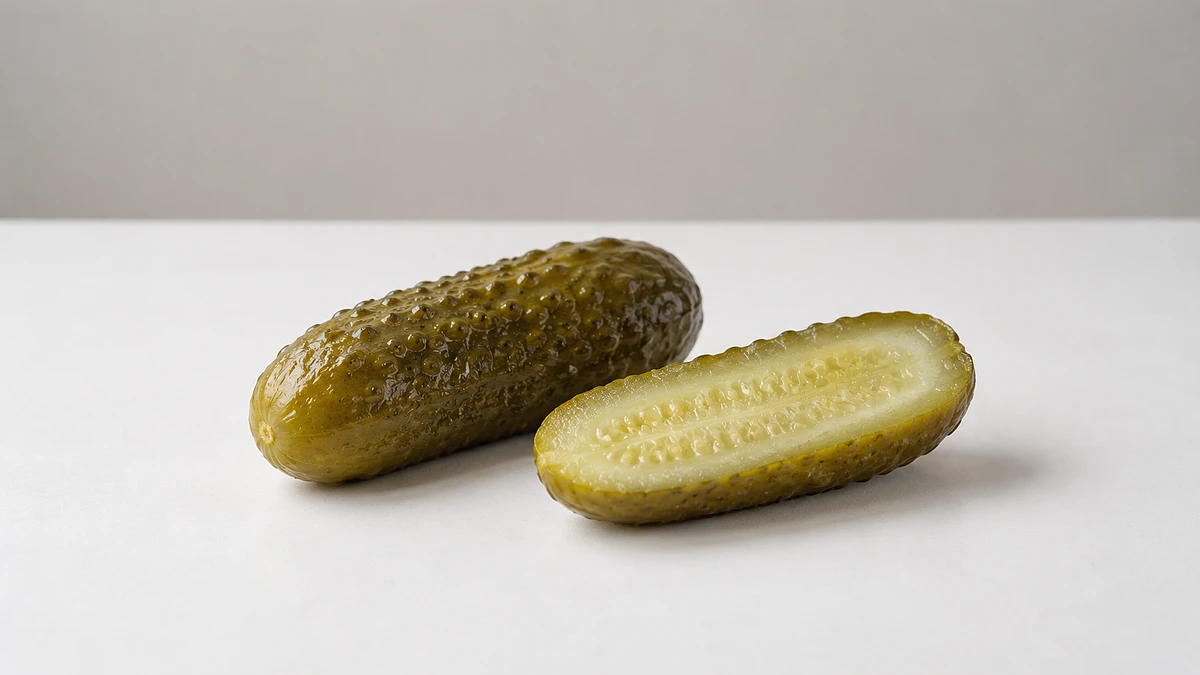
Pickles are a moderate choking risk - they stay firm and crunchy, and a round slice is exactly the coin shape that can seal a small airway.
Chop them into small pieces, never coins, spears, or a whole pickle. See how to serve for age-by-age prep.
Allergens
Cucumber is not a common food allergen, so a true allergy to a plain pickle is rare.[1]
The brine is where to look instead. Jarred pickles routinely carry garlic, dill, mustard seed, or celery seed, and bread-and-butter styles add sugar, so read the label if your child has known allergies.
Start with a small amount and watch for a reaction.
If baby refuses
Sour and salty together is a lot to meet at once, and it usually takes many tries. Stir a little finely chopped pickle through a dish they already like rather than offering a piece on its own, and keep the amount the same each time rather than building it up. This is a taste, not a portion.
Food safety
Pickles are preserved in salt and stay salty after rinsing: dill pickles run about 810 mg of sodium per 100 g, so one large 4-inch pickle carries close to 1,100 mg.[5] A 1 to 3 year old should stay under 1,200 mg for the whole day, which that single pickle very nearly is.[3]
Don't add salt to food in the first 12 months, and keep it low through the toddler years.[2] A reduced-sodium jar and a quick rinse both help, and refrigerator pickles made at home let you cut the salt right down. Plain cucumber is the everyday way to serve the same vegetable.
How to serve
Up to 12 months old
Best to skip - offer plain cucumber instead
Pickles are cucumbers cured in salt, and the salt is what preserves them. Even a small serving carries more sodium than a child under 1 needs in a day.
What to offer instead
Peeled cucumber, cut into soft sticks or small pieces, gives the same cool crunch with none of the brine.
12+ months old
Rinsed and finely chopped into family dishes
Small pieces, never coins or spears
A little finely chopped pickle can go into a family dish now and then - a tuna or potato salad, a sandwich filling. Chop it small enough that no round slices are left, and keep the rest of the meal low in salt.
How to prepare
Rinse under cold running water for a few seconds and pat dry - it takes the surface brine off, though the pickle stays salty through and through - then chop small on a board. Choose a reduced-sodium jar where one exists, and skip the pickle juice.
Sources
- Food Allergies (the 9 major US allergens) - FDA
- Foods and Drinks to Avoid or Limit (honey, added sugar, salt) - CDC
- Dietary Guidelines for Americans 2020-2025 (birth-24 months: no added sugar/salt under 2) - USDA/HHS
- Choking Hazards (Infant & Toddler Nutrition) - CDC
- Pickles, cucumber, dill or kosher dill (FDC 168558) - USDA FoodData Central