 HeySolids
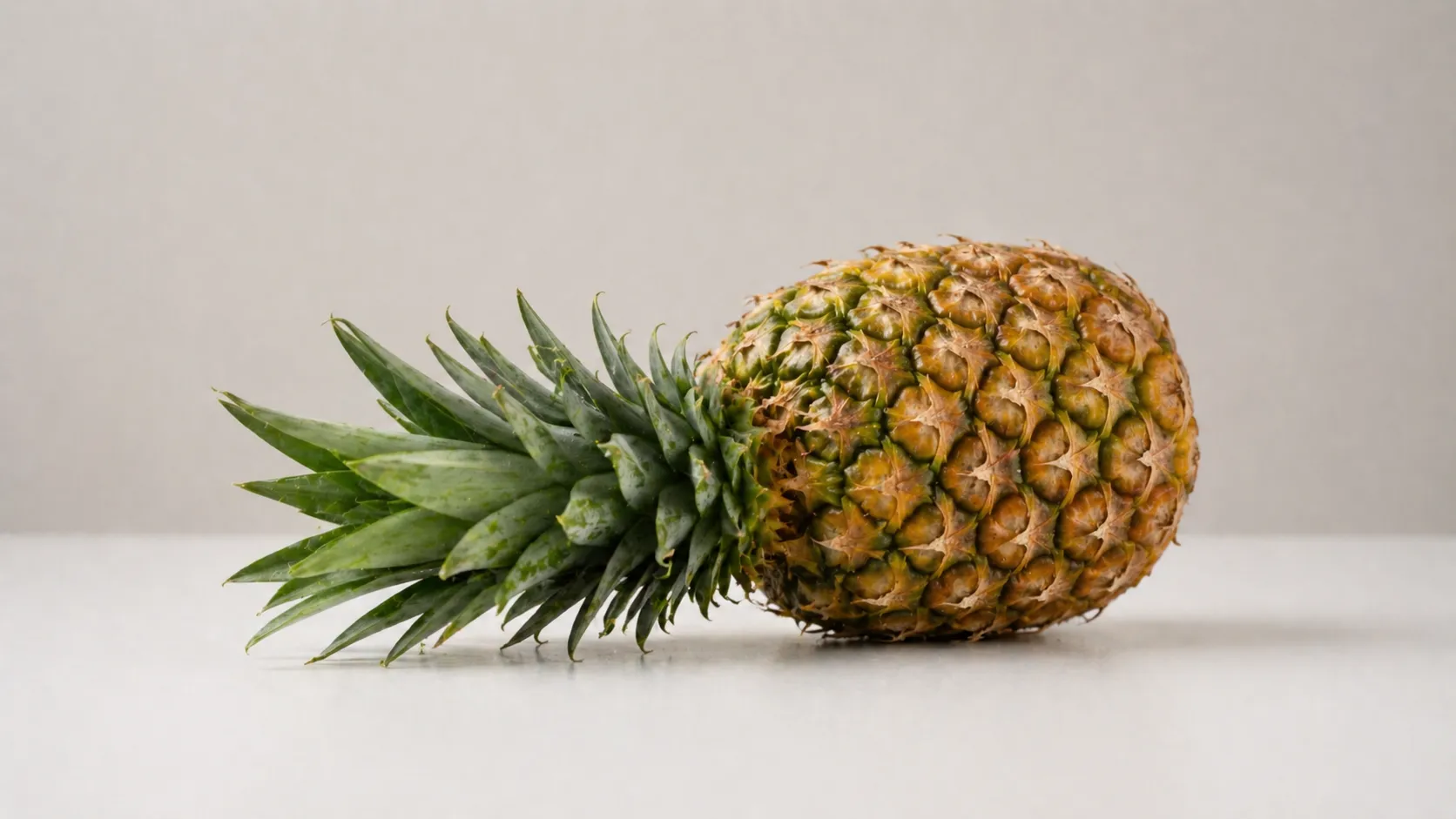
Choking risk
Pineapple is a moderate choking risk - the tough core and stringy flesh can be hard for a baby to chew.
Serve it very ripe and soft, cut across the grain into small pieces or thin spears, with the core, skin, and woody eyes removed. See how to serve for age-by-age prep.
Allergens
Pineapple is not a common food allergen, so a true food allergy to it is rare.[3]
Start with a small amount and watch for a reaction.
If baby refuses
If pineapple is too sharp, it may not be ripe enough - a fragrant, fully ripe fruit is much sweeter. Grilling or roasting it briefly mellows the tang, or stir a little through plain yogurt or oatmeal to soften both the flavor and the acid.
How to serve
6+ months old
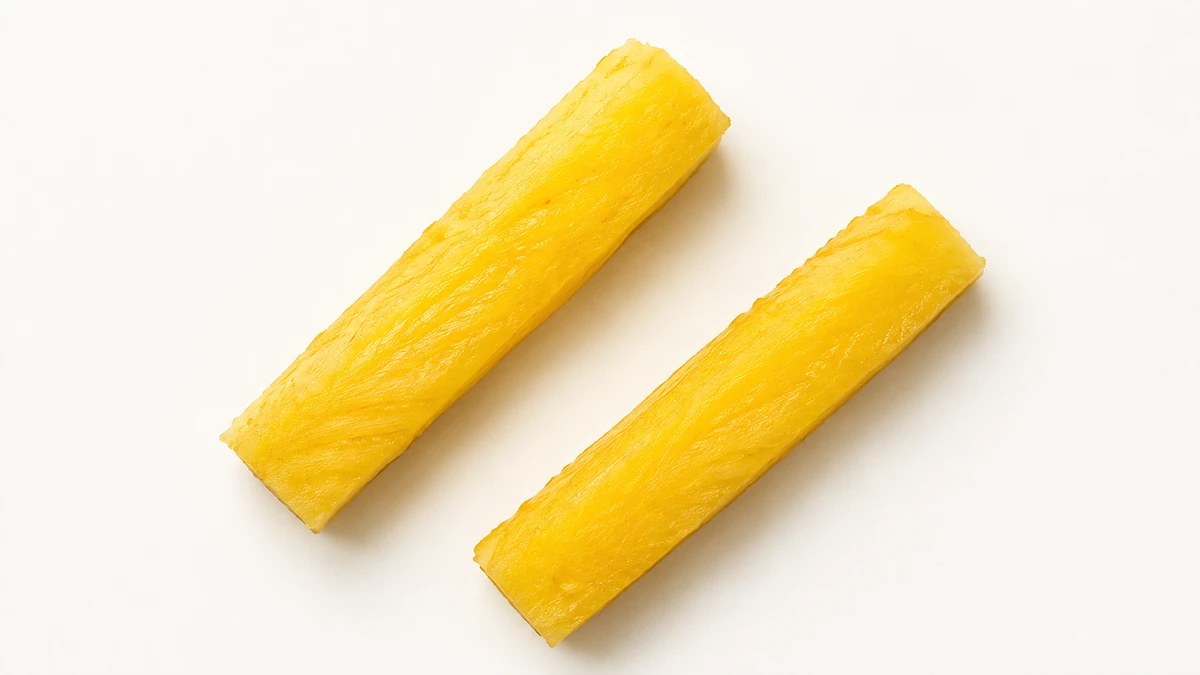
Large thin spear
Finger-length spear, about 2 to 3 inches, core removed
Peel a fully ripe pineapple, cut out the eyes and the tough core, then slice the flesh into large, thin spears about the length of an adult finger so baby can grip one with some sticking out to gnaw. Press a spear between your fingers first and only serve it if it gives easily. A little plain whole-milk yogurt smoothed around the mouth helps with the acid.
How to cook
No cooking is needed if the pineapple is fully ripe and soft. Grilling or roasting briefly softens the flesh further and mellows the acidity if you prefer. The juice stains, so dress baby accordingly.
9+ months old
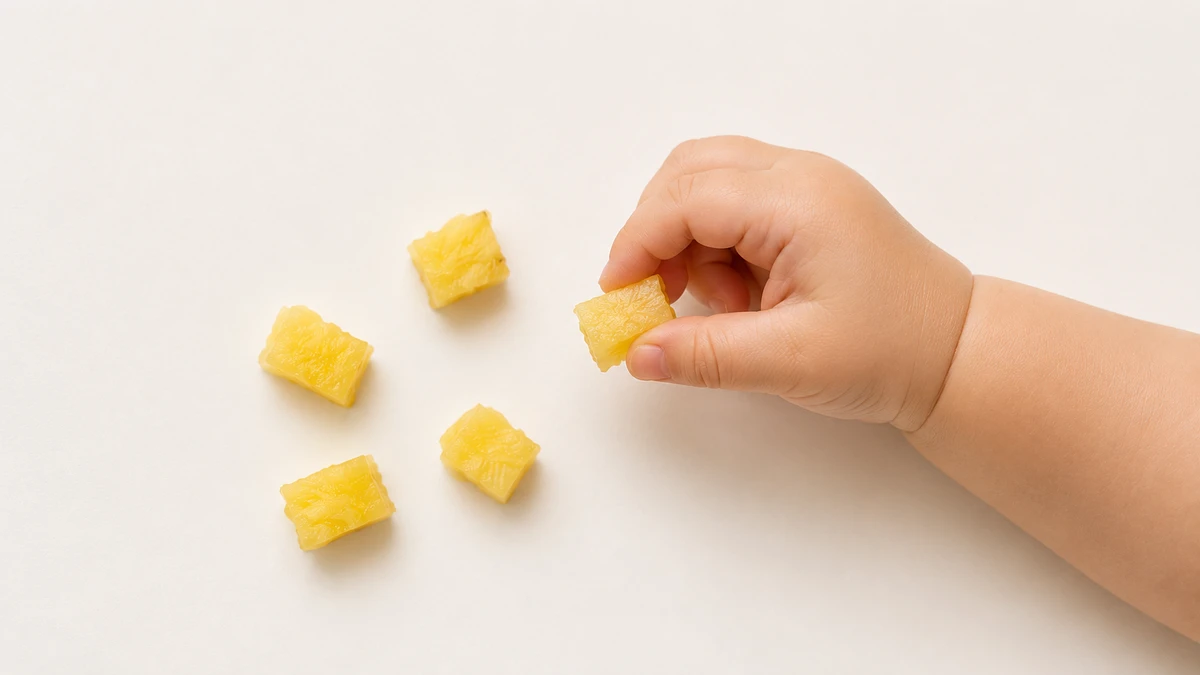
Small thin soft pieces
Bite-sized pieces, about 1/2 inch, core removed
Cut ripe pineapple into small, thin, bite-sized pieces for pincer practice. Slice across the grain so the fibers break into short strands rather than long stringy chunks. Check each piece squashes easily between your fingers, and keep offering larger spears if baby still prefers them.
How to cook
Ripe pineapple is fine raw once the core is out. Grilling or roasting briefly still works if a batch is on the firm side.
12+ months old
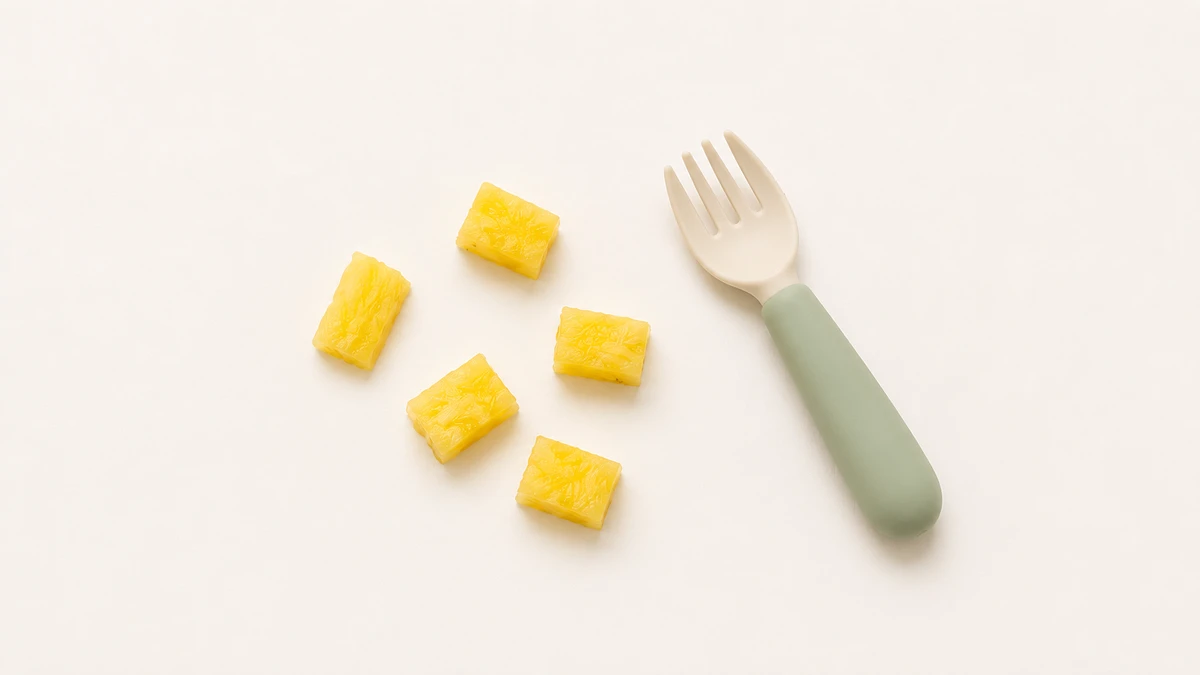
Bite-sized pieces
About 1/2 to 1 inch pieces, core removed
Offer ripe pineapple in bite-sized pieces with a fork for utensil practice. Keep removing the core and cutting across the grain so the fibers stay short. It also works stirred through yogurt, blended into smoothies, or added to family dishes like stir-fries and salsa
How to cook
Serve ripe pineapple raw, grilled, roasted, or cooked into family dishes.
Tips
- Smell the base to pick a ripe one. A ripe pineapple smells sweet at the bottom and gives slightly when pressed. If it smells of nothing, it was picked too early - and pineapple doesn't ripen further after harvest, so a hard one will stay hard.
- The tingle is normal. Fresh pineapple contains bromelain, an enzyme that can make mouths tingle or lips a little red around the mouth. It's irritation, not an allergy - yogurt or a rinse of water settles it. Cooking or grilling deactivates the enzyme if baby finds it too much.
- Canned works too. Pineapple canned in juice (not syrup) is already soft, core-free, and consistent - a reliable backup when fresh ones are underripe. Drain and rinse, and cut spears down across the grain.