 HeySolids
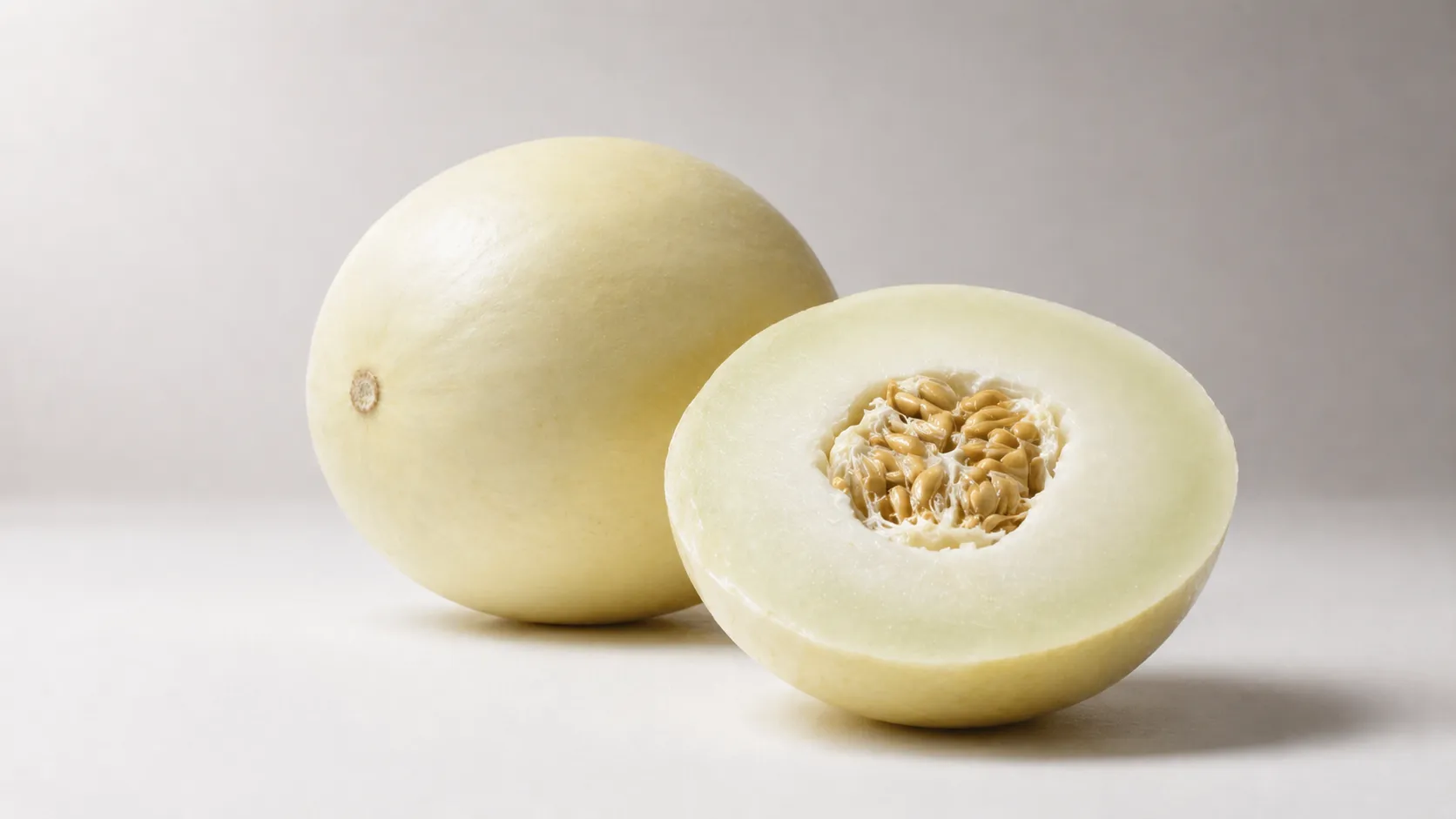
Choking risk
Honeydew is a moderate choking risk - ripe melon is soft but slippery, and underripe melon is firm and can lodge in the airway.
Choose a very ripe, soft melon, scoop out the seeds, and serve it as a large spear rather than balls or small cubes that can slip to the back of the mouth. See how to serve for age-by-age prep.
Allergens
Honeydew is not a common food allergen, so a true food allergy to it is rare.[3]
Start with a small amount and watch for a reaction.
If baby refuses
Honeydew is mild and sweet and rarely turned down. If baby seems unsure, try it lightly chilled, or mash ripe melon into plain whole-milk yogurt to tame the loose juice while they get used to the texture.
Food safety
Even a smooth-skinned melon can carry bacteria on the rind that the knife drags into the flesh as you cut, so scrub honeydew under running water before cutting. Refrigerate cut melon promptly and don't leave it sitting out - bacteria multiply quickly on cut fruit at room temperature.[6]
How to serve
6+ months old
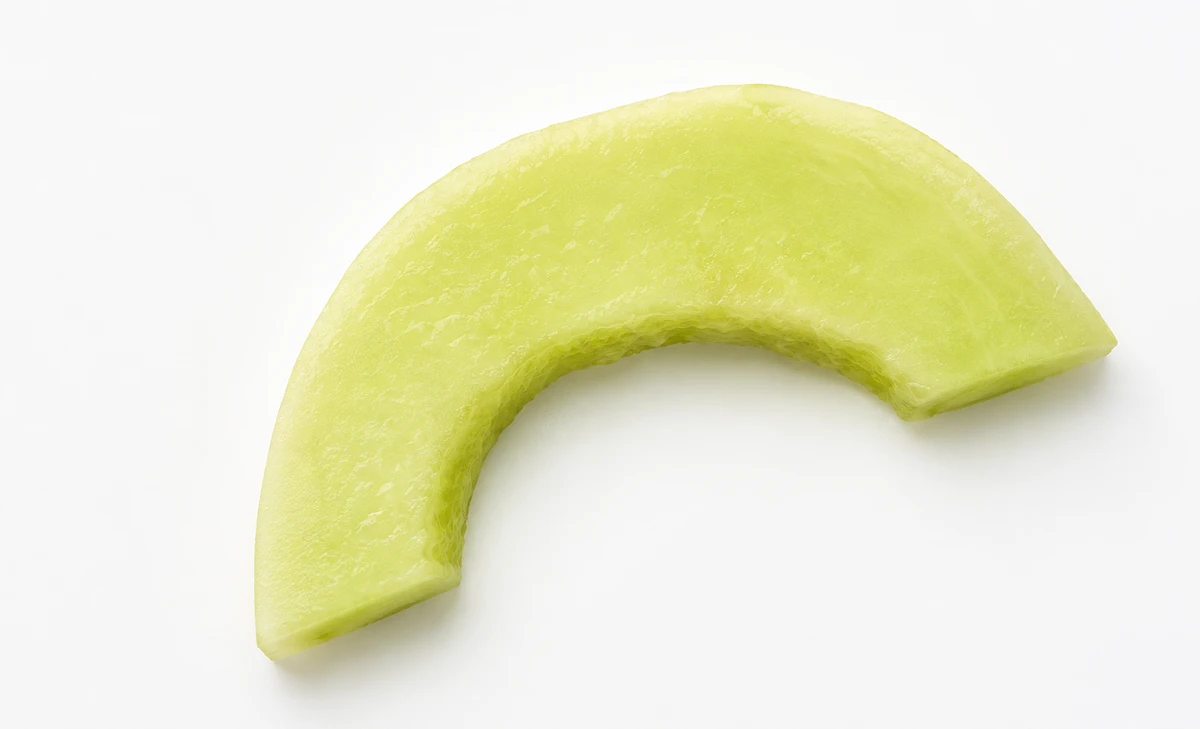
Large soft spear, seeds removed
Finger-length spear, about as thick as an adult finger
Choose a very ripe, soft melon and cut a thick, finger-length spear with the seeds and rind removed, thick enough that baby can grip it in a fist and gnaw the end. If it's too slippery to hold, roll it in ground oats, infant cereal, or milled flaxseed for grip. Don't worry if not much goes in at first.
How to prepare
No cooking needed. Scrub the whole melon, then remove the seeds and rind and cut into large spears. Make sure it's fully ripe and soft - a chilled spear can also soothe sore gums.
9+ months old
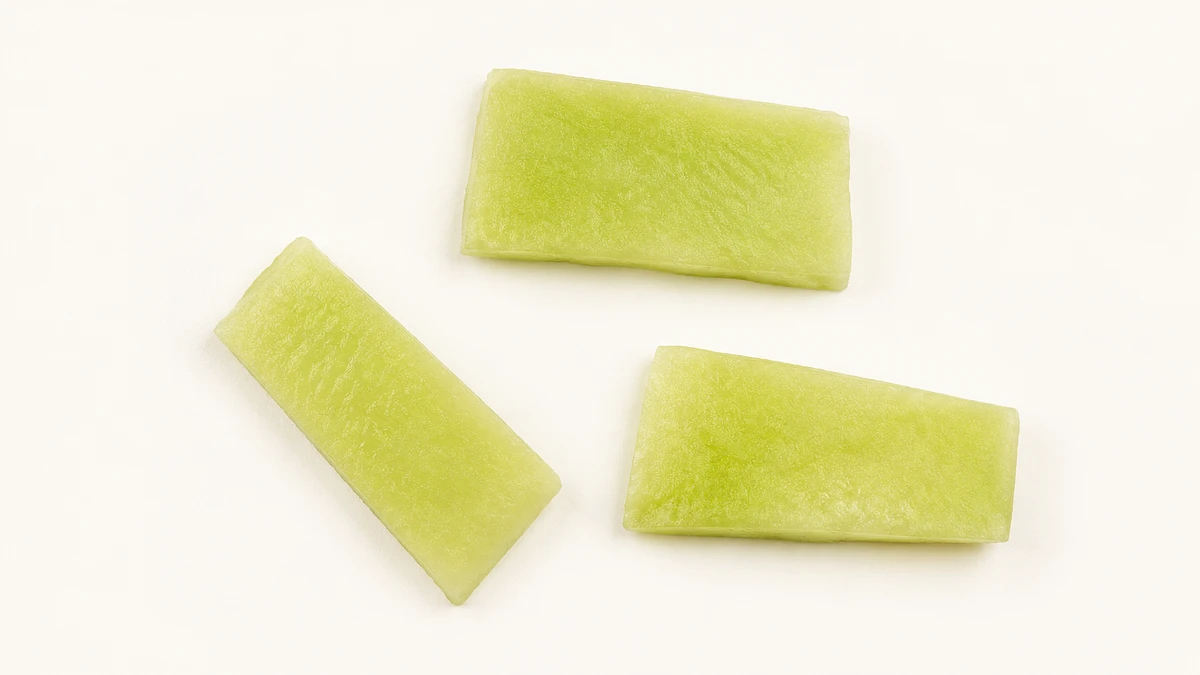
Soft spears or thin strips
Thin strips about 2 inches long and 1/4 inch thick
As baby starts picking up smaller things, keep offering soft, ripe melon as thin spears or long strips they can grip and gnaw, rather than round chunks. Rolling slippery strips in ground oats or infant cereal still helps with grip.
How to cook
No cooking needed. Wash, then remove the seeds and rind and cut into small pieces or spears. Mashed melon can be stirred through plain whole-milk yogurt.
18+ months old
Small soft pieces, or spears
Bite-sized pieces or thin spears
Small pieces of soft, ripe melon can come in now for a confident chewer who doesn't overfill their mouth. Cut them flat rather than in rounded chunks or melon balls, which stay a choking risk for young children, and keep offering spears too. Melon also blends into a smoothie for a hot-day treat.
How to prepare
No cooking needed. Scrub, remove the seeds and rind, and serve raw in small flat pieces or spears.
Tips
- Chill it for teething. Cold, soft melon on a spear is one of the better teething foods - soothing on sore gums and it holds its shape well enough to grip. Keep a few spears in the fridge ready to go.
Sources
- Choking Hazards (Infant & Toddler Nutrition) - CDC
- When, What, and How to Introduce Solid Foods - CDC
- Food Allergies (the 9 major US allergens) - FDA
- Pollen Food Allergy Syndrome - ACAAI
- Melon allergy in ragweed-allergic subjects - PubMed 21262100
- Selecting and Serving Produce Safely (washing) - FDA
- Melons, honeydew, raw (FDC 169911) - USDA FoodData Central