 HeySolids
Choking risk
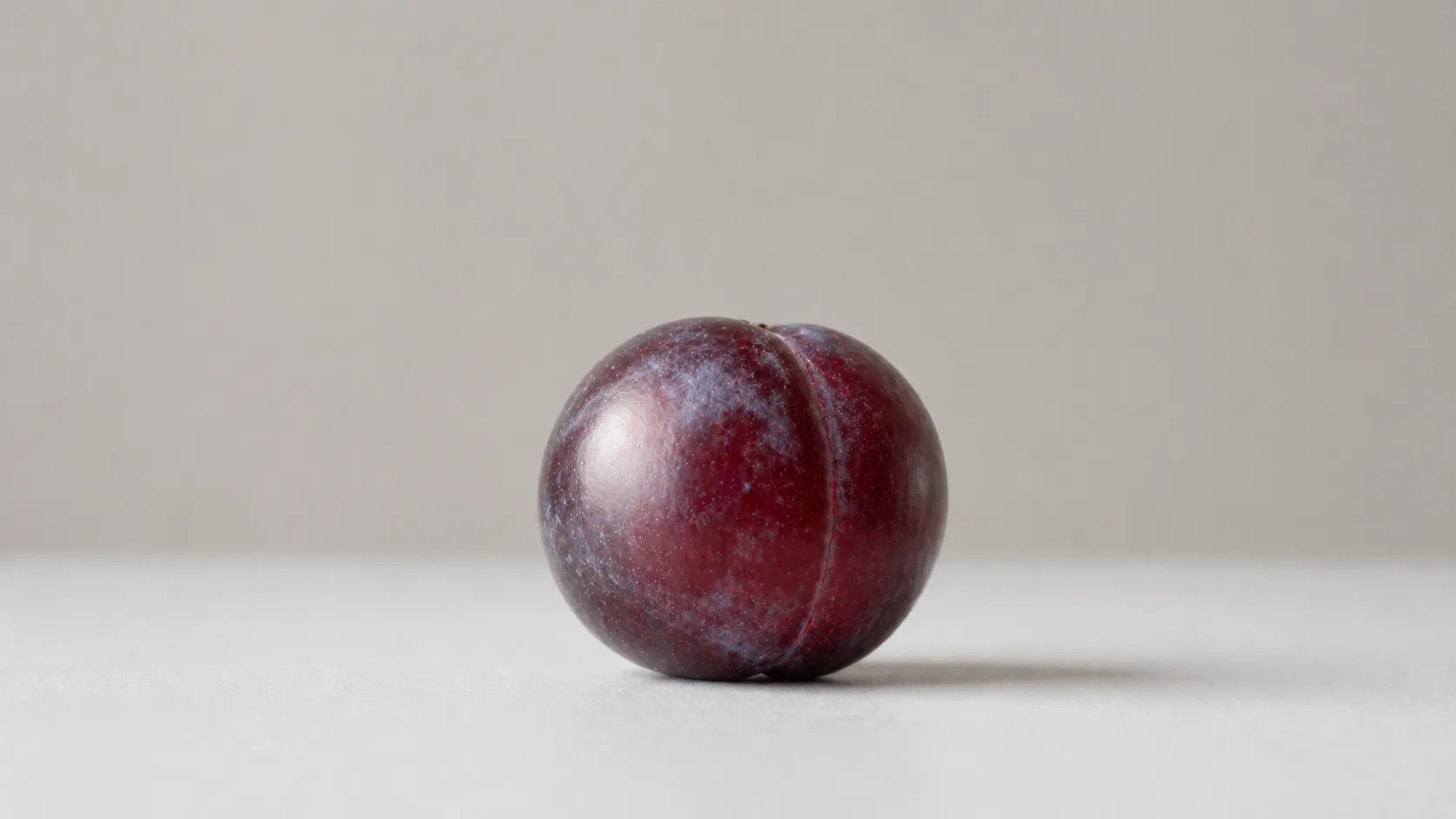
Ripe plum flesh is a low choking risk - it's soft and squashes easily. The stone must always come out first.
Serve only ripe fruit that squashes easily between two fingers. Cook a firm or underripe plum until soft, and peel the skin for younger babies. See how to serve for age-by-age prep.
Allergens
Plum is not a common food allergen, so a true food allergy to it is rare.[3]
Start with a small amount and watch for a reaction.
If baby refuses
Plum can be tart when underripe, so wait until it is fully soft and sweet. If baby turns it down, stir the soft pulp into oatmeal or plain yogurt, or cook it into a compote - cooking mellows the tartness.
How to serve
6+ months old
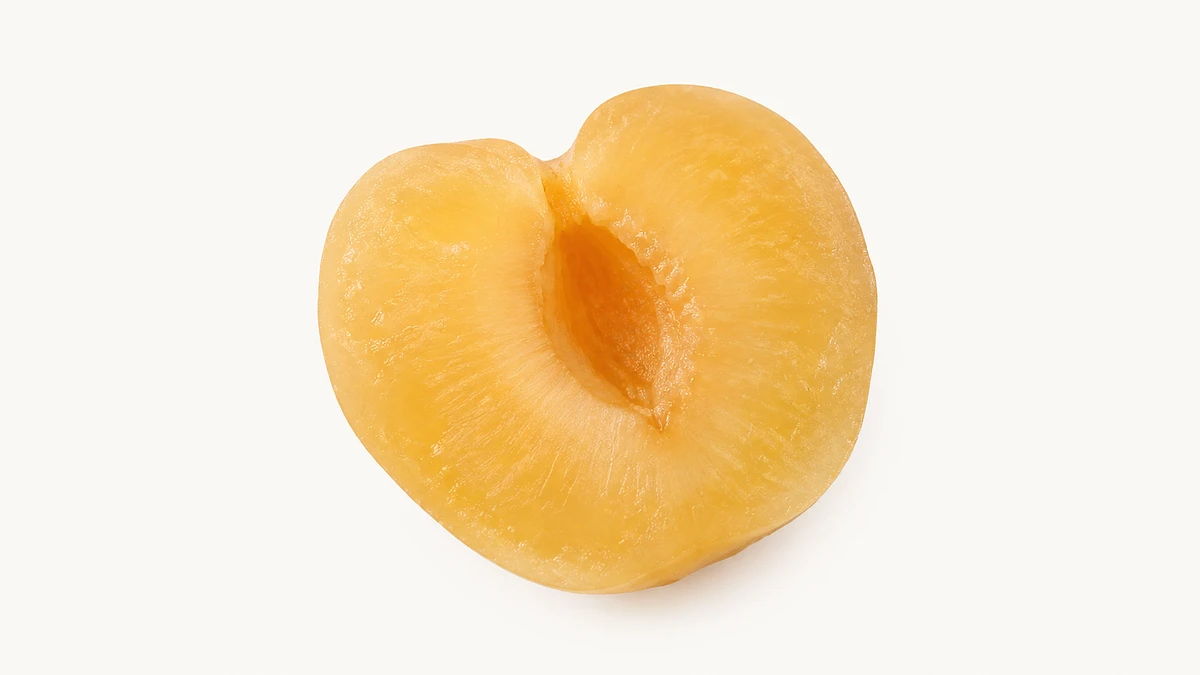
Large stoned half or wedge, peeled
A wedge about finger length, or a stoned half
Offer a very ripe plum as a large wedge or half, peeled - plum skin is tough and can slip off in a strip. Remove the stone completely and check for loose fragments. The flesh should squash easily when pressed between your fingers. Peeled fruit is slippery, so roll the piece in ground oats or milled flaxseed for grip. You can also serve smooth puree on a pre-loaded spoon or stirred through oatmeal.
How to cook
No cooking is needed if the plum is fully ripe and soft. For firmer fruit, halve and stone it, then steam for 3 to 5 minutes until a piece squashes easily. The high water content means you may not need extra liquid when blending.
9+ months old
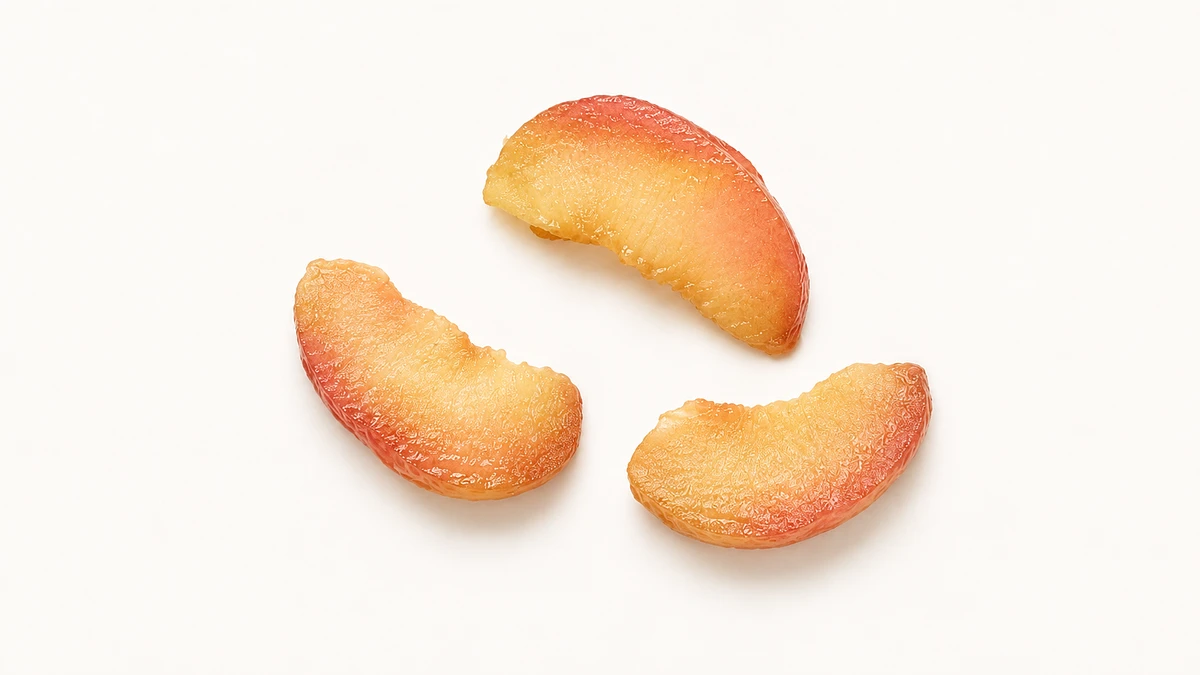
Thin peeled slices or soft pieces
Thin slices, or pieces about 1/2 inch
Keep the plum peeled and offer thin slices or small pieces for pincer practice. The flesh should squash easily when pressed between your fingers. Peeled pieces are slippery, so rolling them in ground oats or milled flaxseed helps, or keep offering a larger stoned wedge alongside.
How to cook
Ripe plum can be served raw. If the fruit is firm, halve and stone it and steam briefly until it squashes easily between two fingers.
12+ months old
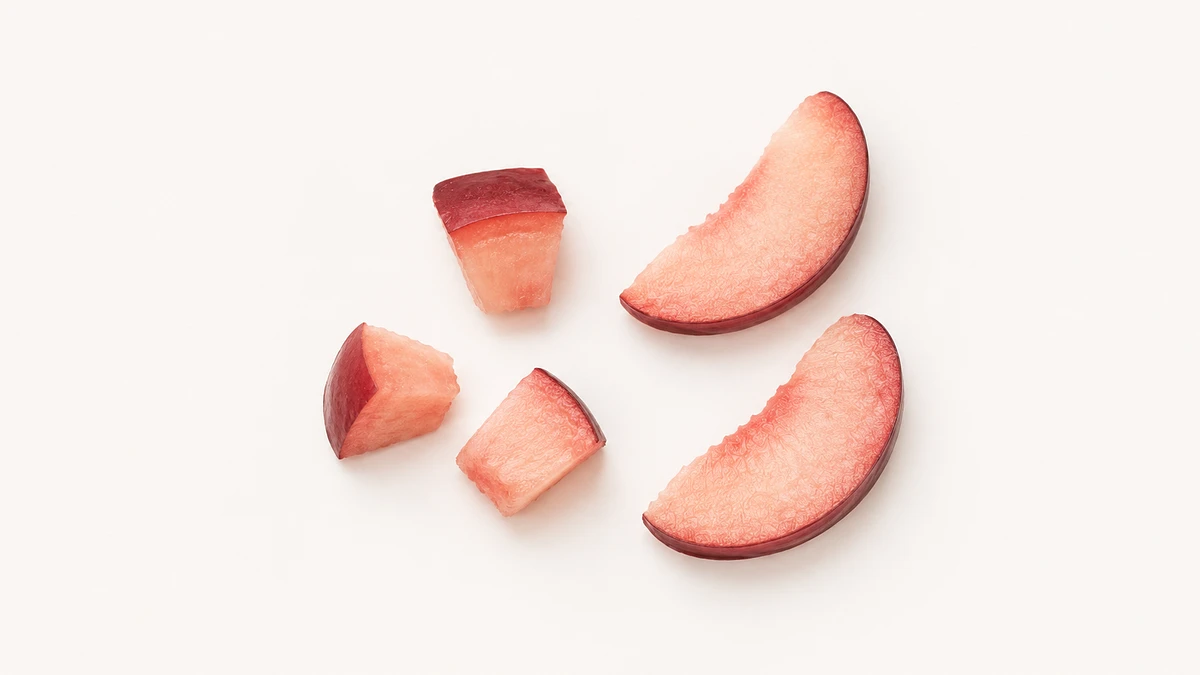
In family meals
Bite-sized or sliced, never whole
Offer ripe plum in thin slices or bite-sized pieces alongside a fork for utensil practice, or stir diced fruit through oatmeal or yogurt. Plum skin is tough, but it's fine now for a confident chewer as long as the fruit is soft. Always stone the fruit and cut it - never hand over a whole plum.
How to cook
Raw ripe plum works well now. Firmer fruit can be poached, stewed into a soft compote with a pinch of cinnamon, or baked until tender as a simple family dessert.
Tips
- Ripen them on the counter. Plums are almost always sold underripe, and a firm one is tart and hard - exactly what babies reject. Leave them at room temperature for a few days until the flesh gives to a gentle press, then move them to the fridge to hold. A paper bag speeds it up.