 HeySolids
Choking risk
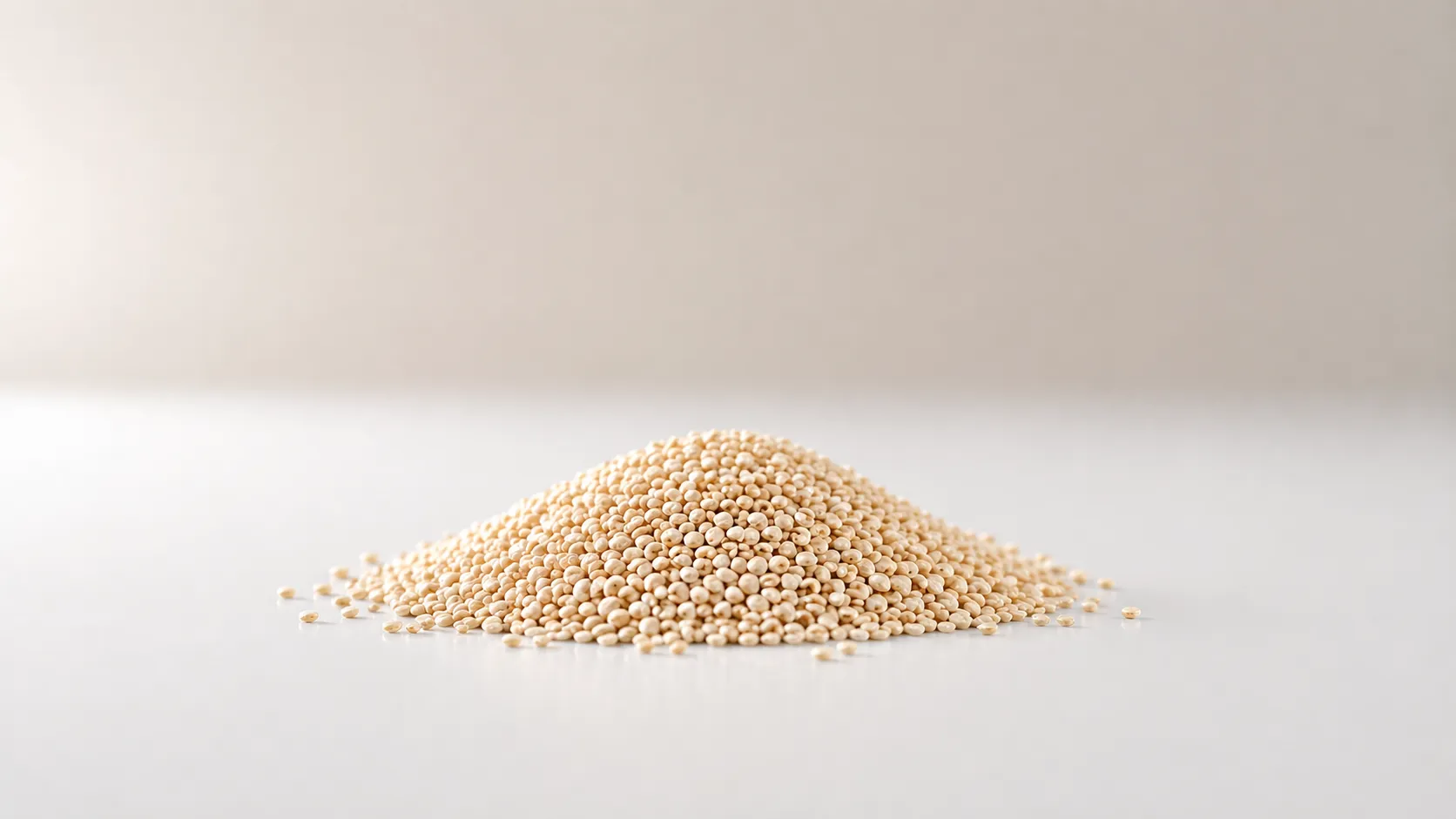
Soft, well-cooked quinoa is a low choking risk - the grains are tiny and squash easily.
Cook it soft and keep it moist, stirring loose grains into mash or sauce so they clump, and skip dry, crunchy forms like popped quinoa. See how to serve for age-by-age prep.
Allergens
Quinoa is not a common food allergen, so a true allergy to it is rare.[2]
It's also naturally gluten-free, a handy grain for families avoiding wheat or gluten.
Start with a small amount and watch for a reaction.
If baby refuses
Quinoa's small grains and earthy flavor can put some babies off at first. Stir it into mashed potato, pureed vegetables, or a favorite sauce to soften the texture, or bind it into soft fritters or patties, which older babies often take more readily than loose grains.
How to serve
6+ months old
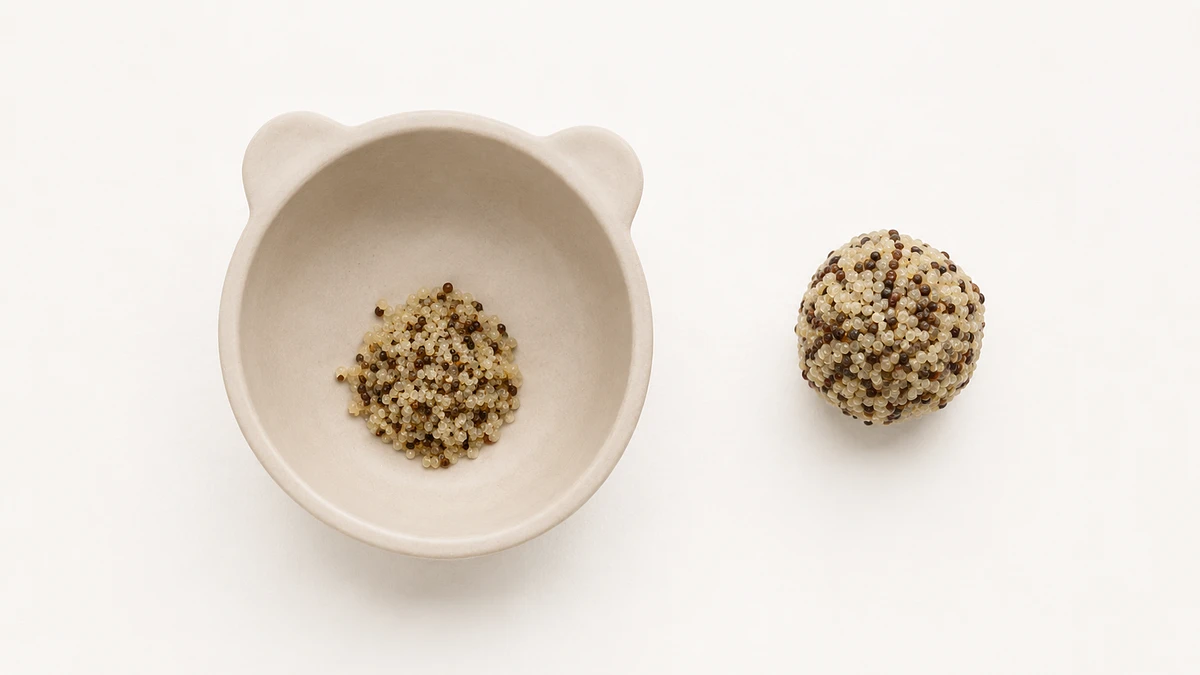
Mixed into mash or soft balls
Spoon-fed, or soft balls about 1/1 inches
Serve well-cooked quinoa stirred into purees, mashed vegetables, yogurt, or a soft sauce. Pre-load a spoon and hand it to baby, or press the cooked quinoa into large soft balls they can grip and gnaw. Keeping it moist and clumped makes loose grains easier for young babies to manage.
How to cook
Rinse the quinoa well under cold water first to wash off its bitter coating. Simmer about 1 part quinoa to 2 parts water for 15 to 20 minutes, until the grains are soft and the spirals pop out, then stir it into a soft food so it holds together.
9+ months old
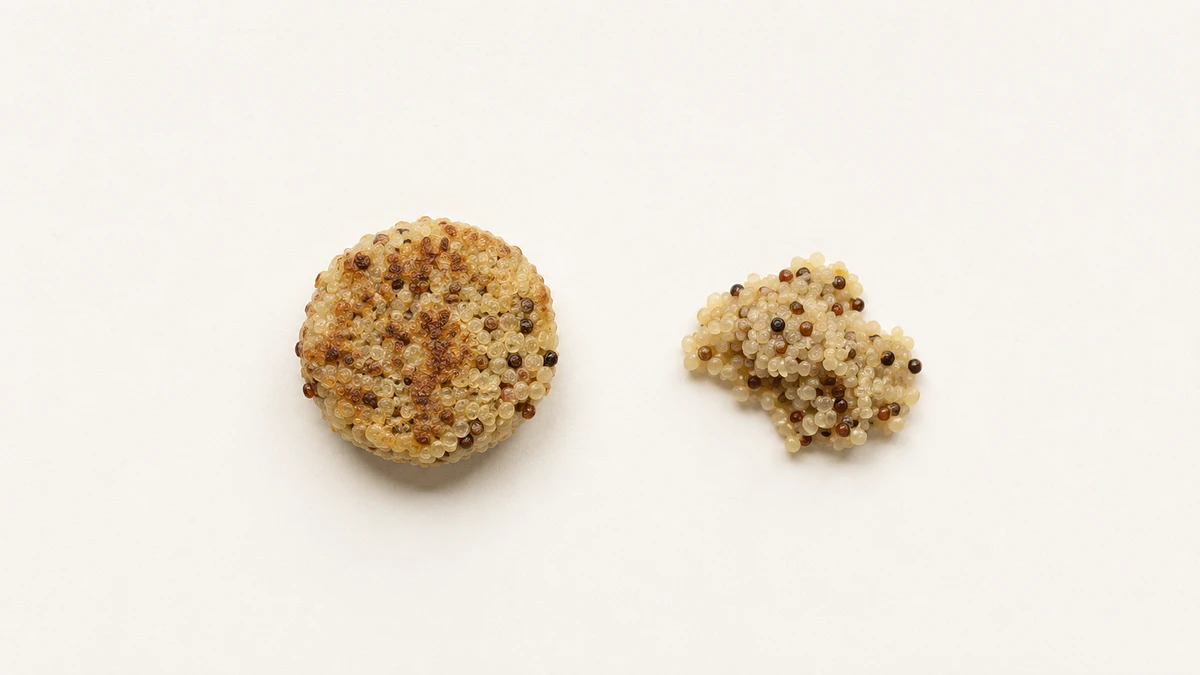
Soft clumped grains, fritters, or patties
Fritters or patties about 1 inch
Offer cooked quinoa stirred through soft family dishes, or bound into fritters and patties baby can pick up. Serving it slightly clumped with a little yogurt or olive oil helps the grains stick together for an early pincer grasp. A deep-bowled spoon helps too, though most babies won't manage loose grains for a while yet.
How to cook
Rinse well and cook until soft and the grains pop. Bind into fritters or patties, or mix into soft dishes so the quinoa holds together rather than scattering loose.
12+ months old
In family meals
Serve quinoa as part of family meals: as a soft side, stuffed into vegetables, or stirred into soups and salads. Offer a fork or spoon for practice and pre-load as needed - it's fine if your toddler still prefers their hands. Keeping it moist and slightly clumped gives them more success with a utensil.
How to cook
Rinse well and cook until soft, then serve to your family's taste. Skip hard, crunchy forms like popped or puffed quinoa.