 HeySolids
Choking risk
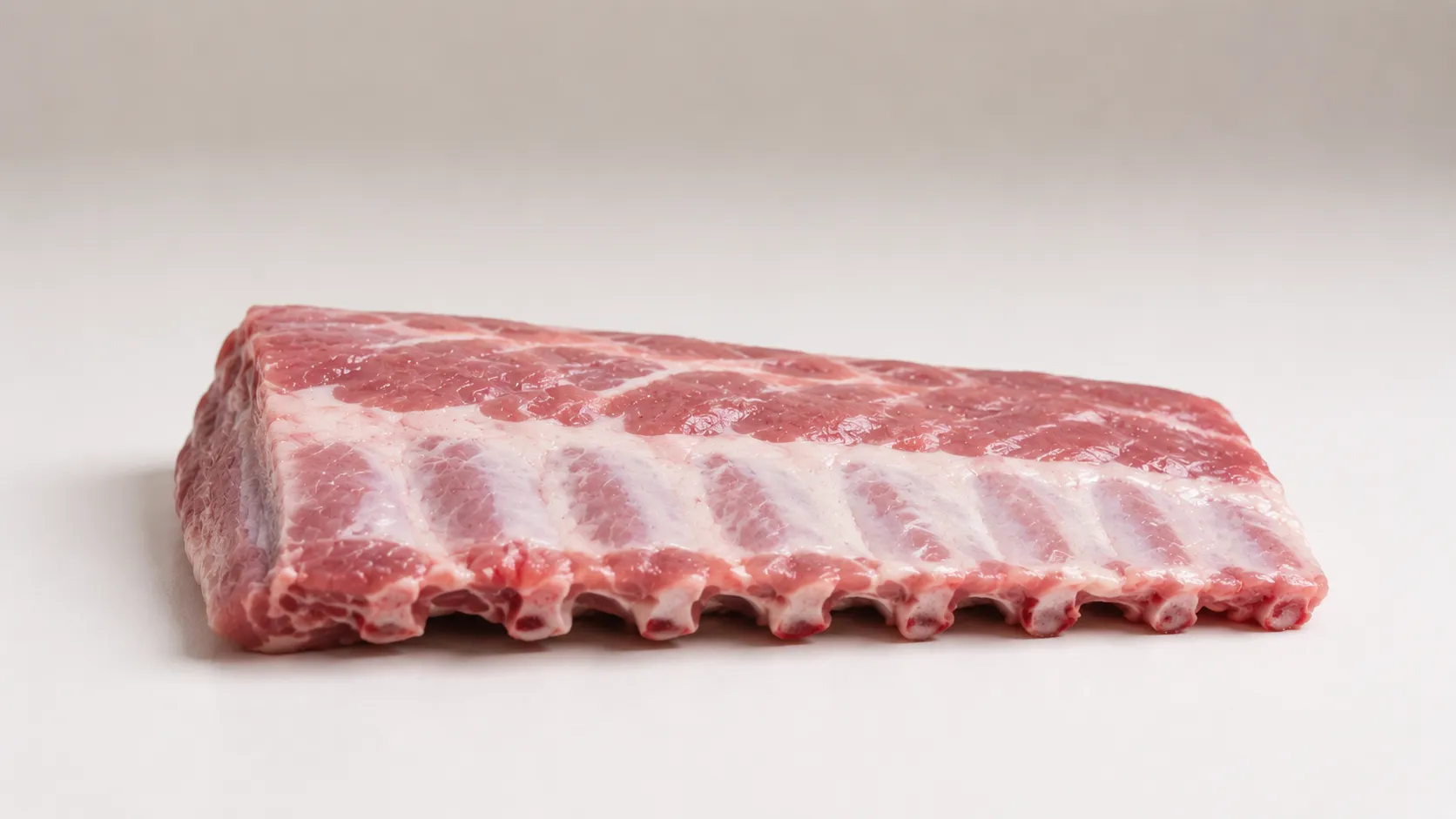
Spare rib is a moderate choking risk. The meat is firm and dry, and stays safe only when it is shredded and kept moist.
Take the meat off the bone, check it over for small or splintered bone fragments, then shred it finely and moisten it with a little of the cooking juices. See how to serve for age-by-age prep.
Allergens
Pork is not a common food allergen, so a true allergy to it is rare.[2]
What matters more is the sauce. Ready-made barbecue sauce, hoisin, and marinades often contain soy, wheat, or sesame, so read the label if your family manages any of those allergies.
If a sauce contains an allergen your baby has not had yet, introduce that allergen on its own first rather than inside a rib dish. Otherwise start with a small amount and watch for a reaction.
If baby refuses
Dry meat is the usual reason ribs get turned down, so keep the shredded meat moist by stirring it into a familiar mash, sauce, or soup. Warming it gently in a little of its cooking liquid helps too.
Food safety
Cook pork ribs to at least 145°F and rest for 3 minutes.[5][6]
That is the safe minimum, but ribs need much longer than this to shred - cook them low and slow until the meat pulls away from the bone with almost no resistance. A slight pink tinge at the bone is normal in cooked pork and is not a sign it needs more time. Use a food thermometer in the thickest part, away from bone, and wash hands, boards, and utensils after handling raw pork.
Salt and sugar
Ribs usually come in sauces that are heavy in both salt and sugar. Cook them plain for your baby. Children under 2 don't need added sugar, and salt should not be added to food in the first 12 months and kept low through the toddler years.
How to serve
6+ months old
Soft shredded rib meat off the bone, no sauce
Soft shreds stirred into a scoopable food
Pull all the meat off the bone, feel through it for small or splintered bone fragments, remove the fat and gristle, then shred or finely chop it and stir it into mashed potato or vegetables. Serve it plain, with no salt or sauce. Let baby scoop with their hands, or offer a pre-loaded spoon.
How to cook
Slow-cook or braise at around 300°F for 2 to 3 hours, until the meat pulls away from the bone with almost no resistance. Cook it plain, without rub or sauce.
9+ months old
Finely chopped soft rib meat off the bone, no sauce
Pea-sized pieces for pincer practice
As the pincer grasp develops, offer finely chopped or shredded soft rib meat for picking-up practice. Pull it off the bone, feel through it for small or splintered bone fragments, and remove the fat and gristle first. Keep it plain and moist, with no salt or sauce.
How to cook
Slow-cook or braise at around 300°F for 2 to 3 hours, until the meat pulls away from the bone with almost no resistance. Cook it plain, without rub or sauce.
12+ months old
Small soft pieces of plain rib meat
Bite-sized soft pieces, about 1/2 inch
Offer small, soft pieces of well-cooked rib meat as finger food or as part of a family meal. Pull the meat off the bone and feel through it for small or splintered bone fragments first.
Cook the ribs plain and season the grown-ups' portions at the table - barbecue and hoisin sauces are heavy in both salt and sugar, and children under 2 don't need added sugar at all.
How to cook
Slow-cook, braise, or bake at around 300°F for 2 to 3 hours, until the meat pulls away from the bone with almost no resistance. Cook it plain, without rub or sauce.
Tips
- Pull the silverskin off the back of the rack before cooking. It's a tough membrane that never softens, however long the ribs cook. Slide a knife under one edge, grip it with a paper towel, and pull.
- Slow cooking makes the smaller bones brittle, so they fracture and leave splinters in the meat. Spread the shredded meat out and run your fingers through it before serving - sharp fragments hide easily in pulled pork.
- Cook the whole rack plain and sauce only the adult portions at the end. Rubs and marinades go on before cooking, which means there's no way to take the salt back out once it's on.
Sources
- Choking Hazards (Infant & Toddler Nutrition) - CDC
- Food Allergies (the 9 major US allergens) - FDA
- Foods and Drinks to Avoid or Limit (honey, added sugar, salt) - CDC
- Dietary Guidelines for Americans 2020-2025 (no added sugar/salt under 2) - USDA/HHS
- Fresh Pork From Farm to Table (cook to 145°F with a 3-minute rest) - USDA FSIS
- Safe Minimum Internal Temperature Chart - USDA FSIS
- Pork, fresh, spareribs, separable lean and fat, cooked, braised (FDC 167869) - USDA FoodData Central