 HeySolids
Choking risk
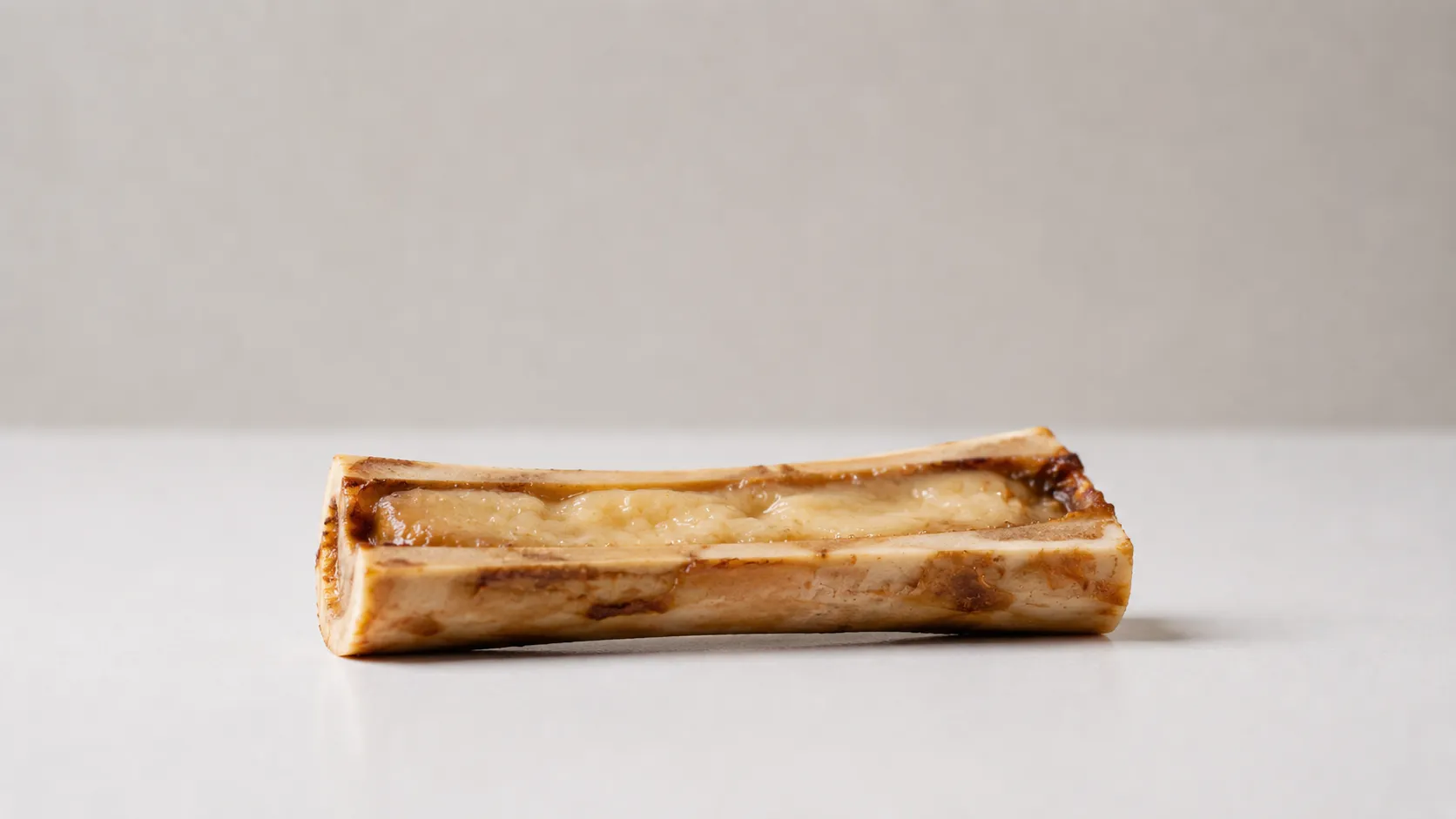
Roasted marrow is soft and spreadable, so it is a low choking risk.
The hazard is the bone rather than the marrow. Scoop the marrow out of the bone, check it over for loose bone fragments, and never hand baby the whole bone to chew. See how to serve for age-by-age prep.
Allergens
Bone marrow is not a common food allergen, so a true allergy to it is rare.[2]
Start with a small amount and watch for a reaction.
If baby refuses
Marrow is very rich, and that is usually what puts babies off. Spread a thin layer on soft toast, or stir a small amount into mashed potato or soft vegetables, where the other food softens the flavor.
Food safety
Roast the bones until the marrow is hot all the way through and soft enough to scoop. Scoop it out rather than serving it in the bone, and check it over for loose bone fragments before serving.
Salt and serving size
Serve marrow plain. Don't add salt to food in the first 12 months, and keep it low through the toddler years.[4]
A teaspoon or two mixed into other food is plenty at a meal - marrow is almost pure fat, so a small amount goes a long way, and it fills a baby up fast.
How to serve
6+ months old
A little roasted marrow, spread thinly or stirred in
Roast the marrow until soft and hot, scoop it out, and check there are no bone fragments. Spread a little marrow thinly on soft toast strips, or stir a small amount into mashed vegetables.
Serve it while it is still warm - marrow sets into firm lumps as it cools, and those are harder to swallow. It is very rich, so keep the amount small, and never give baby the bone to chew.
How to cook
Roast marrow bones at about 425°F for 15 to 20 minutes, until the marrow is soft and hot all the way through. Scoop it out, check it over for bone fragments, and cool it to just warm before serving. Add no salt.
9+ months old
A thin spread on soft strips, or stirred into dishes
Spread the marrow thinly on soft toast strips for baby to pick up, or stir a little into mash, soft vegetables, or other dishes. It stays very rich, so a small amount is still plenty.
How to cook
Roast marrow bones at about 425°F for 15 to 20 minutes, until the marrow is soft and hot all the way through. Scoop it out, check it over for bone fragments, and cool it to just warm before serving. Add no salt.
12+ months old
Small amounts in family dishes
Marrow can be used in small amounts in family dishes, spread thinly on toast or stirred through mash, soft vegetables, or risotto. Always scoop it out and check for bone fragments first, keep the amount small because it is so rich, and never give your toddler the bone to chew.
How to cook
Roast the bones until the marrow is soft and hot, scoop it out, and check for fragments. Keep the salt out of your toddler's portion and cool to just warm before serving.
Tips
Ask the butcher for centre-cut bones rather than end pieces. The ends hold red marrow, which is firm and dark and doesn't scoop out the way the soft fatty marrow does.
Stand the bones upright on the tray so the marrow doesn't slide out and burn on the pan. If they're cut lengthways, roast them cut side up.
Marrow keeps well once scooped. Mash it smooth, freeze it in an ice cube tray, and drop a cube into mash or soup - it melts straight in and saves roasting bones for one meal.
Sources
- Choking Hazards (Infant & Toddler Nutrition) - CDC
- Food Allergies (the 9 major US allergens) - FDA
- About Alpha-gal Syndrome (tick-acquired red-meat allergy) - CDC
- Foods and Drinks to Avoid or Limit (honey, added sugar, salt) - CDC
- Bone marrow (mostly fat; only USDA marrow entry is caribou, FDC 169800) - USDA FoodData Central