 HeySolids
Choking risk
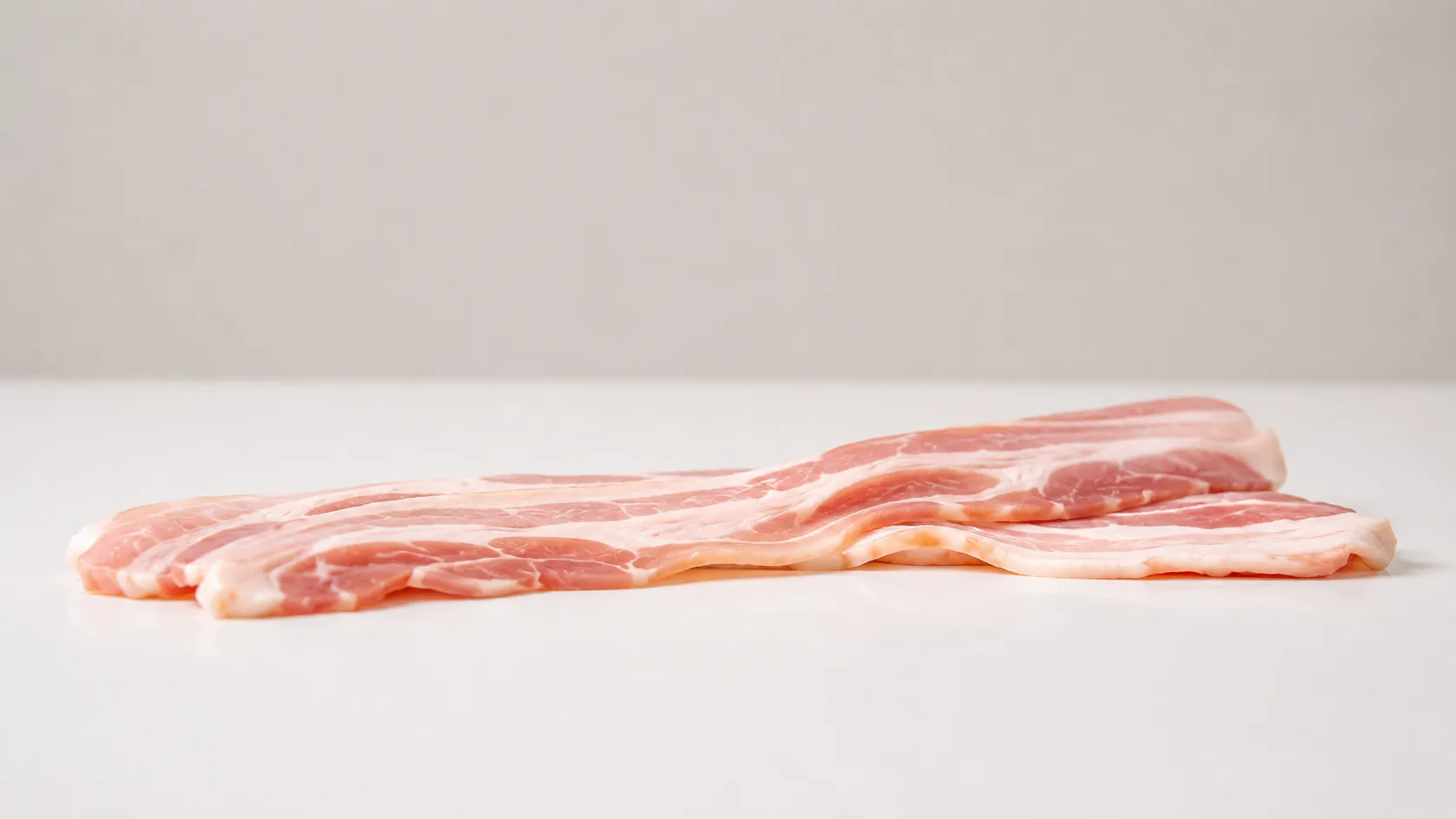
Bacon is a moderate choking risk - cooked crisp it shatters into hard, sharp bits, and cooked soft it's chewy enough to tear into pieces that are hard to manage.
Either way, chop it very fine rather than serving strips, and trim the thick fat, which stays rubbery. See how to serve for age-by-age prep.
Allergens
Plain bacon is not a common food allergen, so a true allergy to it is rare.[1]
Some bacon is glazed or seasoned with added ingredients, so check the label if baby has a known allergy. Start with a small amount and watch for a reaction.
Food safety
Bacon is one of the saltiest foods on the table - babies should have no added salt in the first 12 months, kept low after that, and cured meat is where salt concentrates most.[2]
It's also a processed meat, which is best kept occasional for young children across the board - make fresh pork or chicken the regular protein, and let bacon stay a sometimes-flavor.[4]
Cook it through until it's fully done but still bends - cooked through for safety, not crisp, since brittle bacon shatters into hard, sharp bits.
How to serve
Up to 12 months old
Skip bacon - offer fresh meat instead
Hold off on bacon in the first year. It is cured, very salty, and a processed meat, and a young baby's kidneys can't handle much sodium, so it isn't a food they need yet.
What to offer instead
Slow-cooked or finely shredded fresh pork or chicken gives the same savory, meaty flavor without the salt or curing agents. A little sweet smoked paprika adds a bacon-like note.
12+ months old
Small occasional amounts only
From around a year, a small amount of bacon now and then is fine. Choose a lower-sodium kind, cook it until crisp but not hard, and chop or crumble it small. Keep it an occasional treat, since added salt should stay low well into toddlerhood.