 HeySolids
Choking risk
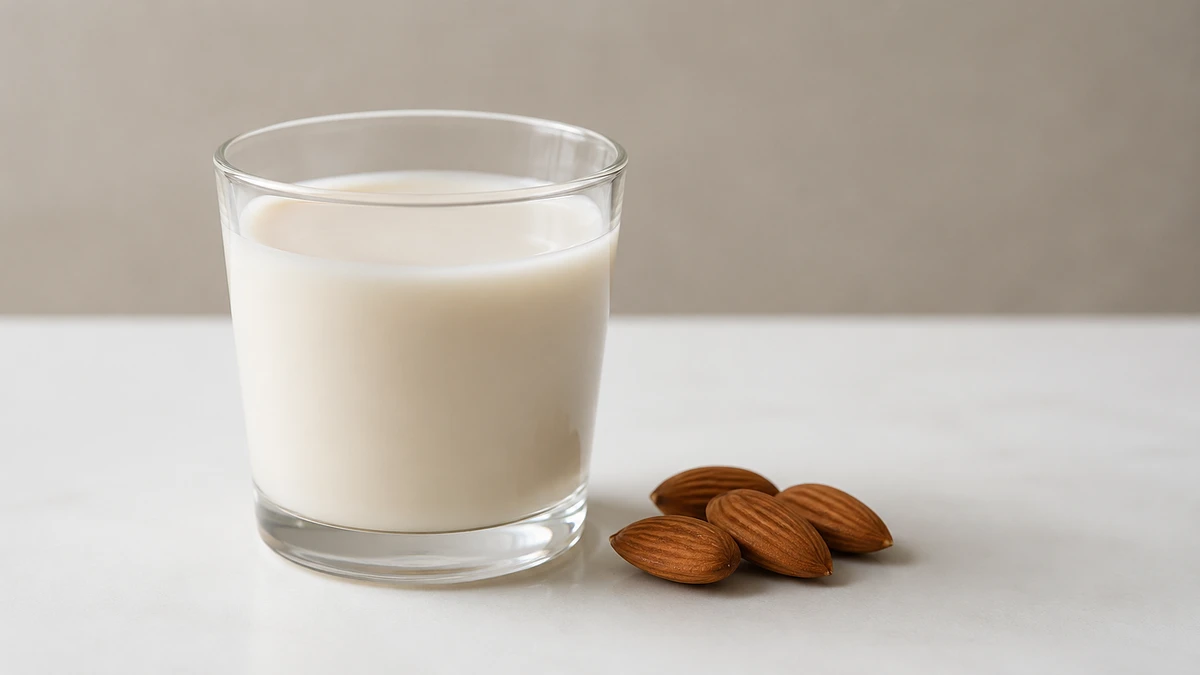
Almond milk is a thin liquid, so it is a low choking risk.
If it goes in a cup from 12 months, make it an open or straw cup rather than a bottle. See how to serve for age-by-age prep.
Allergens
Almonds are a tree nut, one of the most common food allergens.[1][2]
Almond milk is dilute, though - mostly water, with only a little almond protein per cup - so a tolerated splash isn't a real tree nut introduction.
Use smooth almond butter thinned into a puree for that, and talk to your pediatrician first if nut allergies run in the family.[3]
Offer it on its own, start with a small amount, and watch for a reaction.
Food safety
Almond milk isn't a replacement for breast milk, formula, or cow's milk - a cup carries only about 1 gram of protein and few calories, nowhere near what a growing child needs from a milk.[4]
From 12 months an occasional cup is fine - choose unsweetened and fortified, since flavored versions carry added sugar, which isn't recommended under 2.
If dairy is off the menu entirely, fortified soy milk is the plant milk that measures up as the daily drink.[5][6]
How to serve
6+ months old
Almond milk in food and cooking
A splash in a smoothie, oatmeal, or baking
From 6 months, unsweetened almond milk works as an ingredient - in oatmeal, a smoothie spooned from a bowl, or baking. It's a flavor, not a nutrition source, and no substitute for breast milk or formula.
Because almonds are a tree nut, offer the first taste like an allergen introduction - a small amount, early in the day, watching for a reaction. For a real almond introduction, use smooth almond butter thinned into food - the milk alone is too dilute to do that job.
How to prepare
Shake the carton and use a splash in cooking as you would any milk. Unsweetened only - flavored cartons are sugar in disguise.
12+ months old
An occasional cup, not the daily milk
From 12 months an occasional cup of unsweetened, fortified almond milk is fine in an open or straw cup. It shouldn't be the main milk, though - with about 1 gram of protein per cup, it can't do the job whole milk or fortified soy milk does for a toddler.
How to prepare
Shake well so the fortified calcium mixes back in, and check the label: unsweetened, with calcium and vitamin D added. Keep it to a small cup alongside meals, with the real milk doing the daily work.
Tips
- Don't count it as nut introduction. A cup of almond milk is mostly water with surprisingly little almond in it, so a tolerated splash doesn't tell you much about a nut allergy. Introduce almond properly with smooth almond butter thinned into a puree or oatmeal.
- Buy it unsweetened. "Original" and vanilla almond milks usually mean added sugar. The unsweetened, calcium-and-vitamin-D-fortified carton is the one worth keeping in the fridge.
Sources
- Food Allergies (the 9 major US allergens) - FDA
- Tree Nut - FARE
- When to Introduce Egg, Peanut Butter & Other Common Food Allergens - AAP HealthyChildren
- Cow's Milk and Milk Alternatives - CDC
- Healthy Beverage Consumption in Early Childhood: Consensus Recommendations (AAP, AHA, AND, ADA) - Healthy Eating Research 2019
- Foods and Drinks to Avoid or Limit (added sugar) - CDC
- Almond milk, unsweetened, plain - USDA FoodData Central