 HeySolids
Choking risk
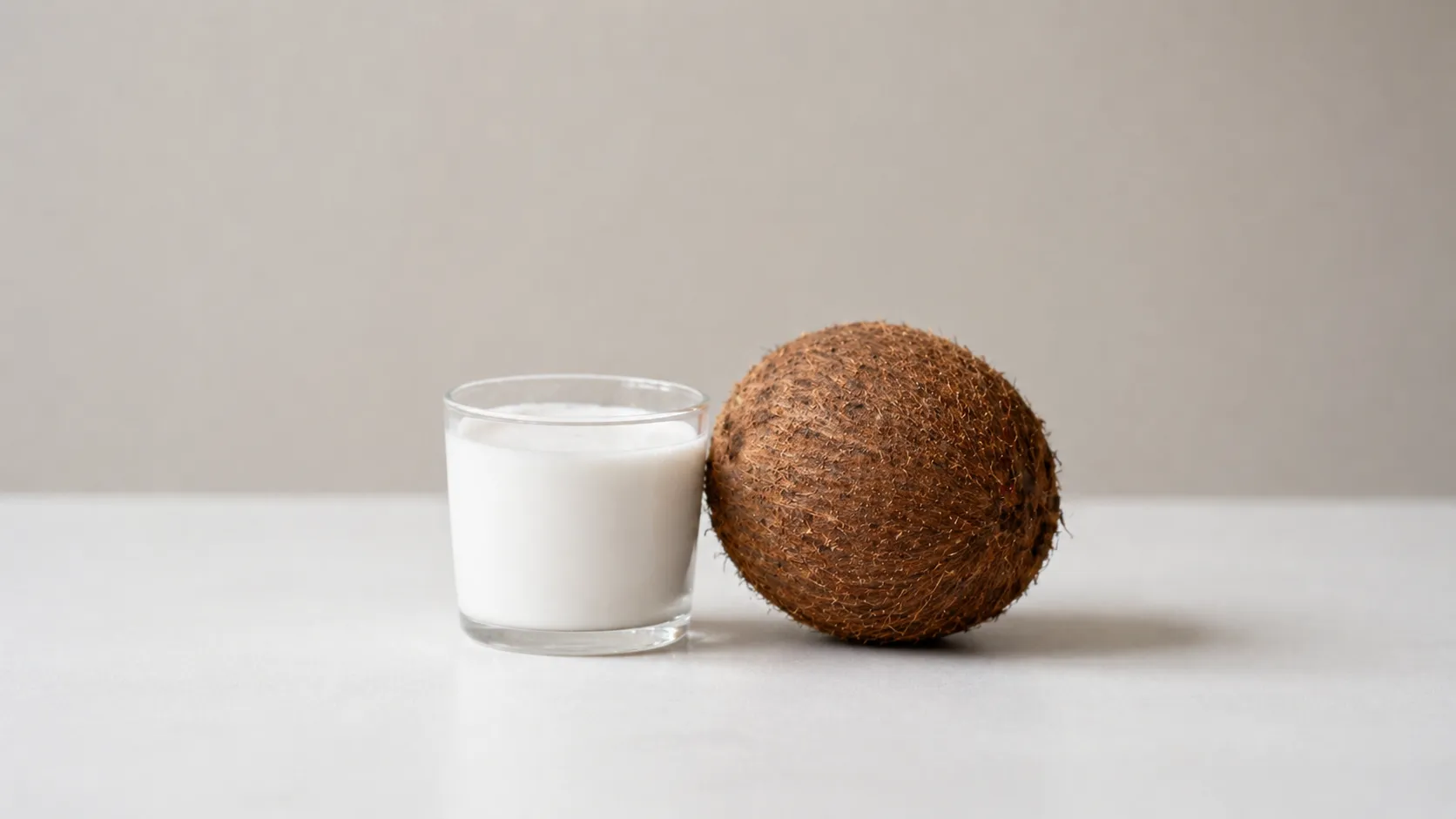
Coconut milk is a smooth liquid, so on its own it is a low choking risk.
Watch whatever you cook it into: any solid foods in a curry, dal, or stew still need to be soft and cut to a safe size for baby's age. See how to serve for age-by-age prep.
Allergens
Coconut is not a common food allergen, so a true allergy to it is rare. Despite the name it is a fruit, not a true tree nut, and a tree nut allergy does not mean a baby will react to coconut.[1]
Start with a small amount and watch for a reaction.
If baby refuses
Coconut has a distinct taste that takes some getting used to. Simmering it into a dish - through oatmeal, rice, or a mild dal - mellows the flavour a lot, so use coconut milk as a cooking liquid rather than stirring it in at the end.
How to serve
6+ months old
Stirred into food as an ingredient
A splash in a puree or bowl of oatmeal
Use a little plain, unsweetened canned coconut milk as a cooking ingredient, not a drink. Stir a small amount into a smooth puree, oatmeal, or a mild dal to add creaminess. It is for flavor and texture, not nutrition, and it is not a substitute for breast milk or formula.[2]
How to cook
Stir the can to recombine the cream and liquid, then use a splash as cooking liquid for oatmeal, a vegetable puree, or a mild dal. Keep any solid foods in the dish soft and safely sized, and let it cool before serving.[4]
9+ months old
Used as a cooking liquid or ingredient
A small amount in family-style dishes
Keep using plain coconut milk in small amounts as a cooking ingredient. It works well as the base for family-style curries, soups, dal, and oatmeal, and can be stirred into mash to loosen it. It is still for creaminess and flavor, not a drink on its own.[2]
How to cook
Stir the can, then use as cooking liquid in curries, soups, rice, or oatmeal. Keep any solid foods soft and safely sized, and let anything hot cool before serving.[4]
12+ months old
Ingredient across family dishes
A small amount in family cooking
Plain coconut milk can be used across family dishes the way you cook with it - in curries, dal, soups, rice, and oatmeal. From 12 months an unsweetened fortified coconut milk drink can also be offered as part of a varied diet, though whole cow's milk (if tolerated) is generally preferred. Choose unsweetened products, since added sugar is not recommended under 2.[3]
How to cook
No special prep needed - stir the can and use a small amount in family cooking. Pick plain, unsweetened products and skip sweetened coconut drinks.[3]
6-24 months+
Cooked into dishes as a liquid
A cooking liquid, not a drink
Coconut milk works as a cooking liquid from around 6 months - simmered into curries, dal, oatmeal, rice, or soups, where it adds richness. Use the canned or carton cooking kind, unsweetened, and choose full-fat rather than "light" - the light versions are mostly water.
It's an ingredient, not a milk: coconut milk isn't a replacement for breast milk or formula, and the thin "coconut milk drink" sold as a dairy alternative shouldn't be a main drink before 12 months, as it's low in protein and fat.
How to cook
Stir coconut milk into dishes and simmer to combine. Choose unsweetened, and check the can for added sugar or thickeners - plain full-fat coconut milk is just coconut and water.