 HeySolids
Choking risk
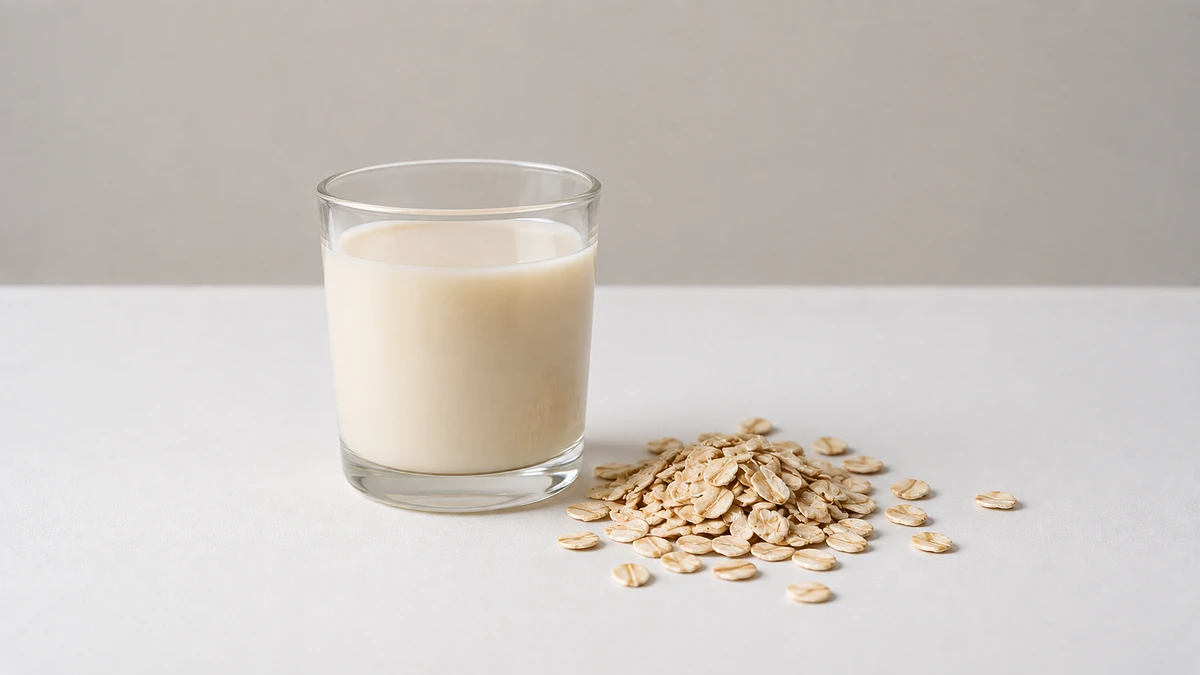
Oat milk is a thin liquid, so it is a low choking risk.
If it goes in a cup from 12 months, make it an open or straw cup rather than a bottle. See how to serve for age-by-age prep.
Allergens
Oat milk is not a common food allergen, so a true allergy to it is rare.[1]
One label note: oats are often grown and processed alongside wheat, so if your baby has a wheat allergy or you're avoiding gluten, pick an oat milk labeled gluten-free.
As with any new food, start with a small amount and watch for a reaction.
Food safety
Oat milk can't stand in for breast milk, formula, or cow's milk - it's mostly water and carbohydrate, with little of the protein and fat a growing child needs from a milk.[2]
From 12 months an occasional cup is fine as part of a varied diet - choose unsweetened and fortified, since many brands add sugar, and added sugar isn't recommended under 2.[3][4]
How to serve
6+ months old
Oat milk in food and cooking
A splash in oatmeal, mash, or baking
From 6 months, plain unsweetened oat milk works as a cooking ingredient - stirred into oatmeal, loosening a mash or puree, or in pancakes and baking. It's for texture and a toasty flavor, not nutrition, and it's no substitute for breast milk or formula.
How to prepare
Shake the carton and use a splash the way you'd use any milk in cooking. Check the label for added sugar and oil - "unsweetened" is the word to look for.
12+ months old
An occasional cup, not the daily milk
A small cup now and then
From 12 months an occasional cup of unsweetened, fortified oat milk is fine. Just don't let it take the place of the daily milk: it has only around 1-3 grams of protein per cup, a fraction of what cow's milk or soy milk carries, so a toddler drinking oat milk as their main milk misses out.
If your family is dairy-free, unsweetened fortified soy milk is the plant milk that actually measures up as the everyday drink - keep oat milk in the ingredient-and-treat lane.
How to prepare
Shake well and serve in an open or straw cup. Choose unsweetened, fortified with calcium and vitamin D, and skip barista blends - they lean on added oil and sugar.
Tips
- Know what it is - and isn't. Oat milk tastes rich, but nutritionally it's mostly water and carbohydrate with very little protein. It's a fine ingredient and an occasional cup for a toddler, not a stand-in for whole milk or fortified soy milk as the daily drink.
- Check the label for extras. Many oat milks - barista blends especially - add sugar and oil. Look for "unsweetened" and, if it's going in a cup rather than a recipe, calcium and vitamin D fortification.
Sources
- Food Allergies (the 9 major US allergens) - FDA
- Cow's Milk and Milk Alternatives - CDC
- Healthy Beverage Consumption in Early Childhood: Consensus Recommendations (AAP, AHA, AND, ADA) - Healthy Eating Research 2019
- Foods and Drinks to Avoid or Limit (added sugar) - CDC
- Oat milk, unsweetened, plain - USDA FoodData Central