 HeySolids
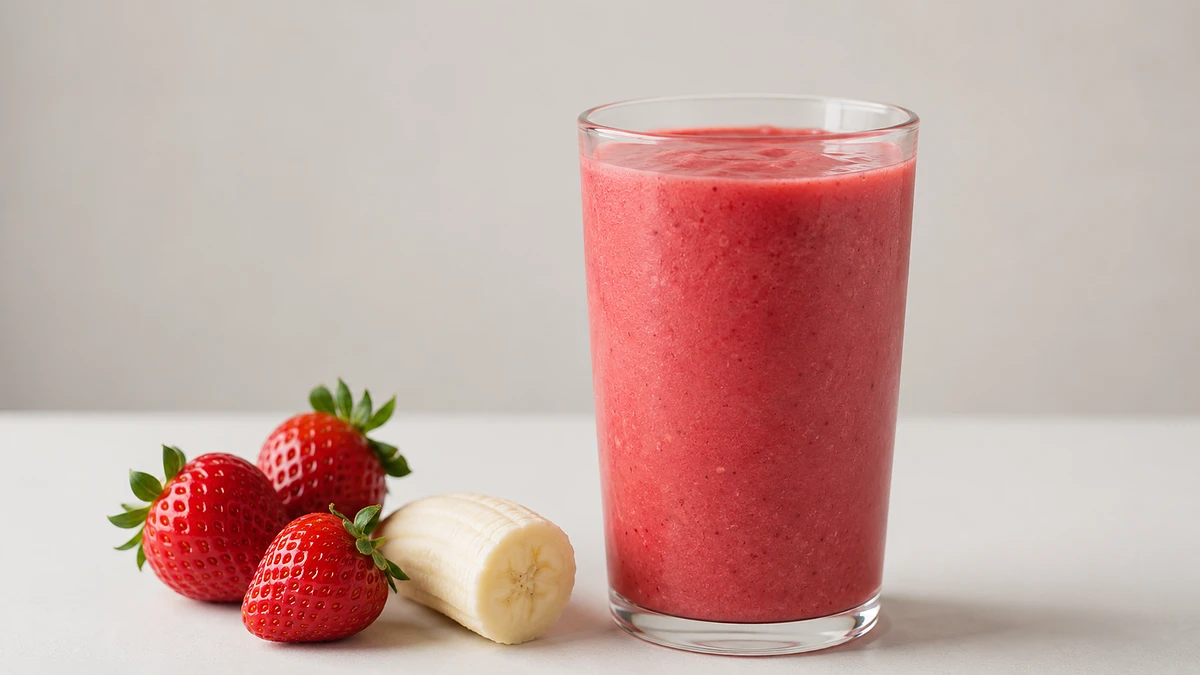
Can babies have smoothies?
Yes, from 6 months, with two things to watch.
- Blending breaks fruit down and releases its sugars, so a smoothie behaves more like juice than like whole fruit - harder on teeth, and easy to drink a lot of quickly. Keep servings small, offer it with a meal rather than sipped over the morning, and build it around vegetables, yogurt, or nut butter rather than fruit alone.
- A smoothie also hides what's in it. If it's your child's first taste of an allergen and they react, you won't know which ingredient caused it. Offer new allergens on their own first, then blend them in.
Before 12 months, blend with breast milk, formula, water, or plain yogurt. Cow's milk isn't a drink yet at this age - it's low in iron and fills a small stomach in place of feeds that aren't.
Choking risk
A fully blended smoothie is a low choking risk - the hazard is anything the blender missed.
Blend until completely smooth, with no chunks of frozen fruit, whole berries, nuts, or stray seeds left behind. See how to serve for age-by-age prep.
Allergens
A smoothie is only as allergenic as its ingredients - and the usual add-ins include several common allergens: yogurt and milk, nut butters, and seeds.[1]
Introduce each new allergen on its own before it goes into the blender - a cup that debuts dairy, peanut, and chia at once leaves you guessing if a reaction follows.[2]
Start with a small amount and watch for a reaction.
Food safety
No honey in a smoothie before 12 months - even a drizzle carries the infant botulism risk.[3]
Build on whole fruit, vegetables, and plain yogurt - not juice, sweetened yogurt, or syrups. Even an all-fruit smoothie is a lot of sugar arriving at once without the slow chewing that whole fruit brings, so treat it as an occasional part of a meal, not a daily bottle-stand-in.[4]
How to serve
6+ months old
Thick and spoonable, like a puree
A few spoonfuls on a preloaded spoon
At this age a smoothie is really a puree with a fancier name. Blend fruit with plain whole-milk yogurt or a vegetable until completely smooth and keep it thick, then spoon-feed it or hand over a preloaded spoon.
Any allergen going in - dairy, a thin layer of nut butter, seeds - should already have had its own solo introduction first.
How to prepare
Blend until berry skins and seeds fully disappear, then keep going a few seconds longer. No honey, no juice, no sweeteners.
9+ months old
Thick smoothie in a straw cup
A small cup, about 2-4 oz
Once baby can drink from a straw, a thick smoothie in a small straw cup is great practice - the resistance of a thick blend actually builds those mouth muscles. Keep portions small so it stays a taste, not a meal replacement.
Serve it alongside foods baby chews, not instead of them - chewing practice is the main event at this age.
How to prepare
Blend completely smooth and keep it thick. No honey or sweeteners. Use breast milk, formula, water, or plain yogurt as the liquid, not cow's milk, which isn't a drink until 12 months. A short, fat straw is easier than a long thin one.
12+ months old
In an open or straw cup, with a meal
About 4 oz, as part of a meal
A toddler can share the family smoothie in an open or straw cup. Keep it an occasional with-a-meal thing rather than an everyday drink - sipped fruit is still sugar arriving fast, and daily smoothies can crowd out both chewing and appetite.
It's also a quietly useful vehicle: a spoonful of peanut butter or a handful of spinach disappears into a banana blend, which helps keep allergens and vegetables in the rotation.
How to prepare
Whole fruit and veg plus plain yogurt or milk, blended smooth. Skip juice as the liquid and check store-bought smoothies - most are closer to juice than to fruit.