 HeySolids
Choking risk
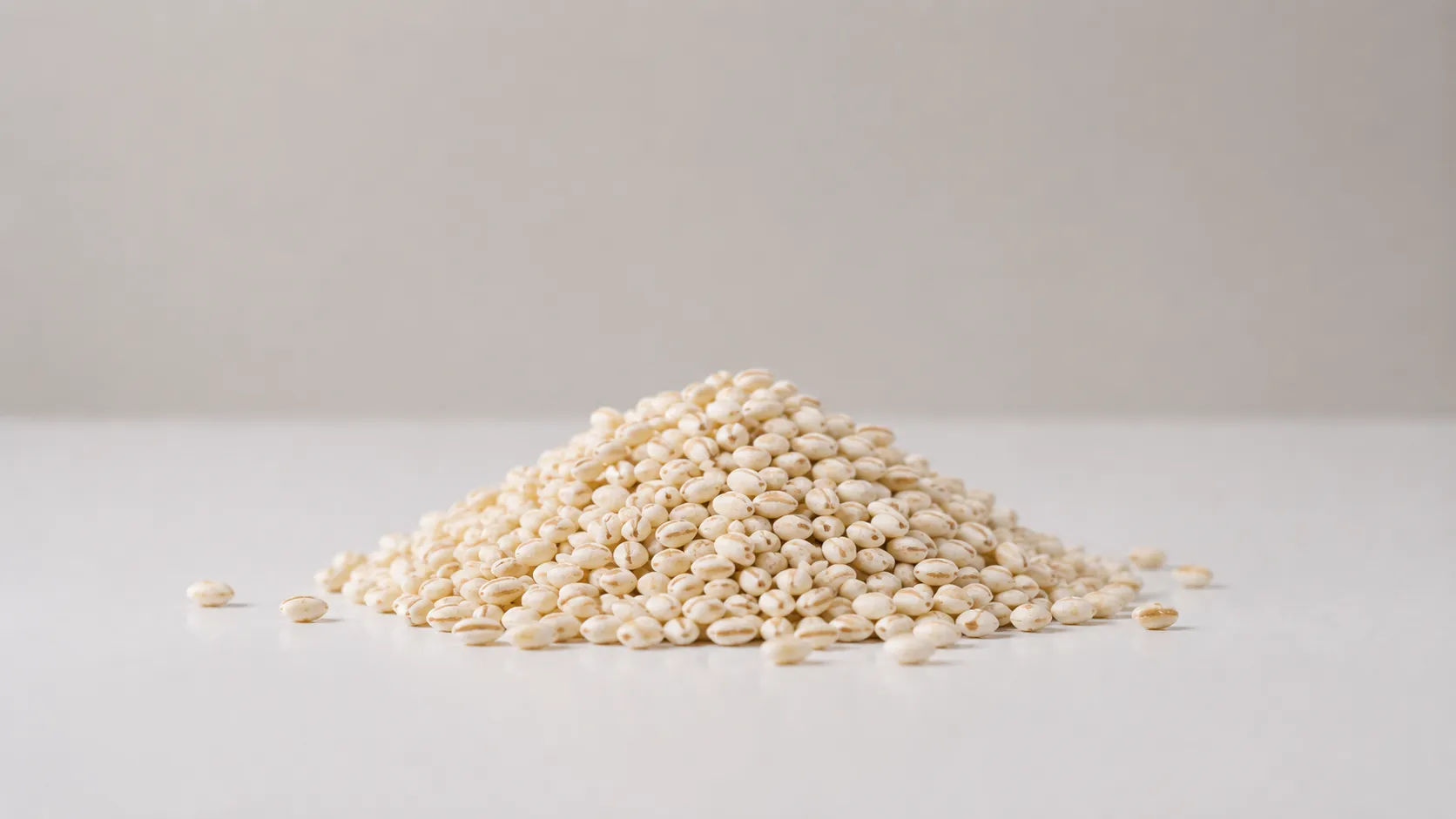
Soft, well-cooked barley is a low choking risk - the small grains turn tender and squash easily.
Cook it until very soft and mix the loose grains into porridge, mash, or a thick soup so they hold together on a spoon. See how to serve for age-by-age prep.
Allergens
Barley isn't one of the nine most common food allergens, and a true barley allergy is uncommon, so for most babies it can go in like any other grain.
What matters with barley is gluten - it contains gluten, along with wheat and rye. If your baby has celiac disease, barley is off the menu. And if your baby has a wheat allergy, ask your pediatrician before offering barley: wheat, barley, and rye are closely related, and many children allergic to wheat react to barley too.
Barley malt turns up in a lot of cereals, breads, and drinks, so it's worth checking labels if you're keeping gluten out.
Start with a small amount and watch for a reaction.[2]
If baby refuses
Barley is mild and a little nutty, and usually goes down well. If it's refused, cook the porridge with your baby's usual breast milk or formula, swirl in a fruit purée or a pinch of cinnamon, or stir the grains into a soup or mash they already like. New foods often take a good few goes before they land.
How to serve
6+ months old
Soft barley porridge or purée
Serve barley well cooked and very soft, blended into a smooth porridge or stirred into a soft mash rather than as loose grains. Pre-load a spoon and hand it to baby. Cooking the porridge with your baby's usual breast milk or formula gives a familiar flavour.
How to cook
Simmer pearl barley in unsalted water, roughly 1 part barley to 3 parts water, for about 40 to 45 minutes until very soft, then blend or mash with a little of the cooking water, breast milk, or formula.
12+ months old
Barley in family meals
Whole soft grains, stirred through a dish
Barley works in family food now - in soups, stews, risotto-style dishes, or as a soft side alongside a meal. Keep it moist and clumped rather than loose and dry, and offer a fork or spoon for practice, though your toddler will probably still use their hands for a while yet. Keep choosing salt-free or low-salt stock so the dish suits everyone.
How to cook
Cook pearl or hulled barley until soft, then use it however the family eats it - soups, stews, risotto, or as a side. Check labels on ready-made soups and broths, which are often high in salt.
Tips
- Pot or hulled barley keeps more of the grain. It holds onto the bran and a bit more fibre than pearl barley, which has been polished. Pearl is perfectly fine and cooks faster - worth knowing the difference rather than worrying about it.
- Watch the stock. Barley usually ends up in soups and stews, and ready-made broths and stock cubes are where the salt sneaks in. Use a salt-free stock or just water, and season the adults' portions at the table.
- Batch-cook it. Barley takes 40 minutes, so it's worth making a big pot - it keeps 2 to 3 days in the fridge or up to 3 months frozen, ready to stir into porridge, soup, or mash.
Sources
- Food Allergies (the 9 major US allergens) - FDA
- When to Introduce Egg, Peanut Butter & Other Common Food Allergens - AAP HealthyChildren
- When, What, and How to Introduce Solid Foods - CDC
- Foods and Drinks to Avoid or Limit (added sugar, salt) - CDC
- Barley, pearled, cooked (FDC 170285) - USDA FoodData Central