 HeySolids
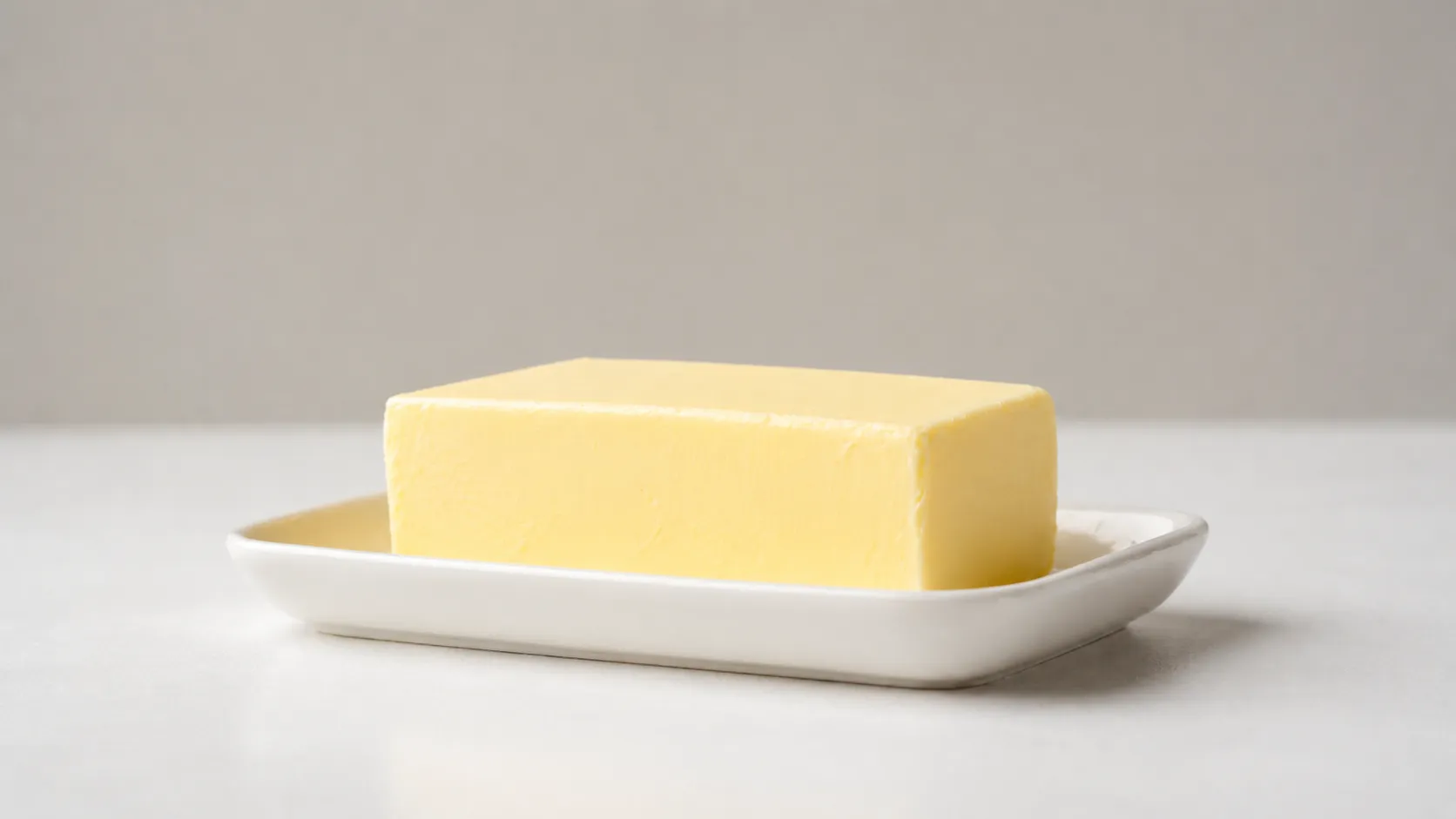
Choking risk
Melted or thinly spread butter is a low choking risk - it softens rather than holding a firm shape.
Keep it melted in or a thin scrape, never a firm, cold chunk. See how to serve for prep at each age.
Allergens
Butter is made from cow's milk, a common allergen, and cow's milk allergy is one of the most common in babies.[1]
Butter is almost all milk fat with only trace milk protein, so most babies handle it well, but treat it as a dairy food. A baby with a diagnosed cow's milk allergy can still react, so check with your pediatrician first. Always use pasteurized butter, never any made from raw (unpasteurized) milk.[2][3]
Offer it on its own, start with a small amount, and watch for a reaction. Once your baby is comfortable with it, keep it in their regular diet.
If baby refuses
Butter is rarely refused on its own since it is a flavor, not a dish. If baby dislikes a butter-cooked meal, a mild oil like olive oil works just as well, or melt some into a food they enjoy.
Food safety
Salted butter adds sodium, and added salt should be avoided before age 2, so choose unsalted.[4]
It is also high in saturated fat, so use it to cook with or finish a dish rather than piling it on. A thin scrape or melted knob is enough.[5]
How to serve
6+ months old
Melted into food or a thin spread
Use butter as a cooking fat and a flavor, not a food on its own. Stir a small amount into mashed vegetables or oatmeal, use a little to soften and cook produce, or spread it thinly on a strip of toast.
Make sure there are no firm, cold chunks in the meal.
How to cook
No cooking needed to add it - melt and stir a small amount into mash, oatmeal, or cooked vegetables. Choose unsalted butter and keep portions small.
12+ months old
Cooking fat, finish, or thin spread
Butter can now be used the way you would in everyday cooking. Melt it over soft vegetables or stir it into mashed potato, toss it through pasta or rice, use it to scramble eggs or make pancakes, or spread it thinly on toast and sandwiches. A little on warm food is an easy way to add energy and richness, which toddlers need plenty of. It's high in salt and saturated fat, though, so keep it to small amounts and reach for unsalted where you can.[5]
How to cook
No special preparation needed - use a small amount in family cooking as a fat, a finish, or a thin spread.