 HeySolids
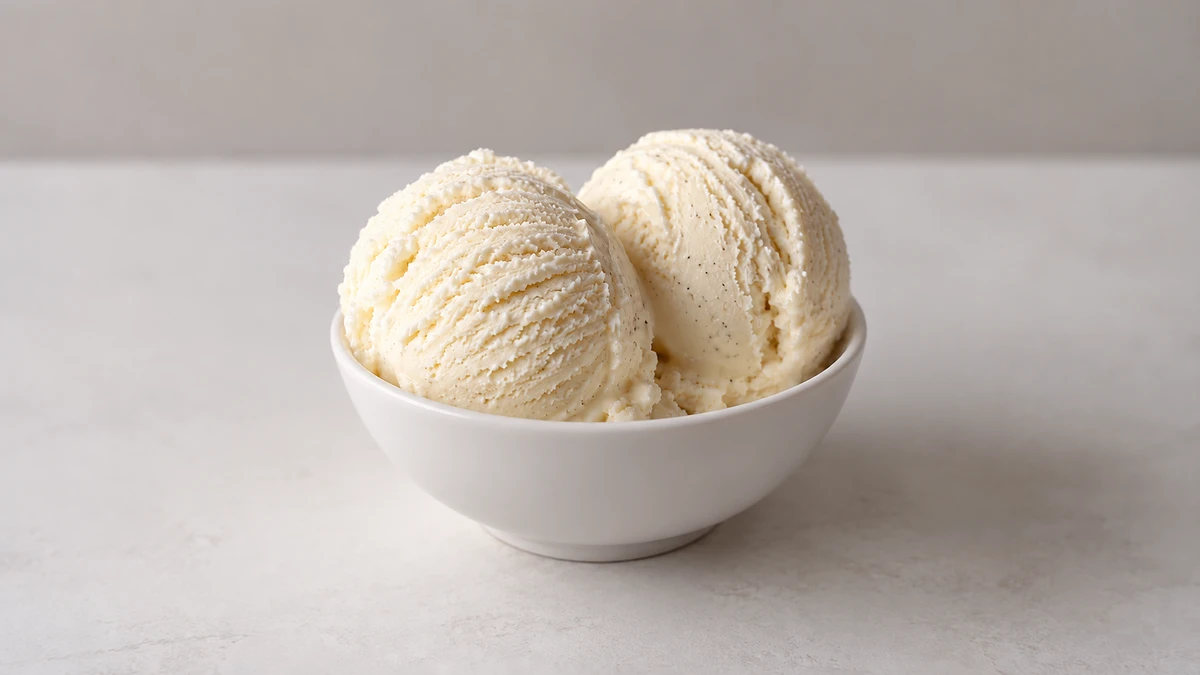
Can babies have ice cream?
No, not before age 2. Ice cream is one of the highest-sugar foods a young child gets offered, and added sugar isn't recommended before age 2. The dairy is fine - full-fat yogurt works from 6 months - so it's the sugar doing the waiting. Blended frozen fruit gives the cold, sweet, spoonable thing children are actually after.
Choking risk
Ice cream itself melts in the mouth, so it is a low choking risk.
The risk rides in on the add-ins - whole nuts, candy pieces, cookie chunks, and brittle cone edges - so for young kids choose plain flavors served in a cup. See how to serve for age-by-age prep.
Allergens
Ice cream is a dairy food, so milk - a common food allergen - is built in, and custard-style kinds add egg.[1][2]
For a child with a nut allergy, the scoop shop is the bigger hazard: shared scoops and open tubs mix flavors freely, so nut-free orders still pick up traces. A sealed, clearly labeled tub is the safer route.[3]
Start with a small amount and watch for a reaction.
Food safety
What makes ice cream wait is sugar: added sugar is off the menu before age 2, and after that it's a sometimes-food in small scoops.[4][5]
Skip homemade ice cream made with raw eggs for young children - it carries the same salmonella risk as any raw egg. Use a cooked-custard or eggless recipe instead.[6]
How to serve
Up to 2 years old
Not yet - frozen fruit does the job
Hold off on ice cream before age 2 - it's concentrated added sugar, and the guidance for these years is none.
What to offer instead
Blend frozen banana into a soft-serve swirl - "nice cream" - or stir fruit into thick plain whole-milk yogurt and freeze it slightly. Cold, creamy, and no added sugar anywhere.
2+ years old
A small scoop, occasionally
From age 2, an occasional small scoop is fine. Keep it plain - vanilla or fruit flavors without nuts, candy pieces, or cookie chunks - and serve it in a cup rather than a cone for the youngest eaters.
One scoop already covers most of a toddler's daily added-sugar room, so let it stand alone rather than topping it with syrup or sprinkles. If food allergies are in the picture, packaged tubs with a clear label beat the scoop shop.