 HeySolids
Choking risk
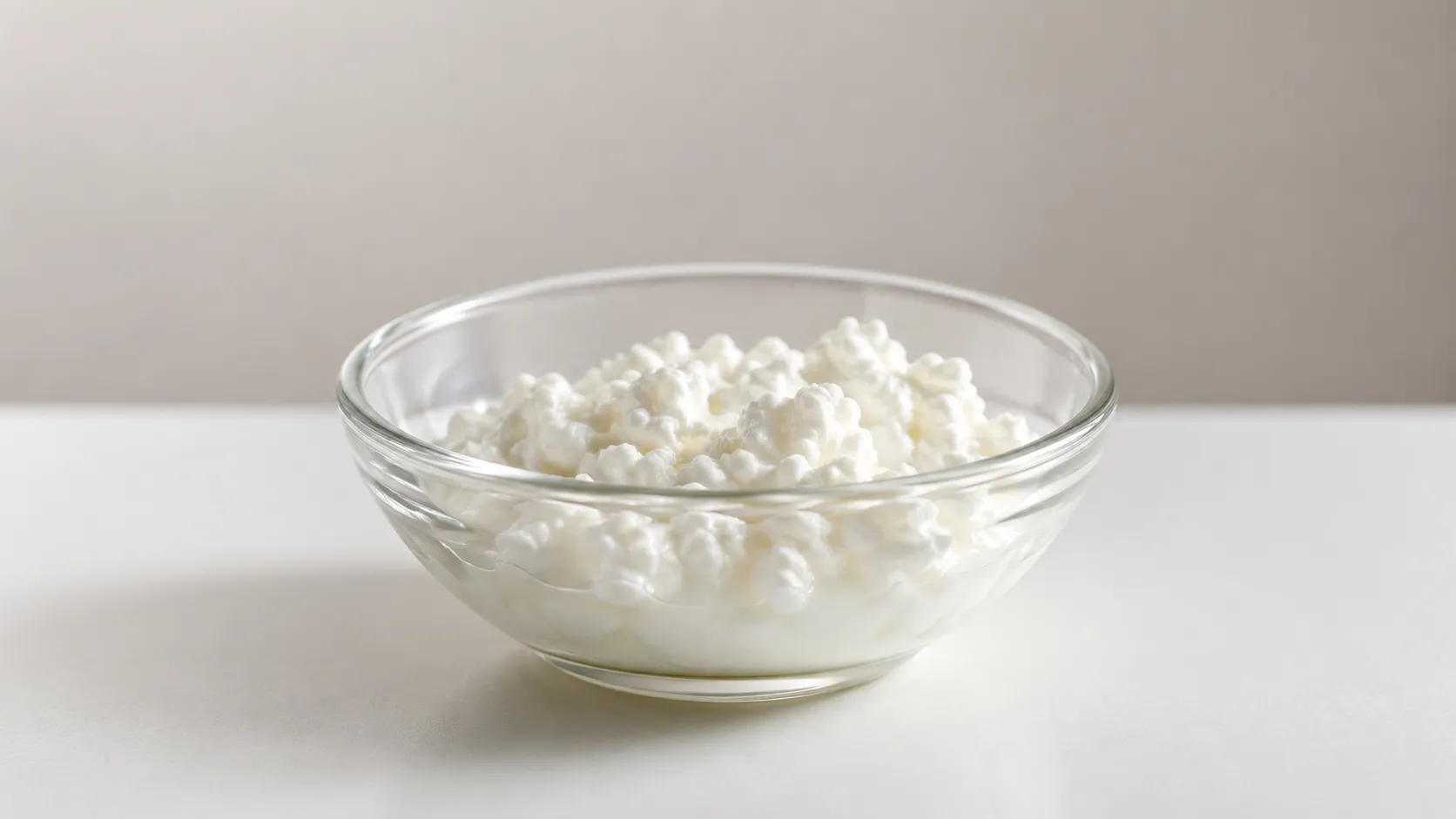
Cottage cheese is a low choking risk - its soft curds break apart easily and are gentle to spoon-feed.
Flatten large curds with a fork and stir in only smooth purees or mashed soft fruit. See how to serve for prep at each age.
Allergens
Cottage cheese is made from cow's milk, a common food allergen, and cow's milk allergy is one of the most common in babies.[1]
Even so, plain full-fat cottage cheese is usually well tolerated. A baby with a known cow's milk allergy can still react, so check with your pediatrician first. Use only pasteurized cottage cheese, never raw (unpasteurized) milk. Introducing dairy early and keeping it in the diet lowers allergy risk.[2][3][4]
Offer it on its own, start with a small amount, and watch for a reaction. Once your baby is comfortable with it, keep it in their regular diet.
If baby refuses
The lumpy curds put some babies off. Blend it smooth or mash the curds, and stir in soft fruit like mashed banana, peach, or berry to change the texture.
Food safety
Cottage cheese is salty - salt is added as a preservative, and the amount varies a lot between brands. Plain, unflavoured is the one to buy, and if the label says "no salt added", even better. Serve small amounts and keep the rest of the meal low-salt. If a standard tub is all you have, rinsing the curds under cold water washes away a good chunk of the salt.[6]
Stick to pasteurised (supermarket tubs are - homemade or farmers' market versions may not be), keep it in the fridge, and don't leave it out for more than a couple of hours.
How to serve
6+ months old
On a pre-loaded spoon or as a dip
Offer plain, full-fat, pasteurized cottage cheese on a pre-loaded spoon for baby to grab, or as a dip for cooked vegetable strips or soft toast fingers. It also stirs into mashed vegetables, soft fruit, or oatmeal. Flatten any large curds with the back of a fork.
How to cook
No cooking needed - serve it straight from the container. Blend it smooth or mash the larger curds if baby prefers a finer texture.
12+ months old
Soft and scoopable
Serve it as a dip, spread on toast, or stirred into family dishes like pasta sauce, scrambled eggs, or a baked potato. It's a good food for spoon practice - the curds cling, so more of it actually makes it to the mouth. Keep portions small, since cottage cheese is saltier than most dairy.
How to cook
No cooking needed. Serve as-is, or stir into warm dishes and let anything warmed through cool a little first.
Sources
- Food Allergies (the 9 major US allergens) - FDA
- Milk - FARE
- The Dangers of Raw Milk (unpasteurized) - FDA
- When to Introduce Egg, Peanut Butter & Other Common Food Allergens - AAP HealthyChildren
- Foods and Drinks to Avoid or Limit (honey, added sugar, salt) - CDC
- Dietary Guidelines for Americans 2020-2025 (birth-24 months: no added sugar/salt under 2) - USDA/HHS
- When, What, and How to Introduce Solid Foods - CDC
- Cheese, cottage, creamed, large or small curd (FDC 173417) - USDA FoodData Central