 HeySolids
Choking risk
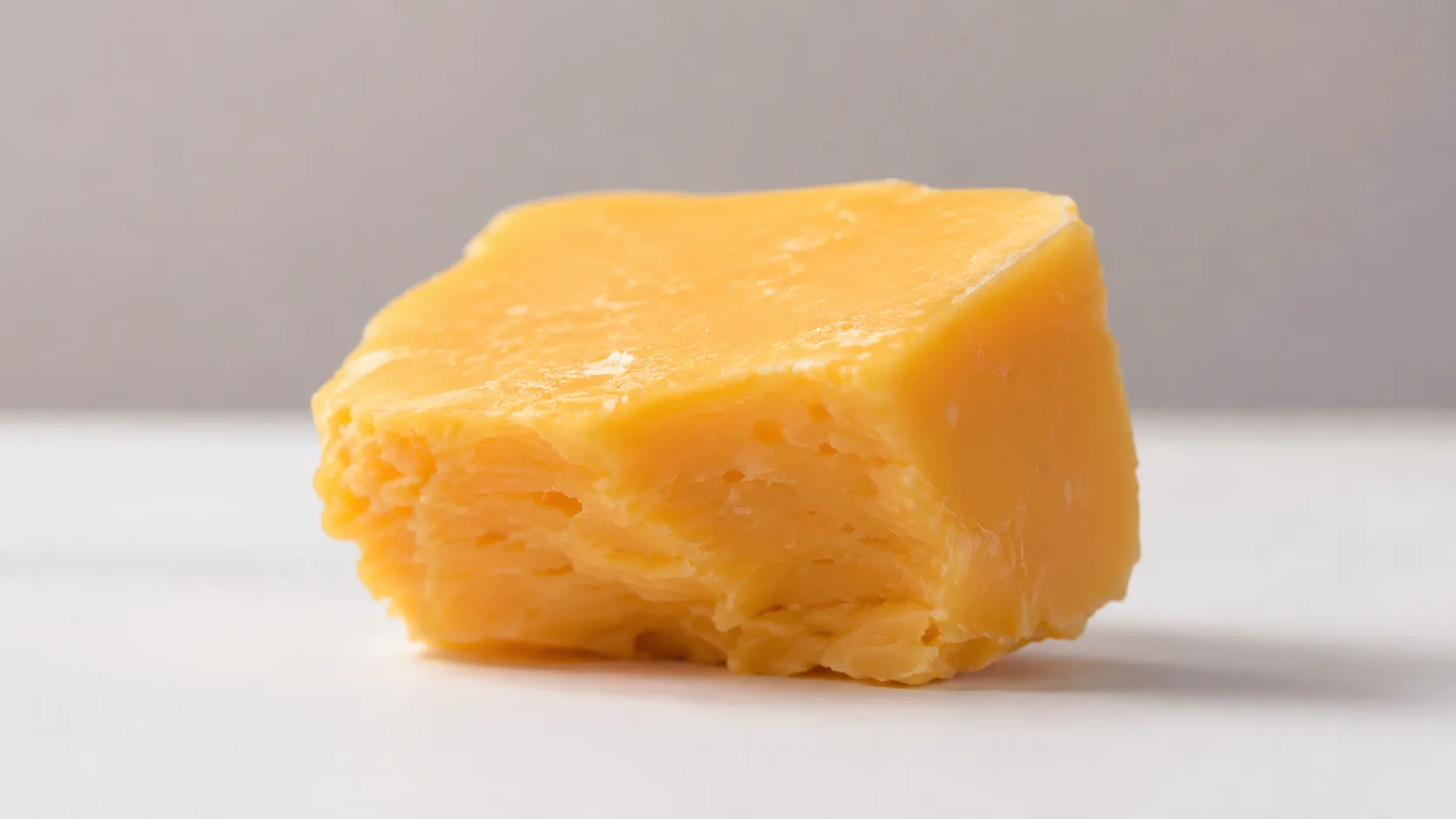
Colby is a moderate choking risk - it is firm and dense, so cubes or chunks can lodge in the throat.
Grate it or cut thin strips, never cubes or chunks, and keep melted layers thin to avoid sticky globs. See how to serve for age-by-age prep.
Allergens
Colby is made from cow's milk, and milk is a common food allergen. There's no reason to delay it, though - waiting doesn't prevent allergies, and allergens can start alongside other solids from around 6 months.[1]
Milk is the same allergen whatever form it takes, so colby counts toward the same introduction as yogurt or cheese.[3]
If your baby has severe eczema or an existing food allergy, check with your pediatrician before starting allergens. If dairy is already comfortably in the diet, colby needs no separate introduction - just serve it in the safe shapes for baby's age.
If it happens to be baby's first dairy, start with about 1/4 teaspoon, grated and melted into a familiar food, earlier in the day, not near bedtime, and watch for a reaction over the next couple of hours.[2]
If baby refuses
Colby is one of the mildest cheeses there is, so the taste is rarely the problem - cold, rubbery texture usually is. Melt it: over warm pasta, into vegetables, folded through scrambled egg. Melted colby is a different food to a baby. Keep offering it - tastes change with repeat tries.
Food safety
Cheese is a salty food by nature, but it earns its place - colby brings protein and calcium a baby can use. So the rule is portion, not avoidance: a serving for a baby is small, two or three thin slices or a small handful of shredded, offered as part of a meal. Babies should have no added salt in the first 12 months, kept low after that.[4]
Use pasteurized cheese only - check the label; nearly all colby is, so this is a quick check, not a hunt. Cheese made from raw milk can carry listeria, and babies are more vulnerable to food poisoning than adults.[5]
How to serve
6+ months old
Finely grated or thin strips
Choose a full-fat, pasteurized colby. Finely grate it over soft food, or cut thin strips baby can hold - thin enough to bend, so they tear and mash easily. No cubes or chunks yet: firm pieces of cheese are a choking shape.
How to prepare
No cooking needed - grate it fine, or melt a thin layer into scrambled egg, mashed vegetables, or a smooth sauce. Let melted cheese cool to warm before serving; it holds heat longer than the food around it.
9+ months old
Grated or thin strips
As the pincer grasp develops, serve colby grated for picking-up practice, or as thin bendy strips to hold. This is also a good stage to fold it into an omelet, melt it over soft vegetables, or melt a thin layer onto soft toast fingers. No cubes or chunks yet: firm pieces of cheese are a choking shape.
How to prepare
No cooking needed. Colby is great grated over warm pasta or vegetables, folded into an omelet, or melted in a thin layer onto soft toast fingers.
12+ months old
Grated, thin slices, or thin strips
Serve colby grated, in thin slices, or as thin strips, and melt a thin layer over toast, vegetables, or beans, or stir it into family dishes.
Still no cubes or chunks: firm pieces of cheese are a choking shape, and cheese cubes wait until around age 4, with the other firm round foods.
How to prepare
No cooking needed - grate, slice thin, or melt a thin layer into family dishes. Serve melted cheese warm, not hot, and watch the other direction too: melted cheese that's gone fully cold hardens back into firm, rubbery clumps, which are exactly the pieces to avoid. Warm and soft is the serving window.
Sources
- Food Allergies (the 9 major US allergens) - FDA
- When to Introduce Egg, Peanut Butter & Other Common Food Allergens - AAP HealthyChildren
- Milk - FARE
- Foods and Drinks to Avoid or Limit (honey, added sugar, salt) - CDC
- The Dangers of Raw Milk (unpasteurized) - FDA
- When, What, and How to Introduce Solid Foods - CDC
- Cheese, colby (FDC 173420) - USDA FoodData Central