 HeySolids
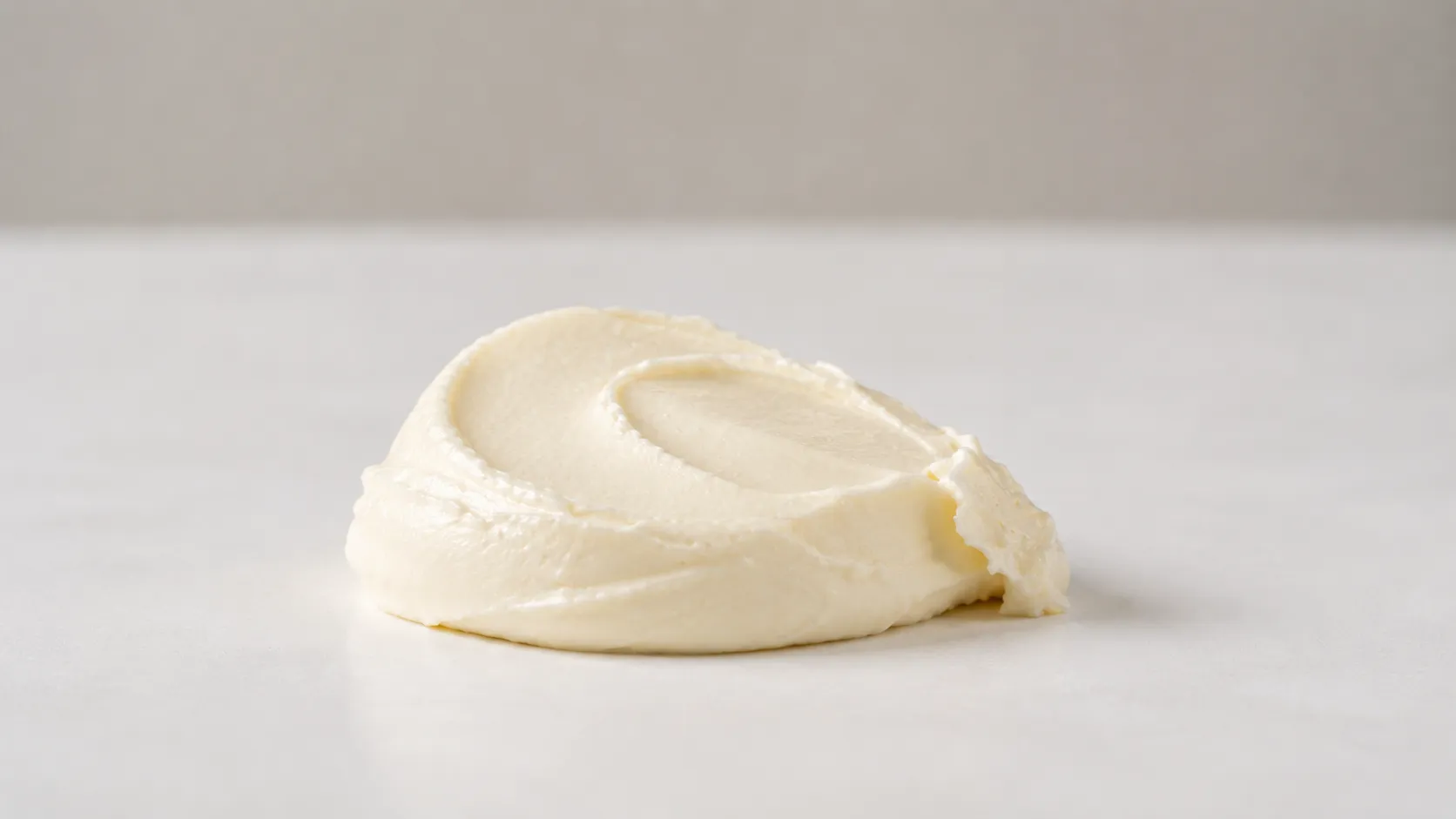
Mascarpone is the richest of the fresh cheeses - really closer to spoonable cream. It's not a food on its own; it's a spoonful stirred into things: oatmeal, mashed fruit, pasta sauce. And while it's best known for desserts, baby's version stays plain - the sweetness comes from fruit.
Choking risk
Mascarpone is a low choking risk - its soft, smooth texture is easy to spoon-feed or stir into food.
When you stir mascarpone into other foods, prep those carrier foods in an age-safe shape and texture too. See how to serve for age-by-age prep.
Allergens
Mascarpone is made from cow's milk, and milk is a common food allergen. There's no reason to delay it, though - waiting doesn't prevent allergies, and allergens can start alongside other solids from around 6 months.[1]
Milk is the same allergen whatever form it takes, so mascarpone counts toward the same introduction as yogurt or cheese.[2]
If your baby has severe eczema or an existing food allergy, check with your pediatrician before starting allergens.
Start with about 1/4 teaspoon of mascarpone stirred into a familiar food, earlier in the day, not near bedtime. Watch for a reaction over the next couple of hours. Build up gradually from there, and keep dairy in the diet a few times a week.[3]
If baby refuses
Mascarpone is mild and usually well accepted. If the richness seems like too much alone, stir a smaller amount through mashed vegetables, soft pasta, or fruit so it blends in.
Food safety
Use pasteurized mascarpone only - check the label. In the US that's nearly all of it, so this is a quick check, not a hunt. Cheese made from raw milk can carry listeria, the bacteria soft fresh cheeses are most prone to, and babies are more vulnerable to food poisoning than adults.[4]
Mascarpone is also one of the shortest-lived cheeses once opened - keep the tub well chilled and use it within a few days, and if it smells sour or looks separated, it's past it.
How to serve
6+ months old
On a pre-loaded spoon or stirred into food
A small spoonful
Stir a little plain, pasteurized mascarpone into mashed vegetables, oatmeal, or soft grains, or fold it through soft fruit, and serve it on a pre-loaded spoon. A small spoonful is plenty - mascarpone packs a lot of richness into a little, and too much can sit heavily. Skip the classic honey pairing: no honey before 12 months.
How to prepare
No cooking needed - it goes straight from the tub. Stirred into something warm, like oatmeal or a fresh mash, it melts in smoothly; into something cold, loosen it first with a spoon so it doesn't sit in lumps.
9+ months old
Stirred into dishes or as a dip
A small dollop
Dollop a little mascarpone into dishes for creaminess, fold it through soft fruit, or stir it into soft pasta or a sauce. You can also offer soft fruit or cooked vegetable strips to dip into a small amount. Keep it plain and the portion small.
How to prepare
No cooking needed. Stir into warm dishes, soft pasta, or a sauce, or use as a dip. Choose plain, unsweetened mascarpone and keep portions modest.
12+ months old
Stirred into family dishes
A small amount mixed in
Use mascarpone more widely now, stirred into family dishes like pasta sauces, risotto, mashed potato, or soft baked dishes for a creamy finish, or folded through soft fruit. Cut any pasta or other ingredients into bite-sized pieces, keep amounts small, and skip the sugary desserts it often goes into.
How to prepare
No cooking needed. Stir a small amount into warm family dishes or fold through soft fruit, letting anything warmed through cool a little before serving.
Sources
- Food Allergies (the 9 major US allergens) - FDA
- Milk - FARE
- When to Introduce Egg, Peanut Butter & Other Common Food Allergens - AAP HealthyChildren
- The Dangers of Raw Milk (unpasteurized) - FDA
- When, What, and How to Introduce Solid Foods - CDC
- Botulism Prevention (no honey under 1) - CDC
- Cheese, mascarpone - USDA FoodData Central