 HeySolids
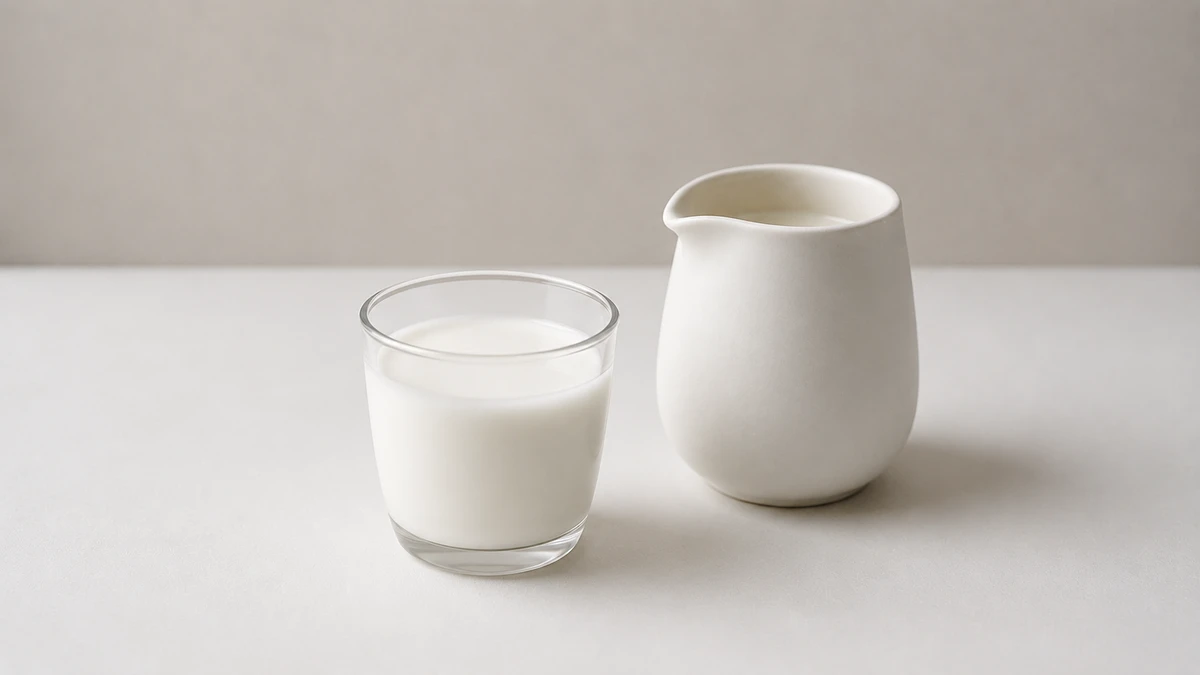
Can babies have goat's milk?
Not as a drink before 12 months, and never in place of formula or breast milk. Plain goat's milk is too low in iron, folate, and B12 to be a baby's main milk in the first year. Goat's milk formula is a different product and is fine - it's built to the same standard as cow's milk formula.
Small amounts in cooking are fine from around 6 months, the same as cow's milk.
From 12 months it can be the main milk. Choose whole and pasteurized, and pick a fortified version if it's the only milk they drink.
Choking risk
Goat's milk is a thin liquid, so it is a low choking risk.
Once it becomes a drink at 12 months, offer it in an open or straw cup rather than a bottle. See how to serve for age-by-age prep.
Allergens
Goat's milk counts as a milk allergen: its proteins are so close to cow's milk that nearly all children allergic to one react to the other.[1]
That means goat's milk is never a safe swap for a baby with cow's milk allergy - don't try it without an allergist's guidance. For everyone else, introduce dairy early and keep it in the diet; if your baby already handles yogurt or cheese, goat's milk in cooking is usually fine too.[2]
Start with a small amount and watch for a reaction.
Food safety
Pasteurized only - raw goat's milk carries the same serious bacteria risks as any raw milk, and babies are the most vulnerable to them.[3]
And never use goat's milk in place of breast milk or infant formula in the first year. Unmodified, it is too heavy in minerals and protein for young kidneys and very low in folate, which can cause anemia - it's an ingredient before 12 months, not a feed.[4]
How to serve
6+ months old
Goat's milk in food and cooking
Cooked into dishes, not as a main drink
From 6 months, pasteurized goat's milk works the same way cow's milk does - stirred into oatmeal or a mash, cooked into a sauce, or baked into food. Goat's-milk yogurt and cheese are good ways in as well.
It shouldn't be a drink yet, and it must never replace breast milk or formula - unmodified goat's milk is unsafe as a baby's main feed.
How to prepare
Use pasteurized, full-fat goat's milk and cook with it as you would any milk - loosen a puree, enrich a sauce, soften a bake. If baby hasn't had dairy yet, treat the first taste as an allergen introduction: a small amount, earlier in the day.
12+ months old
Whole pasteurized goat's milk as a drink
Up to about 16 oz (2 cups) a day
From 12 months, whole pasteurized goat's milk can be a main drink just like cow's milk - same cup, same cap of about 16 oz a day so it doesn't crowd out iron-rich food.
One thing to know if it becomes the household milk: goat's milk is naturally low in folate and vitamin B12 compared with cow's milk. A toddler eating a varied diet is fine; look for a fortified version if goat's milk is the only milk they drink.
How to prepare
Serve it cold or gently warmed in an open or straw cup. The flavor is tangier than cow's milk - mixing the two and shifting the ratio over a week eases the change if your toddler hesitates.