 HeySolids
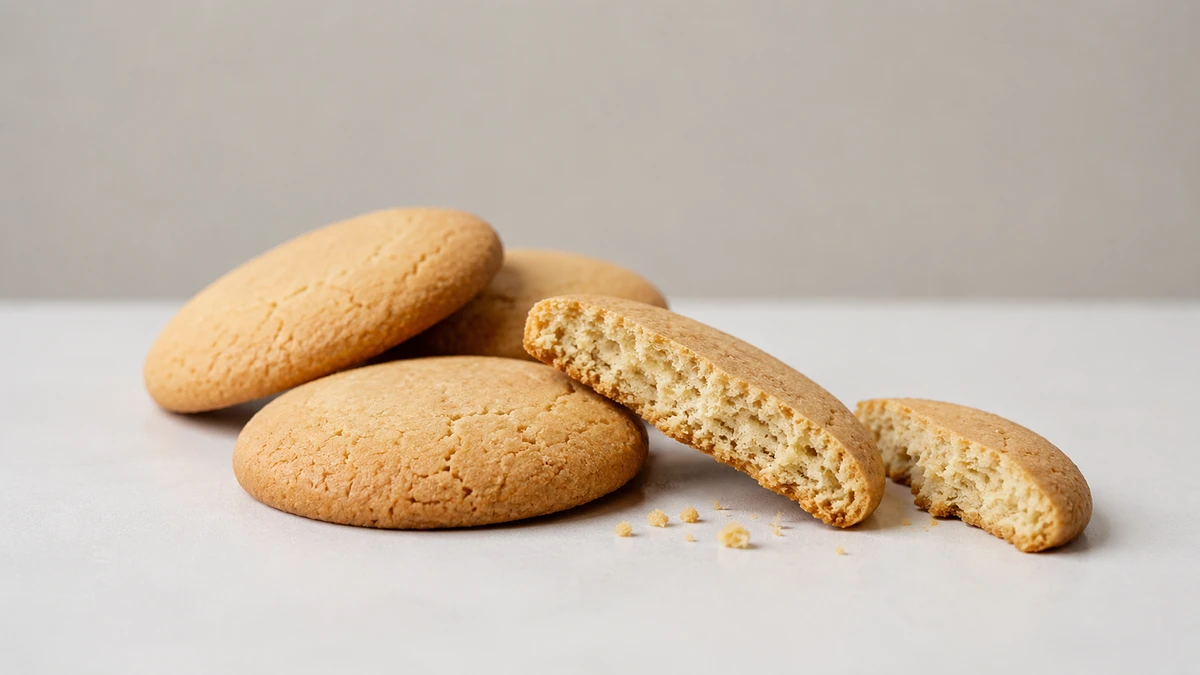
Can babies have cookies?
Not the store-bought kind, including the ones sold as teething wafers. Most contain added sugar, which isn't recommended before age 2.
Homemade is the exception - cookies made from oats and mashed banana, with no sugar added, work from around 6 months. Bake them soft rather than crisp, since a hard cookie snaps into firm chunks instead of dissolving.
Choking risk
Cookies are a moderate choking risk. Soft, plain kinds break down easily once chewed.
Hard or crisp ones snap into firm chunks that don't soften, and anything baked with whole nuts or candy pieces carries those hazards on its own - both wait until age 4. See how to serve for age-by-age prep.
Allergens
Nearly all cookies contain wheat, a common food allergen - and egg, milk, peanuts, tree nuts, and sesame turn up in cookies constantly too.[1][2]
Check the label every time, and treat bakery cookies as unlabeled - shared trays and mix-ins make cross-contact common. Don't let a cookie be your child's first taste of nuts or any other allergen; introduce those on their own first.[3]
Start with a small amount and watch for a reaction.
Food safety
Cookies are added sugar, and the guidance before age 2 is none - that includes the toddler biscuits and graham-style snacks marketed for little kids, whose "baby" label doesn't exempt the sugar inside.[4][5]
From 2, they're a sometimes-food: one small flavored cookie can hold a toddler's whole added-sugar allowance for a meal.
How to serve
Up to 2 years old
No store-bought cookies yet - homemade with no added sugar is fine
No cookies yet, including the ones sold as teething wafers - most contain added sugar, which isn't recommended before age 2. Homemade is the exception. Cookies made from oats and mashed banana, with no sugar added, work from around 6 months.
What to offer instead
For snack duty, a plain unsweetened oat bar, a strip of toast, or soft fruit covers the same moment - and a homemade oat-and-banana cookie with no added sugar is a fine baby "cookie."
2+ years old
An occasional soft cookie
One small cookie, sometimes
From age 2, an occasional cookie is fine - one small, softer cookie rather than a hard one, and skip kinds studded with whole nuts or candy for the youngest eaters.
Keep them an occasion rather than a daily snack: everyday snacks stay unsweetened, and the cookie jar lives out of sight between times.
Sources
- Food Allergies (the 9 major US allergens) - FDA
- Wheat - FARE
- When to Introduce Egg, Peanut Butter & Other Common Food Allergens - AAP HealthyChildren
- Dietary Guidelines for Americans 2020-2025 (birth-24 months: no added sugar/salt under 2) - USDA/HHS
- Foods and Drinks to Avoid or Limit (honey, added sugar, salt) - CDC