 HeySolids
Choking risk
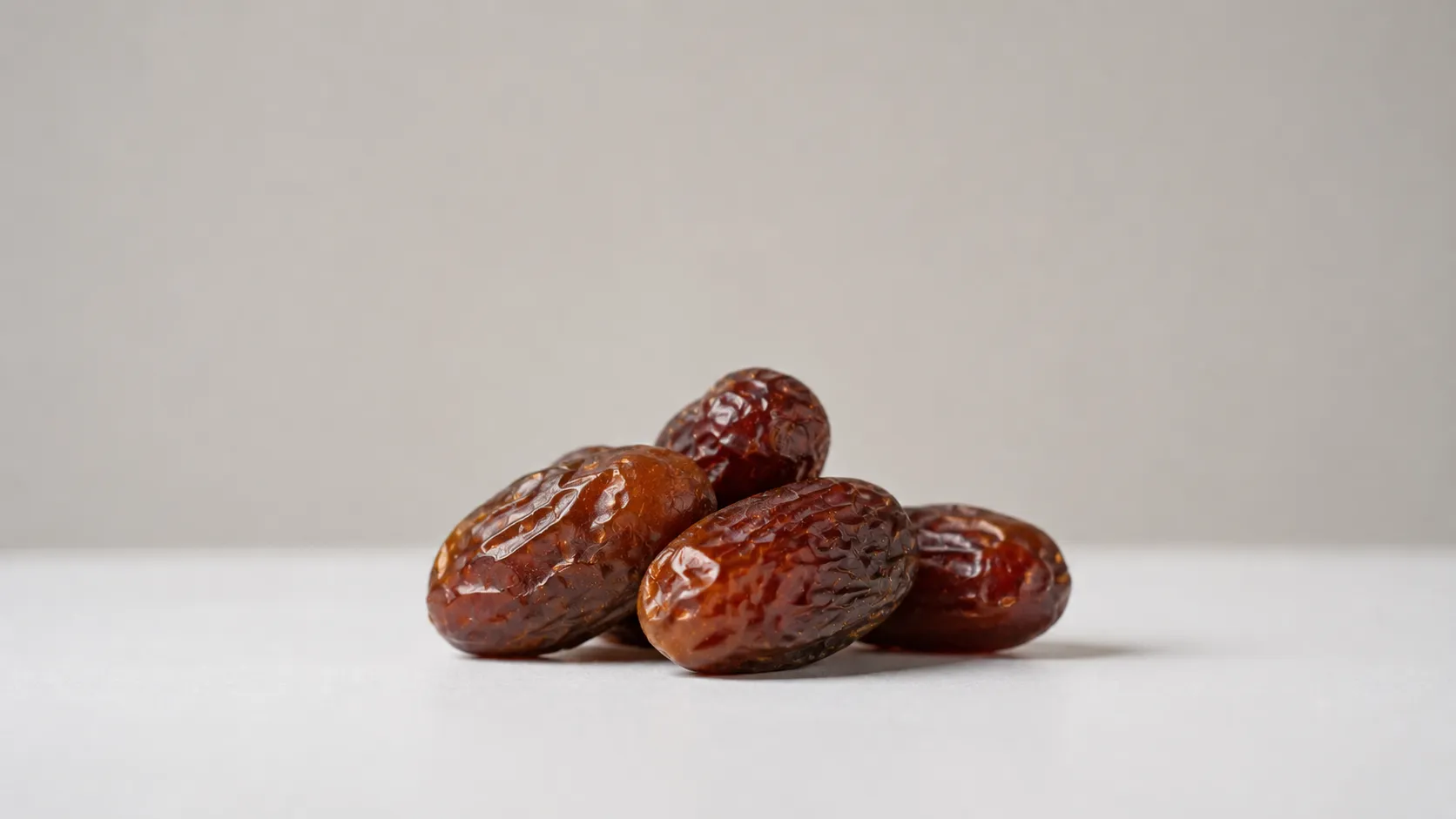
Dates are a moderate choking risk - they are dense, chewy, and very sticky, and they hide a hard stone, so prep matters.
Remove any stone, then soak pitted dates soft and blend into a smooth paste or chop very finely - never a whole, halved, or sticky chunk. See how to serve for age-by-age prep.
Allergens
Dates are not a common food allergen, so a true food allergy to them is rare.[3]
Start with a small amount and watch for a reaction.
If baby refuses
Dates are intensely sweet, so they're rarely turned down - if anything, the challenge is the sticky texture. Stir smooth date paste into oatmeal or plain yogurt if the texture is the issue. Keep amounts small either way: dates are very sweet and sticky enough to cling to teeth, so they suit being an occasional ingredient rather than an everyday snack.
How to serve
6+ months old
Smooth date paste
Small amounts stirred into other foods
Remove the stones, checking each date by feel since pitted dates can still contain one, then soak until very soft and blend into a smooth paste. Stir small amounts through oatmeal, plain yogurt, or fruit purées, or use it in baking.
No whole, halved, or chunked dates yet - they're dense, sticky, and a choking hazard.
How to cook
Soak the pitted dates in hot water for about 10 to 15 minutes until plump and very soft, then blend with a splash of the soaking water until completely smooth.
9+ months old
Smooth paste or finely chopped soaked dates
Stay with smooth date paste, or soak pitted dates until soft and chop them very finely, then mix them through oatmeal, yogurt, or baked goods so they don't clump. Feel through each date for a stray stone first. Whole and halved dates stay off the menu.
How to cook
Soak pitted dates until plump and soft, then blend into a paste or chop very finely. Mix into oatmeal, oat bars, or banana bread rather than serving them loose.
12+ months old
Small finely chopped pieces, or in baking
Offer soft soaked dates chopped small at mealtimes, feeling through each one for a stray stone first, or keep using date paste in baking and breakfast dishes. Whole and halved dates are still a choking risk - they're dense and sticky enough to lodge, so keep chopping them small rather than serving them on their own.
How to cook
Soak pitted dates until soft, then chop small or blend into a paste. Dried fruit is sugary and sticky, so serve dates with meals rather than as a between-meal snack, and keep portions small.
Tips
- Medjool are the soft ones. They're plumper and stickier than Deglet Noor, which are drier and firmer, so Medjool blend into a smooth paste with far less soaking. Worth paying a bit more for if you're making paste regularly.
- Make a batch of paste and freeze it. Soak and blend a whole batch, then freeze it in an ice cube tray - one cube is about the right amount to sweeten a bowl of oatmeal or a batch of baking, and it saves soaking dates every time.
- Check for stones even in "pitted" dates. Pitting is done by machine and strays get through regularly - feel through every date before it goes anywhere near a baby, whether you're chopping or blending. A date stone is hard, pointed, and exactly the wrong size.