 HeySolids
Choking risk
Fully ripe papaya is soft and a low choking risk - firm, underripe fruit is harder and riskier.
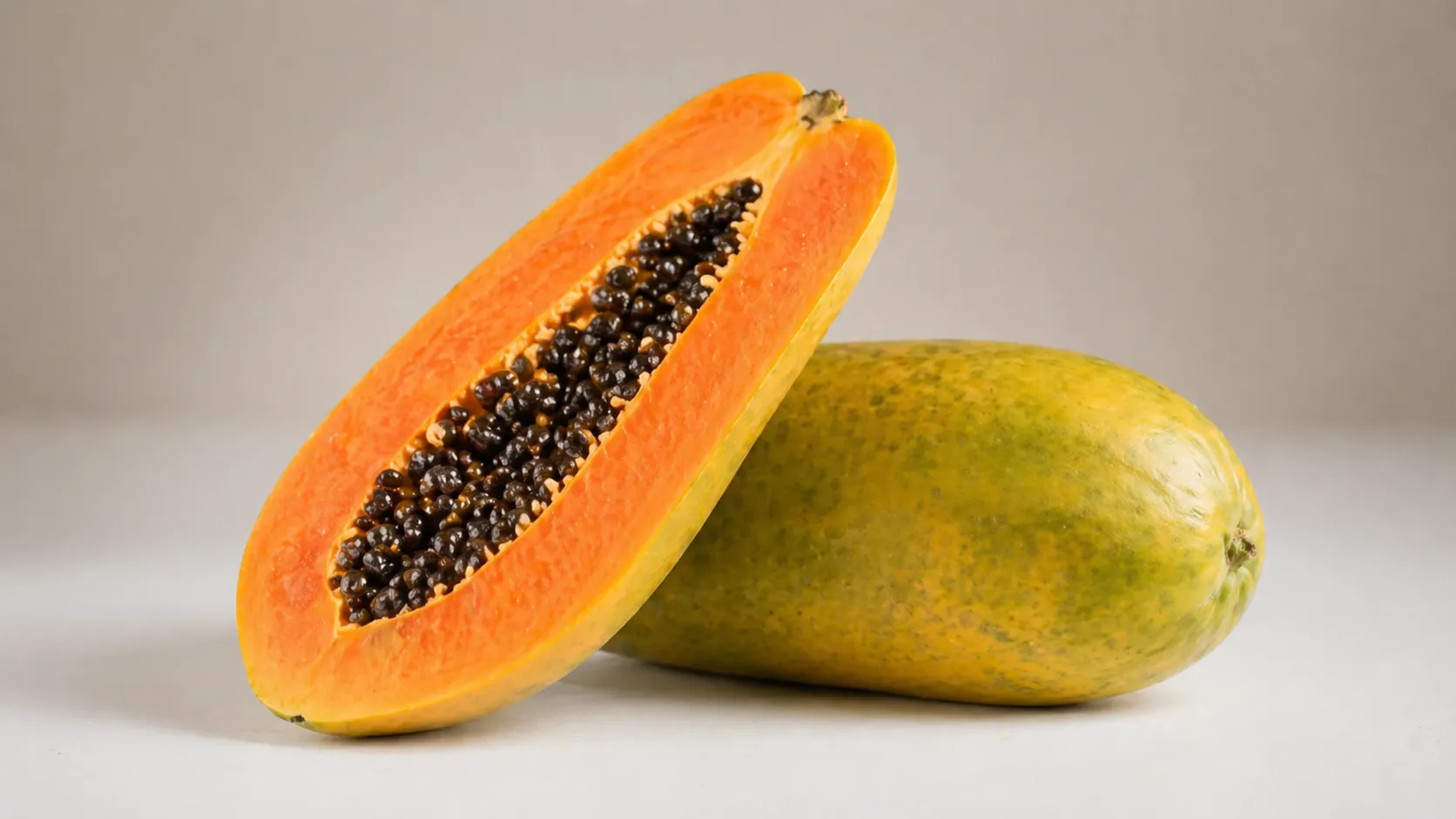
Serve it fully ripe with the skin peeled and the round black seeds scooped out, since they're small, round, and slippery. See how to serve for age-by-age prep.
Allergens
Papaya is not a common food allergen, so a true food allergy to it is rare.[1]
Start with a small amount and watch for a reaction.
How to tell it's ripe
Ripe papaya is mostly yellow-orange rather than green and gives to a gentle press near the stem end, much like a ripe avocado. A green, firm one isn't ready - it's hard, fairly tasteless, and trickier for a baby to manage.
If yours is still firm, leave it on the counter rather than the fridge, and a paper bag will speed things up. Once ripe, move it to the fridge and use it within a few days.
If baby refuses
Papaya's musky note can take getting used to. If it's turned down, check it's fully ripe, since underripe fruit tastes bitter. Stir it through yogurt or oatmeal, or pair it with banana or mango for a sweeter tropical mix.
How to serve
6+ months old
Large ripe spear or mashed
Finger-length spears, peeled and seeded
Cut fully ripe papaya into long spears about the length of an adult finger so baby can grip one with some sticking out of the fist. Ripe papaya gives to a gentle press and the skin has turned yellow-orange - firm fruit is too hard at this age. The flesh is slippery, so roll each spear in ground oats or infant cereal for grip. Mashed papaya also works stirred through plain whole-milk yogurt on a pre-loaded spoon.
How to prepare
No cooking needed. Peel, scoop out the seeds, and slice into spears. The flesh should press easily between two fingers before serving.
9+ months old
Soft bite-sized pieces or spears
About 1/2 inch pieces, or finger-length spears
As the pincer grasp develops, offer small soft pieces of ripe papaya to pick up, with spears alongside if pieces are tricky. The flesh stays slippery, so a light coating of ground oats or infant cereal helps. Always serve it fully ripe, skin off and seeds scooped out.
How to cook
No cooking needed. Serve ripe papaya raw as spears or small pieces, and check it presses easily between two fingers first.
12+ months old
Bite-sized pieces
About 1/2 inch pieces
Offer bite-sized pieces of ripe papaya as finger food, or pre-spear a piece and rest the loaded fork nearby for utensil practice. It also blends well into smoothies and stirs through fruit salads. Keep serving it fully ripe, skin off and seeds removed.
How to cook
No cooking needed. Serve ripe papaya raw, diced or in spears.
Tips
- The seeds aren't dangerous, just not for babies. If a few get through, don't panic - papaya seeds are edible and peppery, and adults eat them. They're just small, round, slippery, and bitter, so scoop them out rather than leaving them in a baby's portion.
- It's gentle on the tummy. Papaya is high in water and fibre and is traditionally used for constipation - a few spoonfuls of ripe papaya mash can help get things moving if your baby is a bit blocked up.